
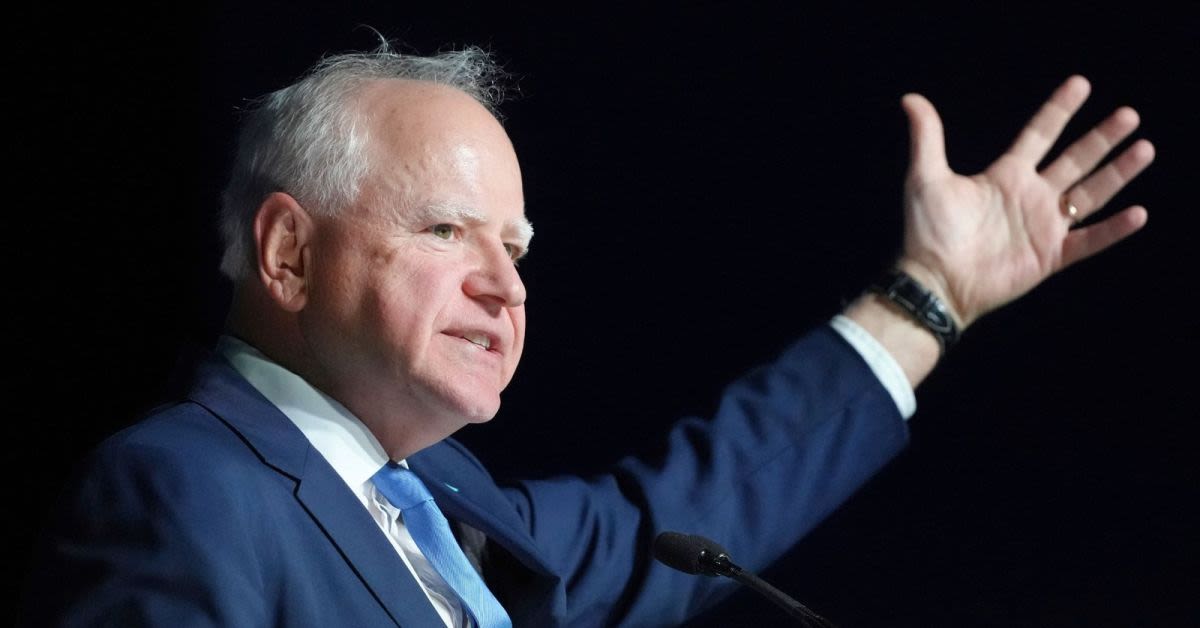
Minnesota Gov. Tim Walz ordered a halt to state involvement in proposed mining projects near the Boundary Waters Canoe Area Wilderness, directly undercutting a Trump-era move to revive resource development in northern Minnesota.
The Boundary Waters, a vast expanse of lakes and forests stretching roughly 150 miles through the Superior National Forest along the Canadian border, has long been a magnet for canoeists, kayakers, and campers who prize its relative isolation and natural beauty. According to The Associated Press, Walzs decision comes just four months after Congress and the Trump administration lifted a federal ban on mining in the region, a step conservatives hailed as a victory for jobs, domestic mineral production, and energy security.
Walz, a Democrat, framed his action in moral and almost spiritual terms, declaring, "It's our duty as Minnesotans to ensure the sacred place remains wild, pristine and unharmed." His executive order effectively freezes state-level environmental reviews and permitting for nonferrous mining projects in the Rainy River watershed, which feeds into the Boundary Waters, while ongoing litigation over Minnesotas mining regulations plays out in the courts.
The order also directs Minnesota regulators to withdraw as a cooperating agency from any federal environmental review of nonferrous mining proposals in that watershed, signaling a deliberate retreat from facilitating large-scale mineral development in the area. This move stands in stark contrast to the Trump administrations approach, which sought to streamline reviews and clear regulatory roadblocks in order to spur investment and job creation in mining communities.
Twin Metals Minnesota LLC, a subsidiary of Chile-based Antofagasta Minerals, has been pursuing a major copper and nickel mining project in the national forest since 2019, arguing that modern techniques can mitigate environmental risks. The company maintains that its design would ensure "no waste rock is stored above ground," a key point it says would "eliminat[e] a potential source of acid" that critics fear could leach into nearby waterways.
The proposed mine site sits upstream from the Boundary Waters within the Superior National Forest, raising concerns among environmental activists and some local residents that any contamination could flow directly into the wilderness area. Opponents of the project have long warned that sulfide-ore copper mining carries a high risk of acid mine drainage, while supporters counter that stringent regulations and advanced technology can protect water quality and still allow for responsible resource extraction.
In April, President Donald Trump signed a resolution passed by Congress that lifted a federal moratorium on mining in the forest that had been set to run through 2023, a moratorium widely viewed by conservatives as a politically motivated barrier to economic growth. Trump argued that opening the region to mining would create jobs and revitalize the mining industry in northern Minnesota, where communities have historically depended on resource development and are now struggling with population loss and limited economic opportunities.
Walzs new directive effectively blunts that federal policy shift at the state level, ensuring that even with Washingtons green light, mining companies will face a hostile regulatory environment in St. Paul. For many conservatives, the move underscores a broader pattern in Democratic governance: prioritizing expansive environmental restrictions and activist demands over blue-collar employment, energy independence, and the strategic need for domestic sources of critical minerals.
U.S. Rep. Pete Stauber, a Republican whose district includes much of northern Minnesota, sharply condemned the governors decision as an attack on his constituents livelihoods and culture. Stauber accused Walz of waging an "outright war on Northern Minnesota and our way of life," arguing that the administration had cavalierly dismissed years of work and investment.
"Years of rigorous review, environmental study, and massive private investment have been erased in seconds by a deeply unpopular Governor," Stauber said in a written statement, reflecting the frustration of many in the region who see mining as a path to stable, high-paying jobs. For these communities, the promise of responsible developmentunder strict environmental oversightoffers a rare chance to reverse economic decline, and they view the governors order as yet another example of urban, progressive priorities overriding rural needs.
Environmental groups, however, celebrated Walzs move as a crucial step in shielding the Boundary Waters from industrial activity they insist is fundamentally incompatible with the areas fragile ecosystem. Becky Rom, chairperson of the advocacy group Save the Boundary Waters, praised the outgoing governor, stating, "The science is clear: copper mining and the Boundary Waters cannot safely coexist. This action helps safeguard the clean water, world-class wilderness, and outdoor economy that generations of Minnesotans cherish," Rom said.
The clash over the Boundary Waters now stands as a microcosm of the national debate between conservation and development, with Democrats and environmental activists pressing for ever-tighter protections while conservatives emphasize economic freedom, local control, and the strategic importance of domestic mineral supplies. As litigation over Minnesotas mining regulations continues and federal policy remains more favorable to development, the future of projects like Twin Metals will hinge on whether a new state leadership emerges willing to balance environmental stewardship with the legitimate aspirations of northern Minnesotas working families.
Login