
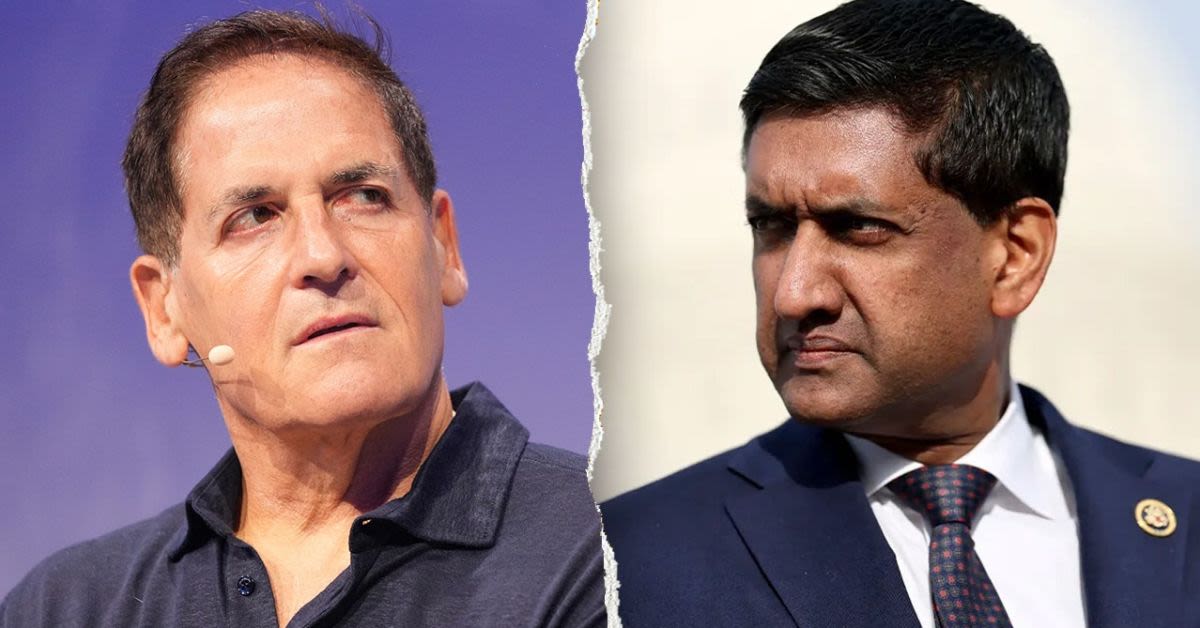
Democratic Rep. Ro Khanna of California is once again demanding a new wealth tax, this time targeting the states billionaires under the familiar banner of helping the working class.
According to RedState, Khanna spent the weekend touting a proposal for a 5 percent wealth tax on roughly 250 billionaires who live in California, boasting that the California Democratic Party and the states powerful labor movement had lined up behind the idea. The California Democratic Party and the California labor movement just stood with @BernieSanders and me in supporting 5% wealth tax on 250 California billionaires, he proclaimed on social media, adding, California voters want a Democratic Party that will stand up for the working class over the billionaire class.
As usual, Democrats are marketing the scheme as a cure-all for economic inequality, with Khanna even invoking healthcare as a justification, despite years of promises that Obamacare had already fixed the system.
The problem, critics argue, is that wealth taxes do not magically generate prosperity; they drive it away. Rather than lifting up workers, such a levy would almost certainly push investors, entrepreneurs, and job creators out of California, shrinking the tax base and leaving fewer opportunities for the very people Democrats claim to champion.
Khannas own personal fortune only underscores the hypocrisy embedded in the proposal. If he truly believes confiscatory taxation is the moral path forward, his critics ask, why not put his money where his mouth is and voluntarily hand over a sizable share of his own wealth to the state?
The congressmans post drew a wave of backlash online, but one response in particular stood out: a detailed, public rebuke from billionaire investor and businessman Mark Cuban. Cuban, who describes himself as an independent and has previously backed Democrats such as Kamala Harris, did not let his political leanings stop him from dismantling Khannas plan and the broader Democratic case for a wealth tax.
Cuban began by pointing out that many so-called billionaires are not sitting on mountains of cash but are cash poor and stock rich, with their net worth tied up in illiquid shares of fast-growing companies. Ro, I like you. You know that. But you need to read the state of the state. The number of Deca Unicorns in Cali is growing by the day as investors chase amazing startups. A unique feature of these 10b startups is that even if they raise a billion, little, if any of that he wrote, describing how these firms reinvest capital into growth rather than lining founders pockets with cash.
From there, Cuban pressed the practical question that progressive ideologues rarely answer: how, exactly, do you tax wealth that exists only on paper. How are you going to tax them? Make them borrow money against their shares, if they can? he asked, noting that these companies often have been in business for less than a year and are hardly prime candidates for massive bank loans. They just raised money to grow their company and a bank will come along and loan them money? A company that has been in business maybe less than a year? lol.
He then raised the specter of government seizure of private property if founders cannot pay. Will you take their stock if they cant? Cuban asked pointedly, before highlighting the absurdity of assuming each founder can simply extract hundreds of millions from a young company. Do you really think each of multiple founders, who started an amazing company in Cali and is now a billionaire, can each just pull out $250m per billion of net worth from their raise? You know they cant.
Cuban made clear that if Sacramento insists on punishing success, rational investors will simply take their money elsewhere. He warned that if the tax were enacted, he would insist that any startup he funded relocate out of California, bluntly stating that if this passes, only idiot startup founders stay in Cali. He went further, promising to condition his capital on geographic sanity: I will make NOT being in California a prerequisite for an investment. Ideology is not a strategy, Ro, Cuban declared.
That warning goes to the heart of the conservative critique: capital is mobile, and so are jobs, innovation, and opportunity. When politicians treat wealth creators as enemies to be plundered rather than partners in prosperity, they should not be surprised when those creators pack up and leave, taking paychecks and tax revenue with them.
Khanna, rather than reconsidering, floated an even more convoluted workaround: founders could pledge their shares as collateral for government loans, then use those loans to pay the wealth tax. Cuban ridiculed the idea without hesitation, responding, Ro, thats insane.
He then spelled out the circular logic at play. You want the state to loan money to the founder, who will then immediately give it back to the state as a wealth tax? Meaning the state has not received any incremental receipts? Whats the point of that? Cuban asked, exposing the proposal as little more than ideological theater masquerading as fiscal policy.
Instead of addressing those substantive concerns, Khanna pivoted to class warfare rhetoric. Mark, come on a road trip with me around California, Pennsylvania and the country and ask ordinary Americans how they feel about a billionaire tax, he wrote. Most say, I promise you, why only 5 percent?
Cubans response was blunt and revealing: You don't understand business Ro. He also emphasized that such a tax would directly undermine entrepreneurship by forcing founders to liquidate shares, diverting resources away from growth, hiring, and innovation. Ro, this is the biggest f--- you in the history of entrepreneurship. Ever, Cuban said, capturing the frustration of many who build companies from the ground up.
That sentiment encapsulates the broader Democratic approach: a reflexive impulse to expand government power and seize private wealth, dressed up as compassion for the working class. Never mind how the government just gets to grab more of their wealth because they want it, critics note, pointing out that even some Democrats have admitted the logic would not stop at billionaires; when Michigan Senate candidate Abdul El-Sayed was pressed on a wealth tax, he effectively conceded it could reach far below the millionaire class.
Once the political class discovers that raiding the fortunes of a few hundred billionaires cannot sustain its ever-growing wish list, the target inevitably shifts downward to successful professionals, small business owners, and eventually the middle class. California is already hemorrhaging residents and employers, and a punitive wealth tax would only accelerate that exodus, leaving behind a smaller tax base, fewer jobs, and a state government even more desperate for revenue.
Login