
New Yorks latest experiment in bodily autonomy has collided head-on with religious liberty, and for once, the courts have drawn a line in defense of life and conscience.
According to The Western Journal, Democratic Gov. Kathy Hochuls push to normalize physician-assisted suicide met serious resistance from Catholic nuns and ministries who refused to be conscripted into what they view as an assault on human dignity. A federal district court in New York City has now granted them temporary protection from a state mandate that would have forced their participation in ending patients lives, marking a rare victory for conscience rights in an increasingly secular policy landscape.
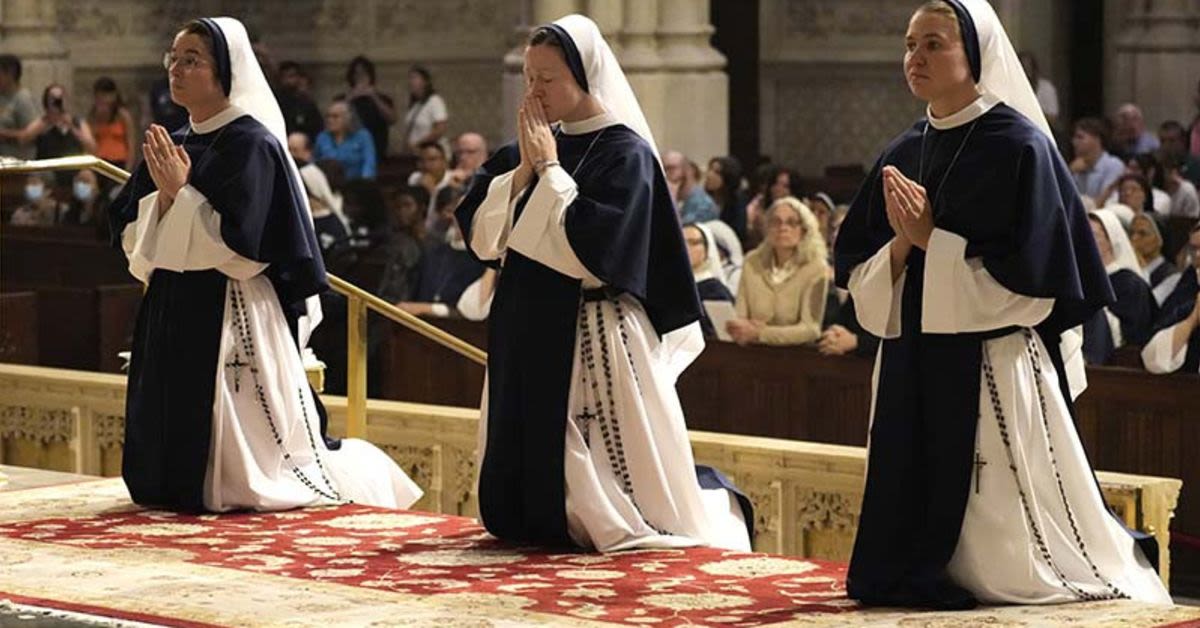
The Becket Fund for Religious Liberty announced last week that the Carmelite Sisters for the Aged and Infirm, the Dominican Sisters of Hawthorne, the Missionary Sisters of St. Benedict, the Little Sisters of the Poor, and the Diocese of Rockville Centre will not be required, for now, to assist patients in committing suicide. The reprieve comes despite a New York State directive tied to the new assisted-suicide regime that is scheduled to take effect on Wednesday.
Religious liberty advocates underscored the gravity of what is at stake as the state moves to redefine medical care to include the intentional ending of life. Its a tragedy that New Yorks new assisted suicide law is soon to take effect in the coming days. In the shadow of this horrific new law, it is at least good to see the court uphold the conscience protections of Catholic nuns and several Catholic health care ministries who do not want to participate in this, Arielle Del Turco, director of the Center for Religious Liberty at Family Research Council, told The Washington Stand.
Del Turco emphasized that the right to follow ones conscience in matters of life and death should not be a negotiable privilege, but a basic protection in a free society. No health care worker should feel they must violate their conscience or lose their job, she added. And no faith-based health care institutions should fear being sued for not providing services that they believe are evil. Its good to see the court, in this instance, ensure basic religious freedom and conscience protections.
The controversy stems from Hochuls December signing of the Medical Aid in Dying Act, a law that recasts suicide as a medical treatment for the terminally ill. The statute is designed to make medical aid in dying available to terminally ill New Yorkers with less than six months to live, beginning August 5, effectively embedding assisted suicide into the states health-care framework.
On July 31, Becket announced a partial but significant legal breakthrough for the Catholic ministries challenging the mandate. With agreement from the state of New York, a federal judge ordered the state not to enforce its assisted-suicide mandate against four orders of Catholic nuns and several Catholic healthcare ministries while their federal lawsuit proceeds. The temporary agreement protects the ministries from being forced to help terminally ill patients end their lives via suicide in direct violation of their faith.
Bishop John Barres of the Diocese of Rockville Centre welcomed the development as a necessary shield against state coercion. Applauding the compromise, he said, This agreement is an important first step towards protecting religious freedom. New York cannot force the Church to answer suffering with suicide or abandon the sick and dying when they need care most. Until our legal fight is resolved, this temporary agreement keeps our ministries free to serve every patient according to the Gospel. We continue to proclaim that every human life is sacred and worthy of love until its natural end.
The broader legal backdrop has long recognized that there is no constitutional right to physician-assisted suicide. In 1997, the United States Supreme Court in Washington v. Glucksberg held that such a right is not embedded in the Due Process Clause, leaving states free to prohibit the practice and affirm a culture of life.
Under the first Trump administration, federal policy moved decisively to protect medical professionals from being forced into morally objectionable procedures. In 2019, President Donald Trump issued a rule that expands the rights of medical professionals to refuse to provide treatments or services that they say infringe their religious beliefs, such as assisted suicide, according to the British Medical Journal, reinforcing the principle that conscience is not subordinate to ideological fashion.
Despite these protections, the cultural and legislative tide in many jurisdictions has shifted toward normalizing assisted suicide as a supposed expression of compassion and autonomy. It is now authorized in 13 states and Washington, D.C., for those deemed terminally ill, and the practice is increasingly marketed as a dignified choice rather than what it is: the deliberate ending of a human life.
Canada offers a stark warning of where this logic leads once the sanctity of life is abandoned in favor of utilitarian calculations. There, policymakers are moving toward allowing physician-assisted suicide for those whose primary affliction is mental illness, a chilling expansion that blurs the line between care and abandonment.
The Canadian government said in 2019 it would delay including them [people whose sole chronic condition is mental illness] for two years in order to draft special guidelines for assessing their eligibility, with the intention of eventually legalizing it for them, The New York Times reported last year. When suffering becomes a bureaucratic criterion for state-sanctioned death, the most vulnerable are inevitably placed at risk.
By contrast, the Catholic ministries resisting New Yorks mandate are grounded in a worldview that sees life as a gift entrusted by God, not a commodity to be discarded when inconvenient or painful. They hold to the biblical conviction that it is the Lord who orders our days and determines our earthly span, not politicians, judges, or medical boards.
Scripture speaks directly to this reality in the book of Job, a text that has comforted believers for millennia in times of affliction. Since his days are determined, and the number of his months is with you, and you have appointed his limits that he cannot pass, look away from him and leave him alone, that he may enjoy, like a hired hand, his day, reads Job 14:5-6.
Advocates of assisted suicide, however, frame the issue in the language of personal choice and emotional appeal, sidestepping the moral and spiritual consequences. Senior Campaign Director for Compassion & Choices NY/NJ Corinne Carey claimed, This law is about compassion, family, love, and respect for bodily autonomy.
Except its not. For those who arent in Christ, death only leads to eternal suffering, the direct opposite of the kind of compassionate relief Hochul and Carey believe physician-assisted suicide offers.
From a Christian and conservative perspective, authentic compassion means walking with the suffering, not eliminating the sufferer, and defending the inherent worth of every person until natural death. For the healthy, the sick, the rich, and the poor, true freedom can only be found in the gospel, as stated in Romans 8:18-20: For I consider that the sufferings of this present time are not worth comparing with the glory that is to be revealed to us. For the creation waits with eager longing for the revealing of the sons of God. For the creation was subjected to futility, not willingly, but because of him who subjected it, in hope that the creation itself will be set free from its bondage to corruption and obtain the freedom of the glory of the children of God.
As New York presses ahead with its assisted-suicide regime, the legal battle launched by these Catholic ministries will help determine whether the state can compel believers to betray their deepest convictions in the name of autonomy. The courts temporary order has bought time, but the larger question remains whether a nation founded on God-given rights will continue to protect those who insist that every human life, from first breath to last, is sacred and not subject to the whims of political ideology.
Login