
Texas Gov. Greg Abbott has ordered a sweeping review of state funding for two of the nations busiest airports after Dallas Fort Worth International Airport abruptly scrapped a plan to install Islamic washing stations.
According to the New York Post, Abbott directed state officials to examine all grants awarded to the entities that operate Dallas Fort Worth International Airport (DFW) and Houstons George Bush Intercontinental Airport (IAH), with an eye toward revoking existing awards and blocking future funding. He simultaneously referred both airports to the US Department of Transportation (USDOT) for investigation, signaling that what began as a local facilities proposal has now escalated into a broader test of how far public institutions may go in accommodating specific religious practices.
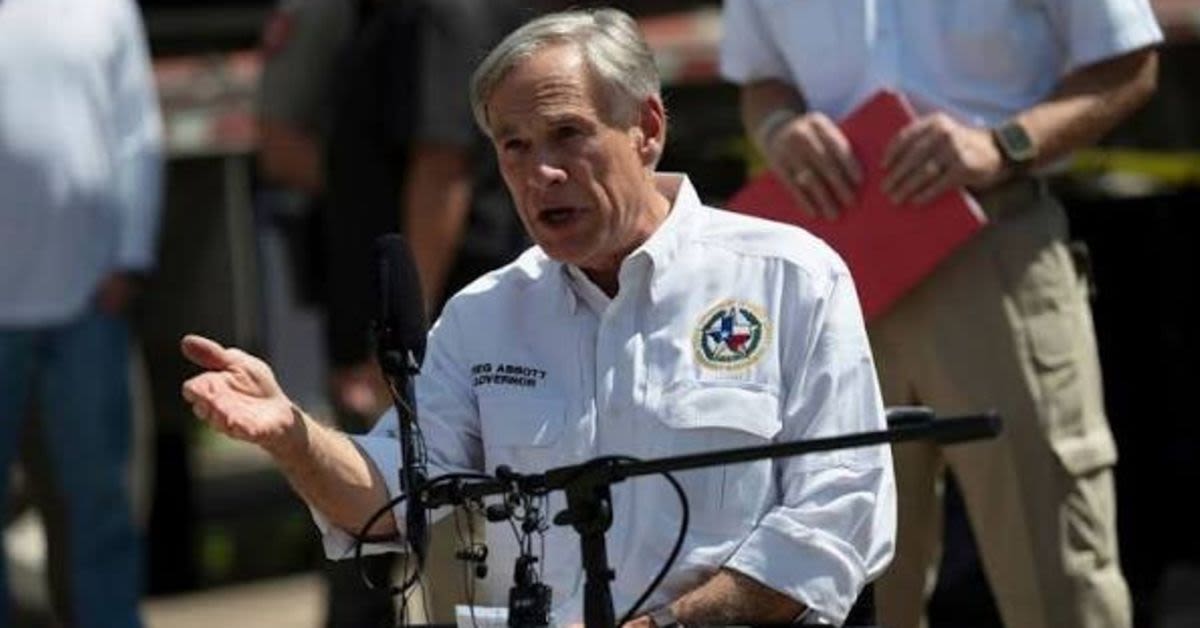
Government-owned airports cannot favor one religion over all others, Abbott wrote on X, as he publicly announced the move to scrutinize the airports finances and policies. DFW plans to install Islamic wudu washing facilities are illegal. Ive directed a review of all state grants to both airports for possible revocation, and referred DFW & IAH to USDOT for investigation.
The governor, who has frequently clashed with the Biden administration over border security and other federal overreach, framed the issue as a matter of equal treatment and constitutional limits on government endorsement of religion. Texas will not allow illegal religious discrimination at taxpayer-funded facilities, he added, underscoring a conservative concern that public entities are increasingly willing to bend rules for favored identity groups while sidelining broader principles of neutrality.
DFW officials acknowledged that they had been considering a proposal to add Islamic ablution, or wudu, washing stations in Terminal D, the airports international terminal, but said the plan was halted after public scrutiny intensified. DFW was in the process of evaluating an internal proposal to add a set of ablution washing stations on the pre-security side of Terminal D, the international terminal. Like all proposed projects, the airport ultimately considers the operational benefits, customer service impacts, operational risks and costs before approving them, the airport said in a statement to Fox News Digital.
Airport management insisted that the decision not to proceed was driven by a reassessment of the projects practical value rather than by political pressure alone. While that evaluation was planned, the airport accelerated its review due to elevated public interest this week and has determined not to proceed with the project as it would not deliver the originally anticipated operational benefits, DFW said, suggesting that the controversy forced a closer look at whether the facilities were truly necessary.
Regulatory filings show the project was registered with the Texas Department of Licensing and Regulation on July 31, indicating that planning had advanced beyond a mere conceptual stage. The initial filing described the work as privately funded, placed the cost at $300,000, and projected completion by the end of the year, details that raised questions about transparency and who would ultimately bear the financial burden.
DFW later walked back those figures, blaming its outside design firm for multiple administrative errors and emphasizing that the project had never received final approval. While the estimate noted was $300,000, that was a preliminary high estimate, and we expect the project, if it were approved to proceed, would cost closer to $120,000, a spokesperson for DFW previously told Fox News Digital, attempting to downplay the scale of the proposed expenditure.
The airport also said the design firm incorrectly labeled the project as privately financed when submitting the regulatory paperwork, a mischaracterization that fueled public suspicion about who was driving the initiative. That was an error, and it should have indicated that airport funds would be used to pay for the work like all our projects, DFW said, while stressing that it relies on parking, concessions, and other revenue streams rather than direct taxpayer appropriations for its operations.
Abbotts office, however, noted that George Bush Intercontinental Airport already maintains an ablution station and an adjoining prayer room, raising the stakes for Houstons airport authority as well. In a letter to Transportation Secretary Pete Buttigieg, Abbott urged the USDOT and the Federal Aviation Administration to conduct a comprehensive review of religious facilities and accommodations at both DFW and IAH.
These ablution facilities appear designed to single out one subset of the population for special treatment based on religion. That is illegal, Abbott said, arguing that government entities cannot selectively privilege one faith tradition under the guise of customer service. Both airports are government-owned facilities. The federal and state constitutions prohibit government from facilitating this sort of discrimination. Just as the government cannot favor the secular over the sacred, it also cannot favor one religious view over all others.
Abbotts office emphasized that recipients of state grants must certify compliance with anti-discrimination laws, a requirement that could put financial pressure on airports if federal or state investigators find that religious accommodations have crossed into preferential treatment. Similar low-level basins and interfaith spaces exist at other major US airports, including Chicago OHare, Fox News Digital previously reported, a fact likely to fuel a broader national debate over whether such facilities represent neutral accommodation or unconstitutional favoritism.
Houston Airports and the US Department of Transportation have been contacted for comment, but have not yet publicly responded to the governors demands for scrutiny. As Texas moves to tie public funding to strict constitutional neutrality, the clash over wudu stations at DFW and existing facilities at IAH may become a bellwether for how far government-owned transportation hubs can go in tailoring services to particular religious communities without undermining equal treatment for all travelers.
Login