
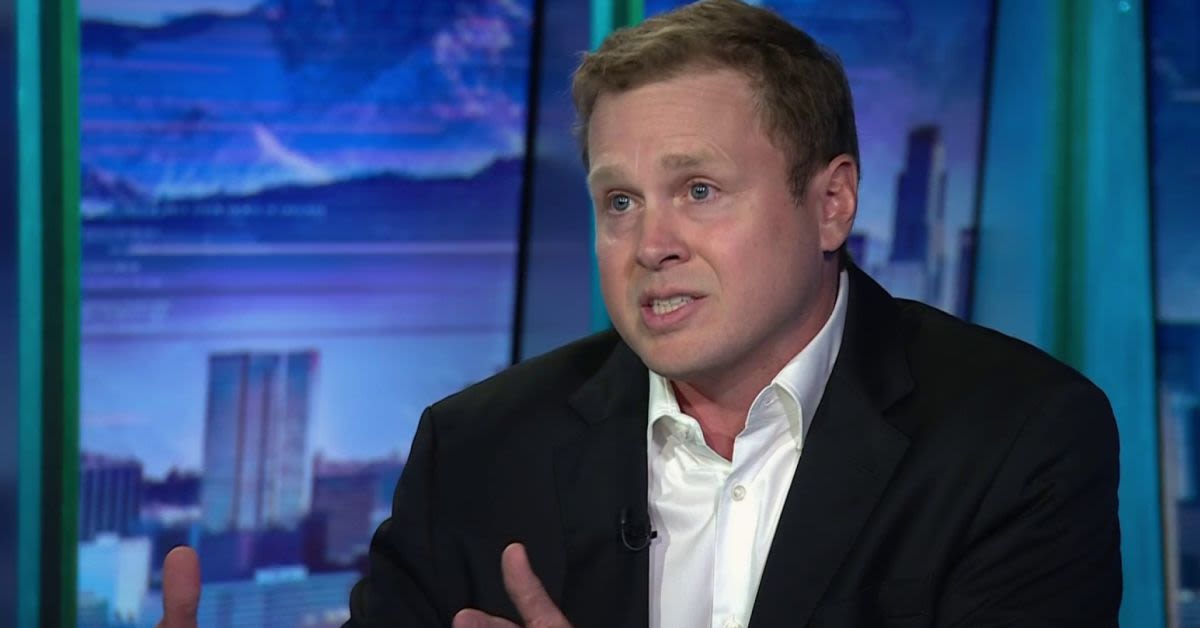
Former Los Angeles mayoral candidate Spencer Pratt, who lost his home in the 2025 Southern California wildfires, has stunned political observers by publicly applauding Democratic Sen.
Adam Schiff of California for working with Republicans on long-delayed disaster tax relief, according to RedState.
The RedState columnist opens by noting there are certain phrases one never expects to type, joking about lines like AOC was quiet on the subject or Former Vice President Kamala spoke eloquently as she laid out detailed plans for how she would ignite the nations economy. Against that backdrop, the writer frames Pratts praise as another such improbability: Former LA mayoral candidate and wildfire victim Spencer Pratt praises the Russia-obsessed junior senator from California, Adam Schiff (D).
Yet that is precisely what occurred after Congress passed the Doug LaMalfa Federal Disaster Tax Relief Certainty Act, a bipartisan measure now sitting on President Trumps desk, as reported by RedState. Pratt, whose home and his parents home were destroyed in the 2025 Los Angeles-area fires, posted on X: Major props to @SenAdamSchiff and @SenRickScott for working across the aisle to get this done. Disaster recovery is hard enough as it is. A little bit of financial relief goes a long way. Its easy to complain, but good leadership is very rare.
According to RedState, the legislation targets a longstanding barrier in the tax code that has made it harder for ordinary Americans to claim disaster relief. Under current rules, in order for an individual to claim a disaster relief tax break, the damage to their property resulting from a federally declared disaster must meet or exceed 10% of their adjusted gross income, the piece explains, adding that Someone who makes $100,000 per year, for instance, must incur $10,000 in damages before they can deduct the damages from their tax bill.
If signed into law, the bill would temporarily remove that 10 percent threshold for individuals hit by disasters between December 28, 2019, and July 4, 2025, a window that includes the California wildfires that wiped out Pratts home and those of many of Schiffs constituents, according to the RedState report. The measure, named for the late Republican Rep. Doug LaMalfa of Californias 1st District, honors a lawmaker who had long advocated for disaster relief but passed away in January during emergency surgery.
Republican Sen. Rick Scott of Florida, a co-sponsor, has also been vocal about the effort, citing his on-the-ground visit to Pratts burned-out property in August 2025. I am glad that we were able to pass the Doug LaMalfa Disaster Tax Relief Certainty Act. What happened in California was devastating. After meeting with @spencerpratt at his burned-down home and the tour he gave me of the destruction, we fought to get this done. I appreciate all Scott wrote in a social media post highlighted by RedState.
Scott, while willing to work with Schiff on the bill, did not spare Californias Democratic leadership from criticism for their handling of the fires and aftermath. California politicians completely failed their residents after the fires. I flew to LA and met with [Pratt] at his burned-down lot. It was devastating, Scott said of the legislation, which he and Schiff sponsored, adding, After meeting with him, we fought to get this done. I appreciate all of Spencers work in helping us deliver much-needed relief for wildfire victims.
From a conservative vantage point, the episode underscores two themes: the chronic failure of progressive state governance in California and the rare but welcome instance of Washington cutting through red tape to provide targeted, practical relief. The RedState writer, who makes no secret of longstanding opposition to Schiff, concedes, I am not and never will be a fan of Adam Schiff, but I can put that aside for a minute and admit: its nice when Congress can actually work together and get something productive achieved.
For wildfire victims facing ruinous losses and a tax code stacked against them, the bill represents a modest but meaningful correction that aligns with the conservative preference for letting families keep more of their own money rather than routing everything through bureaucracies. As the columnist puts it in a final, grudging nod to the unlikely coalition that pushed the measure forward: Kudos to Pratt, Scott and (chokes) Schiff.
Login