
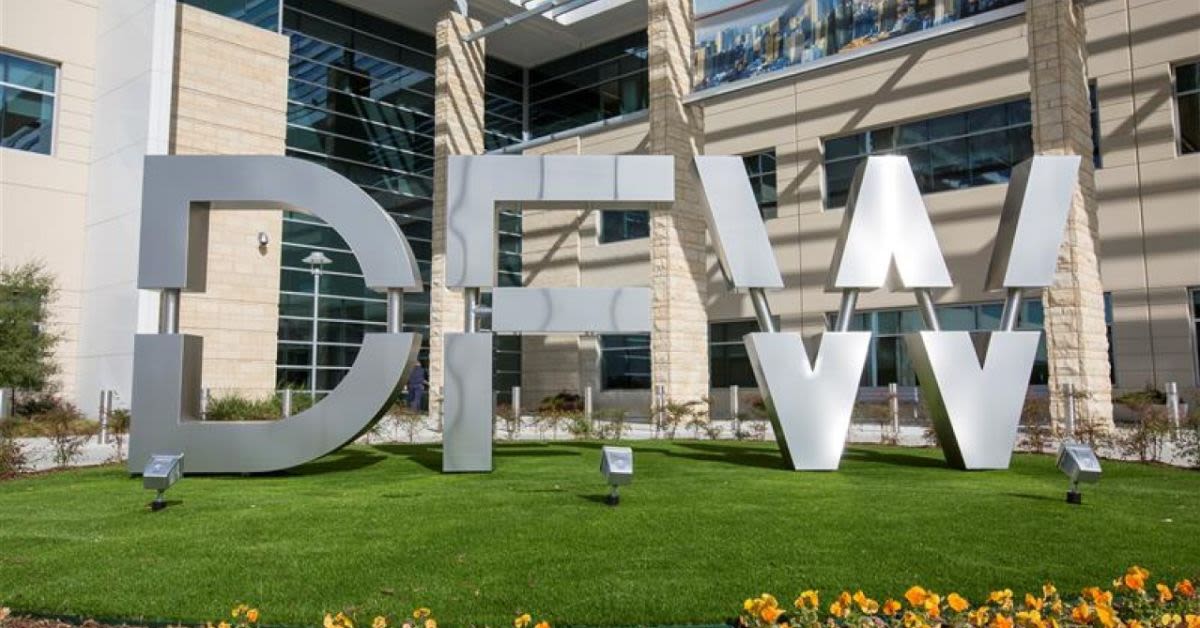
Islamic foot-washing stations are set to be installed at Dallas-Fort Worth International Airport, adding a new layer to the ongoing debate over religious accommodation in Americas public spaces.
According to RedState, the Texas Department of Licensing and Regulation has signed off on a project that will place dedicated Islamic Ablution stations, also known as Wudu stations, inside existing restrooms at DFWs Terminal D. The work, approved on July 31, will be privately funded at an estimated cost of roughly $300,000, signaling that while taxpayer dollars are not directly involved, public infrastructure is once again being adapted to meet specific religious practices.
"Project consists of adding Ablution stations to existing concourse level restrooms in Terminal D, one Men's ablution station in existing men's restroom and one Women's ablution station in the existing women's restroom," the project details read. The documents reiterate that it is privately funded and expected to cost around $300,000, underscoring that the financial burden will not fall on the general public, even as the facility itself remains a public, government-regulated space.
The special stations are designed for Wudu, an Islamic ritual that requires adherents to wash their hands, face, arms, and feet before prayer. The new fixtures will be installed in existing concourse-level restrooms in Terminal D, with one in the mens room and one in the womens, giving Muslim travelers a dedicated place to perform ritual washing before boarding their flights.
Airport officials and project backers have offered a practical justification for the change. One of the primary reasons cited is that travelers performing Wudu have been washing their feet in ordinary bathroom sinks, a practice many find disgusting and incredibly unhygienic, and which can leave counters and floors soaked.
Can you imagine walking in on that? the original report asked, capturing the discomfort many non-Muslim travelers feel when confronted with feet in hand-washing basins. Officials also note that travelers washing their feet in standard sinks can leave floors wet and slippery and damage restroom counters, creating safety hazards and additional maintenance costs for the airport.
Furthermore, there is the simple matter of wear-and-tear on facilities never designed for this purpose. As the report observed, there has been significant wear-and-tear on the counters after untold numbers of people have put their feet up on them, a problem the new stations are intended to mitigate.
Islamic foot-washing stations are coming to Dallas-Fort Worth International Airport. The new Wudu stations will be installed in men's and women's restrooms in Terminal D, giving Muslim travelers a dedicated place to perform ritual washing before prayer, one summary of the project stated, adding that officials point to another reason for the change: travelers washing their feet in standard sinks can leave floors wet and slippery and damage restroom counters.
The stations are privately funded and are expected to be complete by the end of the year. Similar facilities already exist at other major U.S. airports, including Chicago OHare, suggesting that what is happening at DFW is part of a broader national trend toward institutional accommodation of Islamic practices in public transportation hubs.
On its face, the DFW project could be framed as simple good management in an airport that sees millions of travelers pass through every year. Keeping peoples feet out of hand-washing areas is, undeniably, a benefit for everyone who expects basic hygiene and safety in public restrooms.
However, the timing of this development is raising concerns among many North Texas residents, especially when viewed alongside another recent decision involving Islamic institutions in the region. Earlier this week, RedState reported on the massive expansion of an Islamic Center approved by the McKinney City Council, in a city located on the northeastern outskirts of the DFW metro area.
Over 150 McKinney residents signed up to address the council before the vote, reflecting deep unease about the scale and implications of the project. Republican Rep. Keith Self (TX-03) captured that anxiety when he warned from the podium, "Child marriage, honor killings, don't tell me it can't happen here," a line that drew a standing ovation from the crowd.
An Iranian Christian who had once lived under Sharia law offered an even more sobering perspective. "I'm a Sharia law survivor from Iran, an I'm here to tell you, this is a dangerous ideology you're allowing in their country!" she cautioned, invoking firsthand experience with the consequences of political Islam fused with state power.
Despite the fierce opposition and emotional testimony, the McKinney City Council unanimously approved the expansion, which will allow the Islamic center to accommodate as many as 2,000 people. For many conservatives, that unanimous votetaken in the face of such vocal concernhighlights how quickly local institutions can move to reshape communities without fully addressing residents cultural and security worries.
None of this makes the DFW foot-washing stations inherently sinister, and on a narrow, practical level they may well improve cleanliness and safety in airport restrooms. Yet, taken together, these two stories serve as a stark reminder of how rapidly the cultural and religious landscape is shifting in major American metropolitan areas, raising difficult questions about assimilation, public policy, and how far government-linked entities should go in tailoring public spaces to specific religious practices.
Login