
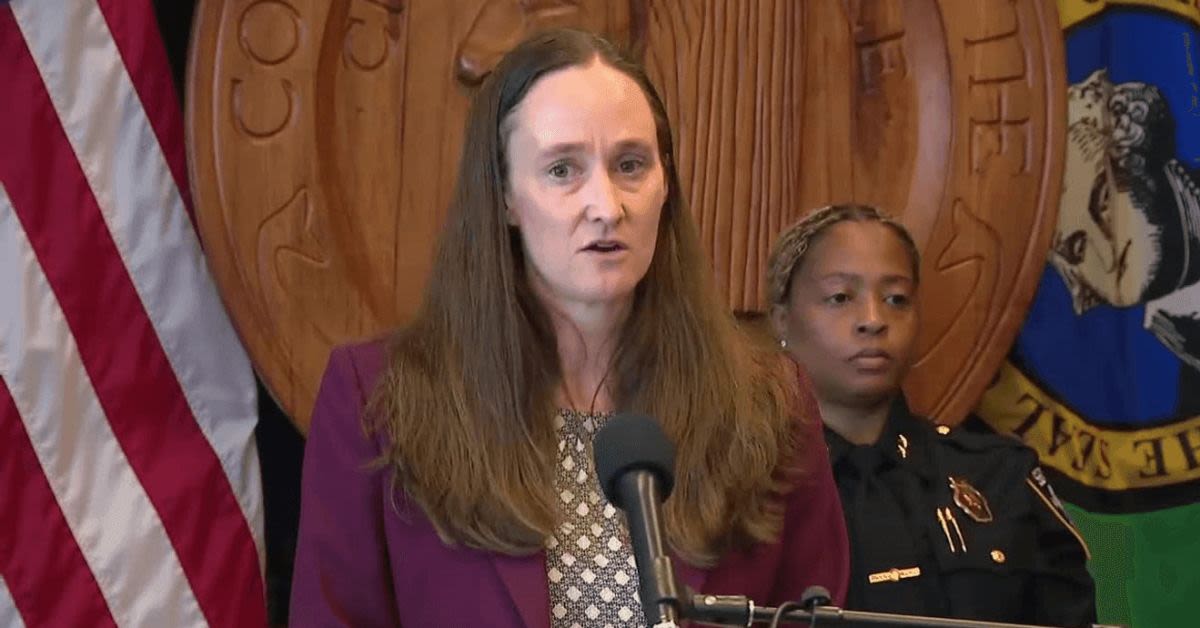
A new recall petition has been launched against Socialist Seattle Mayor Katie Wilson, accusing her of abandoning her core responsibility to protect public safety as crime and disorder continue to plague key neighborhoods and the citys troubled police department.
According to The Post Millennial, the recall application was submitted to King County Elections by Seattle residents Melinda E. Jacobson and Dale L. Osterud, with documentation first obtained by The Ari Hoffman Show. The complaint contends that Wilson has been derelict in her duties for public safety, invoking the Seattle City Charters mandate that the mayor enforce municipal laws, direct subordinate officers, and preserve peace and order.
At the heart of the filing is Wilsons handling of the Seattle Police Department, particularly her decision to oust Police Chief Shon Barnes in the midst of an active homicide investigation. The petitioners allege that Wilson made a hasty, rash decision to force Barnes resignation following the July shooting at the Bite of Seattle, arguing that the chief had brought much-needed stability to SPD, improved recruitment, and maintained consistent engagement with the community.
Barnes removal, they argue, plunged the department back into turmoil, eroded public confidence, and reflected fiscal irresponsibility at a time when Seattle is grappling with a budget crisis. For many residents already frustrated by rising crime and a shrinking police force, the move is seen as emblematic of an ideologically driven approach that prioritizes progressive politics over basic law-and-order governance.
The recall filing also zeroes in on the worsening situation along North Aurora Avenue, a corridor long associated with drugs, prostitution, and street crime. Residents reportedly contacted the mayors office repeatedly about gun battles, bullets striking homes and businesses, prostitution, and sex trafficking, only to see little visible response from City Hall.
According to the charge, Wilson did not publicly acknowledge the crisis until after a June neighborhood march forced the issue into the spotlight. The petitioners further condemn the citys decision to remove makeshift barriers that residents had installed to deter criminal activity, only to replace them later with a limited Seattle Department of Transportation barrier pilot that critics say is too little, too late.
Additional complaints focus on the ChinatownInternational District, where an open-air drug market near 12th Avenue and Jackson Street has become a symbol of the citys permissive approach to public drug use. The filing also cites ongoing crime and open narcotics consumption in Belltown and along Third Avenue, areas that have become synonymous with Seattles broader public-safety decline.
The recall proponents further accuse Wilsons administration of failing to use tools already paid for by taxpayers, particularly surveillance cameras installed in crime hot spots. The petition states that cameras deployed during the World Cup were shut off afterward, while systems near Garfield High School and in Capitol Hills nightlife district remain inactive despite being budgeted and partially funded with a federal grant.
Wilsons office has dismissed the recalls substance while highlighting the administrations progressive policy agenda. We're aware of the petition that has been filed. While it does not appear to have merit, our focus remains where it belongs: on making life safer and more affordable for the people of Seattle, a mayoral spokesperson said in a statement to The Ari Hoffman Show.
The spokesperson touted a series of initiatives that reflect the mayors left-wing priorities rather than a traditional tough-on-crime posture. Since taking office, we're delivering meaningful progress: expanding community crisis responder hours, launching universal school meals this September, banning rental junk fees, accelerating shelter expansion, expanding transit, investing in our libraries, and taking on unfair pricing at grocery stores. That work continues.
The courts will address any questions. We will address the needs of Seattle, the spokesperson added, signaling that Wilson intends to fight the recall on legal grounds while continuing her existing policy course. For critics, that stance underscores a deeper divide between residents demanding stronger enforcement and an administration more focused on social programs and regulatory interventions.
For now, the recall petition is undergoing a technical review by the King County Prosecuting Attorneys Office and has not yet been cleared for signature gathering. If it satisfies the procedural requirements, prosecutors will draft a ballot synopsis and forward the matter to King County Superior Court, where a judge must decide whether the allegations amount to malfeasance, misfeasance, or a violation of the mayors oath of office.
Only if the court finds sufficient legal grounds will recall supporters receive 180 days to collect the required number of signatures from eligible voters. King County Elections would then verify the signatures and, if the threshold is met, schedule a recall election that could give Seattle residents a direct say on Wilsons future in office.
County officials caution that most recall attempts fail to clear these legal hurdles, reflecting Washingtons relatively high bar for removing elected officials. According to King County Elections, the last Seattle recall to reach the ballot targeted thenCity Councilmember Kshama Sawant in 2021, when voters narrowly opted to keep the socialist councilmember in office.
The last Seattle mayor to face a recall election was Wes Uhlman in 1975, who also survived the challenge, underscoring how rare successful recalls are in the citys history. The most recent successful recall in King County came in 2018, when voters removed Black Diamond Councilmember Patricia Pepper from office, a reminder that while difficult, voter-led accountability efforts can prevail when public frustration reaches a breaking point.
Login