
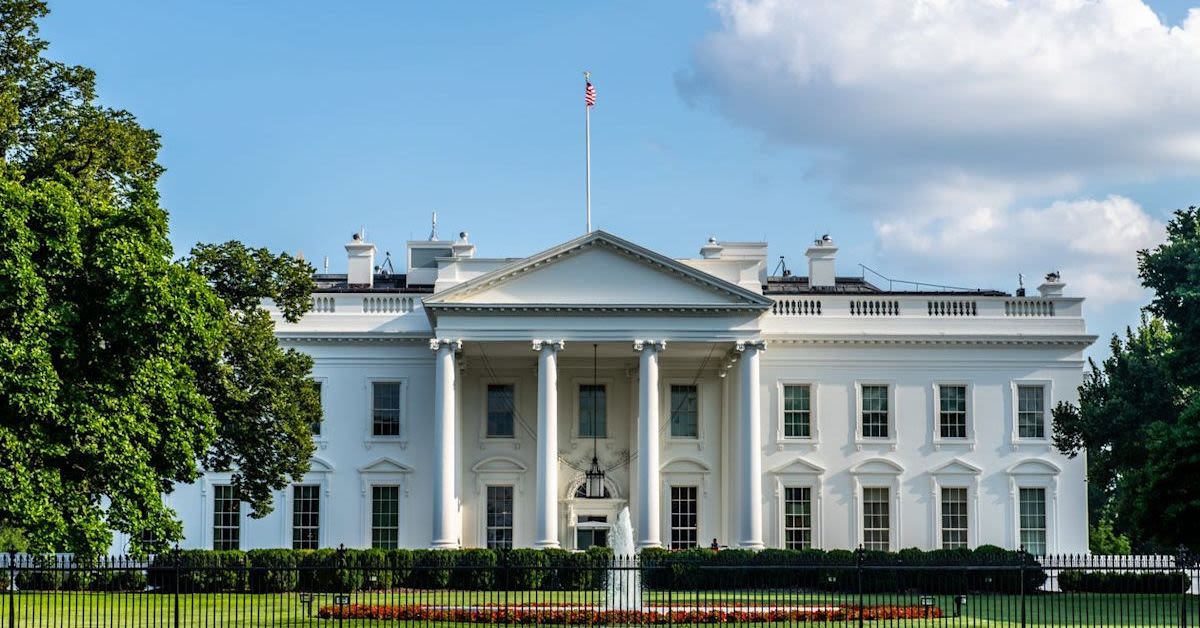
A senior Chinese Communist Party (CCP) intelligence figure has quietly acquired a historic office building with a direct line of sight into the White House complex, raising profound national security concerns in the heart of the nations capital.
According to the Daily Caller, property and corporate records show that the 100-year-old Securities Building on 15th Street NW, roughly 650 feet northeast of the White House grounds, was purchased on July 21, 2026, for $8.4 million by an entity called the Philip Qiu and Family Foundation. The buyer, Chinese national Philip Qiu also known by his Chinese name, Qiu Feili has held multiple posts within Chinese intelligence and state security organs, based on university records and translated Chinese government announcements reviewed by investigators.
Qiu did not respond to multiple requests for comment from reporters seeking clarification about his background and intentions. His silence stands in stark contrast to his public praise for the Chinese Communist Party, which he has lauded in official settings as a benevolent guiding force for the Chinese people.
The CCP is like a kind, but firm parent, Qiu declared in 2021, according to a translation of an announcement from a Chinese intelligence arm. It has guided our people out of hardship, led Chinas sons and daughters to build a new country and is steering us toward great national rejuvenation.
National security professionals warn that Qius control of a building so close to the White House is not a benign real estate investment but a potential operational platform for hostile intelligence activity. They argue that federal authorities must move swiftly to investigate and, if necessary, unwind the purchase before Beijings security services can exploit the location.
This property allows access for big splashy intel ops as well as for more classic ops like a listening post or Stingray-like systems to collect phone calls, text messages, and digital exhaust, former CIA operations officer Bryan Dean Wright told the outlet. Thats all great for collecting targeting information to later bump or recruit targets out in the world, who otherwise work inside a key U.S. government building.
Wright, who hosts The Wright Report podcast, stressed that the danger is not limited to traditional espionage tradecraft. But whats especially alarming are emerging ops that properties like this allow like hidden drone swarms or shipping container missiles, he said. This kind of property is where the next 9/11 will come from. Its coming.
Qius rsum, as presented in Chinese and American institutional materials, reads less like that of a neutral philanthropist and more like a career operative embedded in the CCPs sprawling security and influence network. A 2024 Instagram post from the University of New Haven (UNH) notes that he began his professional life with a career as a detective in the Criminal Investigation Team in Shanghai.
Shanghais criminal investigation team operates within the citys Public Security Bureau (PSB), a local arm of the Ministry of Public Security (MPS), often described as Chinas FBI, according to translated Chinese government reports. The MPS is a core pillar of the CCPs internal security state, responsible for policing, surveillance, and political control.
While the precise duration of Qius service in the Shanghai PSB is unclear, records indicate he had already undergone combat training by October 2011, when he enrolled in a masters program at Shanghai Jiaotong University (SJTU). Photographs from SJTU show students in camouflage fatigues carrying rifles during a team-building war game at the start of the program.
Classmate Qiu Feili, who has undergone special forces training, served as a commander in the Red-Blue Battle, and not only directed his troops to successfully capture enemy positions, but also killed one-third of the opposing forces with 42 shots, achieving the best individual sniper record, an SJTU announcement states, according to a translation. The description underscores that Qius background is not merely bureaucratic but includes paramilitary-style training and leadership in simulated combat.
In recent years, Qiu has remained closely intertwined with Chinas security apparatus through a series of honorary and leadership roles. He has served as honorary chairman of the Hong Kong Immigration Department Staff Association, using that platform to organize events in 2023 and 2024 that introduced Hong Kong students to the Shanghai SWAT team, according to translated Chinese government announcements and accompanying photographs.
Beyond policing and paramilitary ties, Qiu has also been deeply embedded in the CCPs United Front Work Department (UFWD), the regimes primary foreign influence and political warfare arm. The Shanghai native has held at least three positions in UFWD-linked entities, including roles in the All-China Federation Of Returned Overseas Chinese (ACFROC), based on translated Chinese government announcements.
The UFWDs operations are described by the House Select Committee on the CCP as a blend of engagement, influence activities, and intelligence operations used by Beijing to shape foreign policy and gain access to advanced foreign technology. In that context, Qius ascent within UFWD structures is particularly troubling for U.S. policymakers concerned about CCP penetration of American institutions.
Among his posts, Qiu has served on the executive committee of the Shanghai branch of ACFROC, a key UFWD platform for cultivating overseas Chinese elites. His most senior united front role is as chairman of ACFROCs Shanghai Overseas Chinese Foundation (SOCF), which promotes overseas cultural exchanges and is described as the only charity in the Shanghai UFWD system, according to translated Chinese government announcements.
The former Shanghai detective joined SOCF as a director in May 2017 and has led the foundation as chairman since May 2021. In that capacity, he has explicitly framed the organizations mission as an extension of CCP policy toward the global Chinese diaspora.
[SOCF] will continue to execute General Secretary Xi Jinpings directive to comprehensively implement the partys overseas Chinese affairs policy, unite the hearts of overseas Chinese and serve overall interests, Qiu said during a 2021 foundation meeting, according to a translated SOCF announcement. [With] overseas Chinese hearts turned toward the party and pursuing a common dream, [SOCF] will actively embody responsibility and commitment to the overseas Chinese community in public welfare, charity and people-to-people exchanges, he continued. [We] will strive to build SOCF into a charity with social influence to contribute the strength of the overseas Chinese community toward realizing the shared Chinese Dream.
At SOCF party-building events he organized, Qiu has referred to the CCP as our party, signaling personal identification with the ruling regime rather than any pretense of political neutrality. He has also represented SOCFs party branch at Shanghai ACFROC party meetings, according to translated announcements and photos, underscoring that the foundation is structurally integrated into the CCPs grassroots organizational system.
Under Chinese law and practice, a party branch is the smallest grass-roots CCP unit and is mandatory for institutions with three or more party members, according to a translated announcement from the Supreme Peoples Procuratorate, Chinas top legal supervision body. This means SOCF is not simply a charity but a party-governed entity operating under direct political oversight.
SOCF itself has employed several individuals with ties to Chinese intelligence-linked organizations. Its secretary general has served as a director of the Shanghai International Culture Association (SICA), which former Australian Strategic Policy Institute analyst Alex Joske has identified as a front for the Ministry of State Security (MSS), Chinas premier civilian intelligence agency.
The MSS is roughly the CIA, with a dash of the FBI, Wright explained. The MPS, however, is a mash-up of DHS and FBI. The key difference is the MPS is generally the overt, visible, heavy hand of the state and party.
Wright added that the UFWD provides cover for MSS operations sort of like what the State Department allegedly does for the CIA abroad when a spy pretends to be a diplomat. Bottom line: there is no real line between intel and non-intel agencies or officers in China. Anybody can be compelled for any role at any time you dont say no to President Xi, he said.
For American security hawks, Qius overlapping connections to MPS, UFWD, and MSS-linked fronts are not academic details but flashing red lights. Gordon Chang, a prominent author and China expert, argued that such affiliations should be disqualifying for ownership of sensitive U.S. real estate.
Qius connections to MPS, UFWD and MSS arms should set off alarm bells in our nations capital, Chang told the outlet. No Chinese citizen should be permitted to own, lease, or occupy any real estate that gives him or her the ability to surveil any sensitive federal installation, he said. No ifs, ands, or buts.
The Securities Building is not Qius only foothold near the seat of American executive power. The Philip Qiu and Family Foundation is headquartered in another historic property about half a mile north of the White House, which it shares with six other entities controlled by Qiu, including the Chinese American Museum in Washington, D.C. (CAMDC), according to business filings and translated Chinese government announcements.
CAMDC, a 501(c)(3) nonprofit, describes its mission as to advance the understanding, knowledge, and appreciation of the Chinese American experience, according to its website. On paper, it presents itself as a cultural institution devoted to heritage and education, a familiar model in Washingtons crowded nonprofit landscape.
Qiu co-founded CAMDC in 2017 with Chen Xiaoping, known in English as Neil Chen, who previously chaired SOCF. Like Qiu, Chen has held multiple Chinese government positions, including roles in Shanghai branches of ACFROC and the Chinese Peoples Political Consultative Conference (CPPCC), according to translated Chinese government and state media reports.
The U.S.-China Economic and Security Review Commission has described CPPCC delegates as individuals who serve as proxies for CCP interests. That characterization raises further questions about the independence of CAMDCs leadership from Beijings political agenda.
CAMDC and Chen did not respond to multiple requests for comment about the museums governance and funding. Their refusal to engage leaves unresolved the extent to which the institution may function as a soft-power or influence vehicle for the CCP under the guise of cultural outreach.
Despite CAMDCs public claim that the museum and its programs are not funded, controlled, or influenced by any foreign government, evidence suggests extensive collaboration with Chinese state entities. The Chinese government has co-sponsored at least eight of the museums programs, according to CAMDCs own website and translated Chinese government reports.
Four of those programs received support from religious organizations controlled by the UFWD, which oversees patriotic religious bodies aligned with CCP objectives. Since 2023, CAMDC has co-sponsored three Buddhist events in Washington, D.C. including one held at the Library of Congress with Shanghais Longhua Temple, according to translated Chinese government announcements.
Longhua Temple is overseen by the UFWDs Bureau Of Ethnic And Religious Affairs Committee, placing it firmly within the CCPs political-religious management system. All three Washington events were headlined by Longhuas abbot, Zhao Cheng, who holds dual roles as a standing committee member of the Shanghai CPPCC and deputy director of the UFWDs municipal Ethnic And Religious Affairs Committee, according to a translated government announcement.
For national security advocates, the pattern is unmistakable: CCP-linked individuals and entities are systematically acquiring physical and cultural footholds in proximity to Americas most sensitive institutions. Michael Lucci, founder and CEO of State Armor, a national security-focused policy and advocacy organization, argued that Qius real estate holdings near the White House exemplify a broader, dangerous trend.
The security risks posed by Qius ownership of properties near the White House are screamingly obvious, Lucci told the outlet. CCP intelligence agents have been caught buying property around military installations and critical infrastructure where they commit espionage in preparation of sabotage, he warned.
Now, even more of our most important national assets are being put at risk by the proximity of a man who has multiple CCP intelligence and security affiliations just 200 meters from executive facilities that should be completely off limits from adversary actors, Lucci said. We need government action to force the sale of the commercial property controlled by the CCP associate and a ban on this happening in the future.
For policymakers who take national sovereignty and constitutional government seriously, the implications are stark. A regime that openly declares the United States its chief strategic rival now has a loyal operative, steeped in its security and influence apparatus, sitting within visual range of the Oval Office and co-sponsoring events inside iconic American institutions.
Conservatives have long warned that the CCP exploits every available channel from real estate and nonprofits to religious exchanges and cultural programming to extend its reach into Western societies. Qius trajectory, from Shanghai detective and UFWD cadre to Washington property owner and museum co-founder, encapsulates that strategy and underscores the urgent need for robust legal safeguards.
Congress and the executive branch face a clear test of will: whether to treat CCP-linked acquisitions near critical federal facilities as routine business or as strategic encroachments by a hostile power. The experts quoted here leave little doubt about which view aligns with hard-earned lessons from past intelligence failures and the CCPs own stated ambitions.
Login