
Democrats are facing a deepening internal revolt as prominent party veterans publicly break ranks rather than fall in line behind an increasingly radicalized left wing.
According to RedState, two longtime insiders from the heart of the Democratic establishment have now gone beyond private grumbling and are openly declaring they will not support what they see as extremists hijacking their party. These are not obscure local activists or fringe commentators; they are figures who have spent decades working at the highest levels of Democratic politics and who are now signaling that they will not merely sit on the sidelines, but will actively work against their partys nominees when those nominees embody the hard-left turn that has come to define todays Democratic Socialists.
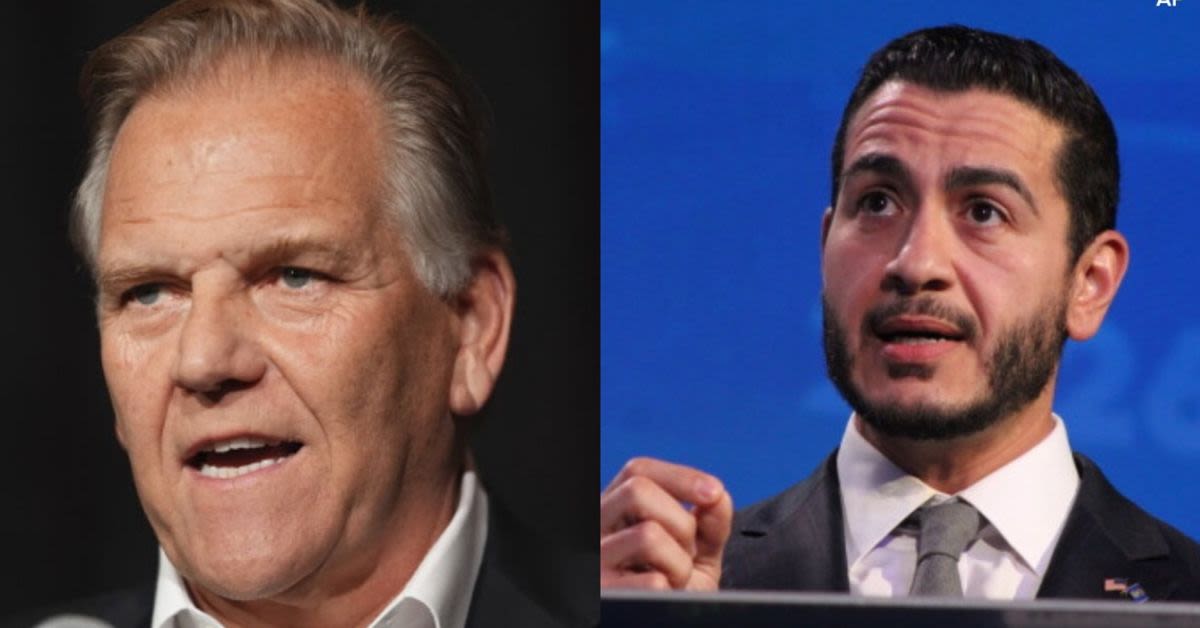
The immediate trigger for this latest rupture was the Democratic primary in Michigan, where Democratic Socialist Abdul El-Sayed secured the partys nomination for the United States Senate. In the wake of that victory, Julian Epstein, a veteran Capitol Hill figure who served as chief counsel for House Judiciary Committee Democrats and as staff director for the House Oversight Committee, announced in a New York Post op-ed that he would be backing the Republican candidate instead, a move that would have been unthinkable for many establishment Democrats just a few years ago.
Epstein, who describes himself as having devoted decades to electing Democrats to Congress, made his break explicit and unambiguous. After decades of giving my all for Democratic House and Senate candidates, this fall I will support and contribute to Mike Rogers, Michigans GOP Senate nominee, instead. He then added a pledge that underscores the seriousness of his defection: And Ill do everything I can to make sure other Democrats follow.
In his view, the partys leadership has largely capitulated to its most extreme elements, with only a few exceptions. With the exception of Pennsylvania Sen. John Fetterman, my partys leaders have sought to appease the dangerous faction rising in our midst. That dangerous faction, as he describes it, is rooted in the ideology of identity politics, grievance, and redistribution that has come to dominate the progressive left and is now increasingly shaping Democratic candidates and campaigns.
Epstein went on to describe the deeper cultural and philosophical rot he believes is being spread by the lefts obsession with diversity, equity, and inclusion and with cultivating a perpetual victim mentality. The politics of identity grievance gives no one greater agency or know-how to succeed; its black-pilling an entire generation with a victim mindset that will only hold them back. In his telling, this is not merely a misguided strategy but a destructive worldview that undermines personal responsibility and achievement.
He argued that the Democratic Socialists answer to the failures of their own policies is simply to demand more of the same. Perversely, the Democratic Socialists argue we need more of whats failing. By contrast, he insisted that the countrys future depends on a very different ethic: But Americas future depends on teaching our people how to build, not how to take from others or peddle whining complaints. That is a fundamentally conservative critique, emphasizing productivity, merit, and the dignity of work over entitlement and grievance.
Epstein did not confine his criticism to the printed page; he also elaborated on his decision in an interview with Fox News Digital. I think the lunatics are in charge of the asylum, he told the outlet, in a blunt assessment of the partys current direction. He then drew a clear moral line about the kinds of alliances and positions he believes should be intolerable in any serious political movement: I think that there is no room in the tent for people that want to destroy our Constitution. There's no room in the tent for people that want to align themselves with radical Islam. There's no room in a tent for people that want to align themselves with antisemitism.
He continued by condemning the economic radicalism that has become fashionable on the left, which he sees as fundamentally hostile to the free-market system that has lifted millions out of poverty. And there's no room, in my view, for people who don't have any interest in building for the next generation but only want to redistribute what others have created and want to basically tear down the free market that has been the most effective anti-poverty liberation machine that human beings have ever invented. That statement could have been lifted from a conservative policy paper, underscoring how far the Democratic Party has drifted from its former centrists.
In his op-ed, Epstein also identified the few Democrats he believes still recognize the danger and are willing to say so publicly. He cited Fetterman, New Jersey Representative Josh Gottheimer, and longtime Democratic strategist James Carville as among the last remaining voices of sanity within the party. Fetterman, and a few other Dems like New Jersey Rep. Josh Gottheimer and consultant James Carville, seem to get that and theyre warning of a coming intraparty civil war.
He warned that the Michigan race is likely to be a harbinger of broader unrest within Democratic ranks. Some in Michigan are hinting at mass party defections in November. In his view, El-Sayeds rise is not an isolated incident but a sign of a continuing hemorrhage: And El-Sayeds new prominence means the bleeding wont stop.
Epstein predicted that Democrats across the country will be forced into an untenable position because of the partys embrace of figures like El-Sayed. Democrats in many districts will be forced on the campaign trail to distance themselves from El-Sayed or denounce him and every one of their comments will write another permission slip for party defections come fall. For him, the problem is not merely tactical but existential, and he argued that half-measures will not suffice: To arrest this freefall, Democratic leaders must do more than just tell the extremists to find another party; they must also admit that post-modern liberalism is failing.
He reserved some of his sharpest criticism for Senate Minority Leader Chuck Schumer, a man long associated with the partys big tent rhetoric. In what conservatives will see as a long-overdue reckoning, Epstein described Schumer as lacking both courage and conviction. Weak, timid figures like Senate Minority Leader Chuck Schumer are spouting empty clichs We are a big-tent party while abdicating their moral and political responsibilities.
Epstein argued that Democrats are not merely flirting with mild European-style social democracy but are instead embracing something far more radical and dangerous. Democrats arent coddling Scandinavian-style socialists; theyre getting into bed with a nihilistic, deconstructionist brand of third-worldism. He then spelled out what that ideology entails in stark terms: Its an ideology that seeks the elimination of prisons, policing, borders, the Senate, the presidency, the Supreme Court and democratic free markets.
He further linked this ideological project to violent, anti-Western movements abroad. A worldview that aligns with genocidal jihadist movements like Hamas. He noted that in an earlier era, the American left would have recognized such elements as hostile infiltrators rather than allies: A generation ago, the left wouldve recognized this cadre as Trojan horse doing the bidding of our adversaries. His verdict on the present moment was bleak: But not today.
Epsteins assessment of the political stakes heading into November was unsparing. He argued that Democrats cannot simply pretend these issues will fade into the background once the general election begins. As he put it bluntly, Democrats cant run from this lunacy in November.
Yet Epstein was not the only high-profile Democrat to break ranks this week. On Friday, Michael LaRosa, the former spokesman for First Lady Jill Biden and a special assistant to President Joe Biden, publicly endorsed Epsteins message by resharing the op-ed on X with a single word: SAME. That one-word affirmation from a figure so closely tied to the Biden inner circle was enough to trigger a wave of backlash from fellow Democrats, prompting LaRosa to expand on his views in a lengthy and colorful X thread the following day.
LaRosa opened his commentary with a wry description of the uproar his brief post had caused. Last night, I literally wrote ONE WORD on XSAMEthen closed my laptop, put my phone on my mid-century-modern nightstand, poured half a glass of Whitehaven New Zealand Sauvignon Blanc, watched the first episode of Ted Lasso Season Four, fell asleepand apparently woke up in Crazy Town. From there, he made clear that his agreement with Epstein was not casual or half-hearted, but rooted in a firm refusal to support candidates like El-Sayed.
He stated unequivocally that he could not back the Democratic Socialist nominee in Michigan. That said, since everyone suddenly seems so interested in my personal opinion: no, I could never support El-Sayed. Instead, he aligned himself with the Republican nominee, emphasizing Rogers record of working across the aisle: Of course, I support a reasonable Republican like Mike Rogers, someone who worked with President Obama and Democrats as Chair of the Intelligence Committee. Of course I would rather see someone like Rogers over a D who is too much of a pu**y to stand up to an anti-Semitic goon like Hassan [sic] Piker.
LaRosa framed his opposition in moral and national-security terms, invoking the memory of the September 11 attacks. I would never encourage any Democrat to support a candidate too weak to stand up to extremists who believe that those men and women jumping from a burning building 110 stories up because the alternative was worse deserved what they got on September 11th. For him, the inability to confront such extremism is disqualifying for high office.
He questioned how voters could trust a candidate who will not even challenge a fringe media personality spouting hateful rhetoric. If you cant stand up to amateur DJs or whatever he is spewing hateful and inflammatory rhetoric from behind a microphone, why should voters believe youll stand up for an entire state in the United States Senate? That line of argument echoes a broader conservative critique: that too many Democrats are willing to appease or excuse radical voices rather than confront them.
LaRosa also took pains to clarify his own position and motivations, perhaps anticipating attempts to portray him as a power broker or factional leader. He reminded his audience that he holds no public office and commands no formal political machinery. Im not a public official. I have no constituency, no endorsement apparatus, and no particular political juice to offer. I dont vote in Michigan. I have no connection to Michigan or this Senate race beyond being a lifelong Democrat and political observer with opinions.
He insisted that his concerns are not about partisan gamesmanship but about character and the moral health of the party. I only care about keeping bad people out of the Democratic Party and good people in public service for the right reasons. Thats it. For conservatives, that admission underscores a key point: when even loyal Democrats are more concerned with purging bad people from their own ranks than with defeating Republicans, something fundamental has gone wrong inside the party.
Taken together, the interventions by Epstein and LaRosa point to a deeper crisis for Democrats than a single Senate race or one bad news cycle. These are not casual voters drifting away; they are true believers, long-time operatives and communicators who have been ride or die for the party and are now openly signaling that they can no longer support its most visible standard-bearers in key races. When such figures are willing to cross party lines to back a Republican like Mike Rogers, it suggests that the Democratic brand has become toxic even to some of its own architects.
For conservatives, the implications are significant. The trend suggests that the Democratic Partys problem is not confined to one election cycle or one controversial nominee; it is a long-term structural and ideological crisis driven by its embrace of post-modern liberalism, identity grievance, and hostility to free markets and traditional institutions. As Epstein warned, Democrats cant run from this lunacy in November, and the growing chorus of internal dissent indicates that, for many lifelong Democrats, the partys leftward lurch has already gone too far to ignore or excuse.
Login