
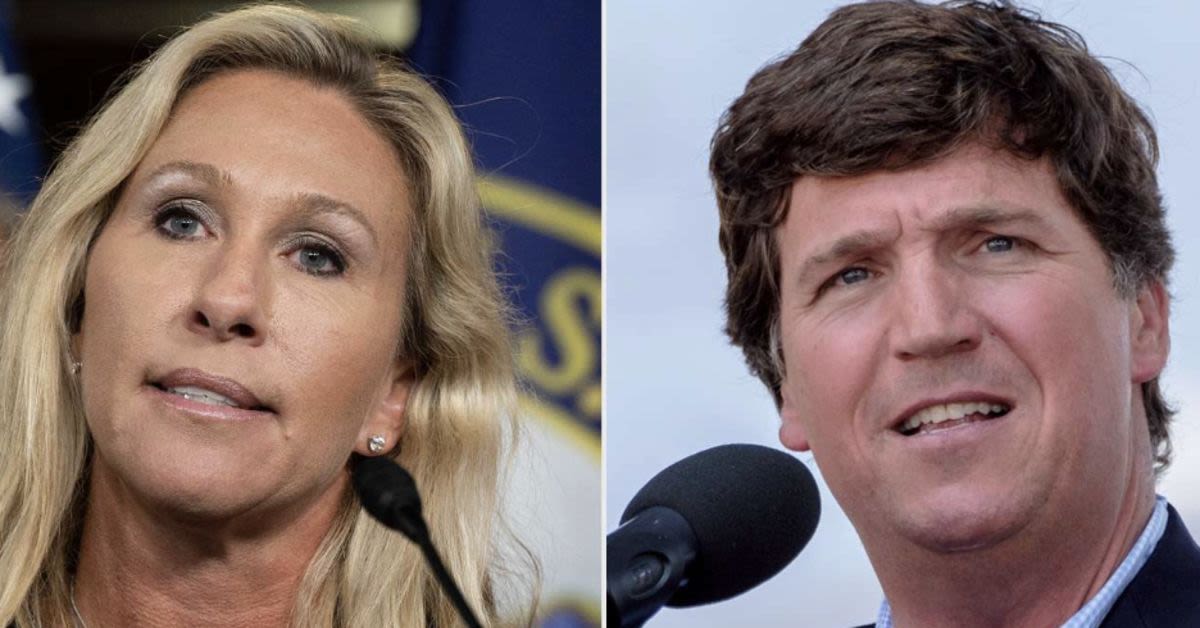
A small but vocal cadre of conservative dissidents, angered by what they see as the Trump administrations betrayal on Iran, is now openly flirting with the creation of a right?wing third party built on non?intervention abroad and national renewal at home.
According to Just The News, the emerging effort is being framed as a vehicle for voters who backed Donald Trump on the promise of ending forever wars but now feel abandoned by a White House they believe has drifted into the very foreign entanglements it once condemned. The central question hanging over the project is whether such a movement could become a durable electoral force or simply fracture the right and hand power to Democrats, much as past third?party bids have done in modern American politics.
We said no more foreign wars and we meant it and supported Donald Trump because he made that promise. But hes betrayed us all, declared former Rep. Marjorie Taylor Greene, R?Ga., in a recent social media post that crystallized the sense of disillusionment among many grassroots conservatives. Our commitment is America First for all Americans, right, left, and center. The movement has begun.
Greenes message was accompanied by a photograph of herself alongside Rep. Thomas Massie, R?Ky., conservative commentator Tucker Carlson, and former National Counterterrorism Center Director Joe Kent, a tableau that effectively served as a soft launch for the prospective America First slate. All four have opposed the Iran war, with Kent resigning his national security post earlier this year over the conflict and Massie long positioning himself as a skeptic of foreign influence and a persistent no vote on GOP spending packages, a stance that once prompted then?President Donald Trump to back a primary challenger against him.
The political calculus behind such a breakaway effort is fraught, particularly given Trumps eroding approval numbers amid the Iran campaign and the delicate coalition that powered his 2024 bid. While many of the most disenchanted voters are independents who once rallied to Trumps anti?war rhetoric, it is far from clear they would migrate to a party fronted by figures long branded as the hard edge of the Republican right.
Some pollsters suggest that a CarlsonGreeneKent alignment could siphon support from both major parties, but with a sharper bite into the GOPs flank. The Kent, Tucker, etc. ticket takes equal percentages of partisans but hurts the GOP more because they take more GOP-leaning indies than DEM-leaning indies, Big Data Poll Director Rich Baris observed, underscoring the risk that an America First ticket could function as a spoiler that delivers narrow victories to Democrats in key states.
Fueling the push is mounting anger over the Iran war itself, which many conservatives view as a direct violation of Trumps pledge to avoid new foreign conflicts and focus on rebuilding the American economy, border security, and cultural cohesion. That frustration is not confined to the right, but it is particularly acute among voters who believed the America First brand meant a decisive break from the bipartisan foreign?policy establishment.
Polling data suggest that sentiment is widespread. As of July, 62.7% of voters said they believed the Trump administration was too focused on foreign issues and not enough on domestic issues, according to Big Data Poll, while just 23% thought the administration had struck the right balance and 14.3% believed Washington was too inward?looking and insufficiently engaged abroad.
Veteran pollster Mark Mitchell, formerly of Rasmussen Reports, argued that the CarlsonGreene axis reflects a shrewd reading of generational change on the right. Boomers have their PRINCIPLES (capitalism, democracy, conservatism). But the 4th turning tells us that youth will take over and rebuild society on a new set of VALUES (fairness, peace, prosperity, etc.), he said, adding, Tucker fired the first shot of the 4th turning because he understands this.
The notion of a Tucker Carlsonled presidential bid centered on non?intervention is not a new parlor game in Washington, but the Iran conflict has given it fresh urgency and plausibility among disaffected conservatives. From the outset of the war, pundits have speculated that a Carlson ticket could scramble the traditional left?right map by pairing cultural conservatism with a sharp break from neoconservative foreign policy.
A Tucker Carlson / Joe Kent ticket would steamroll anything Democrats or Republicans could bring, commentator Mike Cernovich predicted in March, capturing the enthusiasm of those who see in Carlson a rare figure capable of galvanizing populist conservatives, libertarians, and war?weary independents. That confidence, however, is not shared by many in the Republican establishment, who view such talk as fanciful at best and politically destructive at worst.
Some mainstream GOP lawmakers have openly mocked the idea that Carlson could mount a serious national campaign. Speaking to the School of War podcast on Friday, Sen. Ted Cruz, R?Texas, a longtime Carlson critic, sneered that the Fox alumnus should instead join forces with a progressive Democrat, quipping, Thats a great idea! And Tucker can form a unity ticket with Abdul El-Sayed. They both are apologists for the Muslim Brotherhood. They both love the Ayatollah. They both defend Iran, in remarks that underscored the deep ideological rift between populist non?interventionists and hawkish conservatives.
For now, any America First party would lean heavily on the celebrity and notoriety of its founding figures, particularly Carlson and Greene, whose names are well known but polarizing. That dynamic presents a structural challenge: both leaders are lightning rods in a media environment dominated by progressive narratives that routinely caricature them as extremists, making it harder to broaden their appeal beyond the conservative base.
Current favorability numbers are sobering. Tucker Carlson registers just 21.1% popularity in a running YouGov tracker, with 46.3% disapproval, while Marjorie Taylor Greene fares even worse at 17% popularity and 41% disapproval; Massie posts a modest 19% favorability against 15% disapproval but suffers from low name recognition, and YouGovs tracker shows no data at all for Joe Kent, suggesting a steep climb to national viability.
History is also stacked against any third?party venture in the United States, where the two?party system is deeply entrenched in ballot?access laws, media coverage, and donor networks. No candidate outside the Republican and Democratic parties has captured the presidency since Zachary Taylor won in 1848 as a Whig, and subsequent efforts have typically served to fracture existing coalitions rather than replace them.
The most notable modern example is Ross Perots 1992 bid, which drew 18.9% of the popular vote but failed to win a single state, leaving historians to debate whether his insurgent campaign siphoned enough support from President George H.W. Bush to hand the White House to Bill Clinton. Similar questions linger over Ralph Nader of the Green Party and Pat Buchanan of the Reform Party, both of whom ran in 2000 and are still scrutinized for their potential spoiler roles in one of the closest elections in American history.
Other high?profile third?party efforts, such as George Wallaces 1968 run under the American Independent Party banner and Eugene V. Debss multiple Socialist Party campaigns in the early 20th century, have left a cultural imprint without definitively altering the two?party structure. Debss 1920 campaign, waged from a prison cell in Atlanta for speaking against World War I, garnered nearly one million votes, yet academic studies have not conclusively demonstrated that these candidacies changed electoral outcomes rather than merely registering protest.
Third?party and independent candidates have found somewhat more success at the state level, where lower turnout and localized issues can loosen partisan loyalties. Former Alaska Gov. Bill Walker, for instance, managed to win the governorship as an independent in 2014, though he did so with the explicit backing of the Democratic Party, underscoring how even independent victories often depend on one major party stepping aside.
For conservatives weighing an America First alternative, the stakes are high: a new party could offer a genuine vehicle for non?interventionist, pro?sovereignty voters who feel betrayed by both neoconservatives and progressive globalists, yet it could also fracture the right and entrench left?wing governance on issues from the border to the courts. Whether figures like Carlson, Greene, Massie, and Kent can convert discontent over the Iran war into a durable, electorally viable movementor whether they will reprise the role of past third?party spoilersremains the unresolved question hanging over the next phase of American politics.
Login