
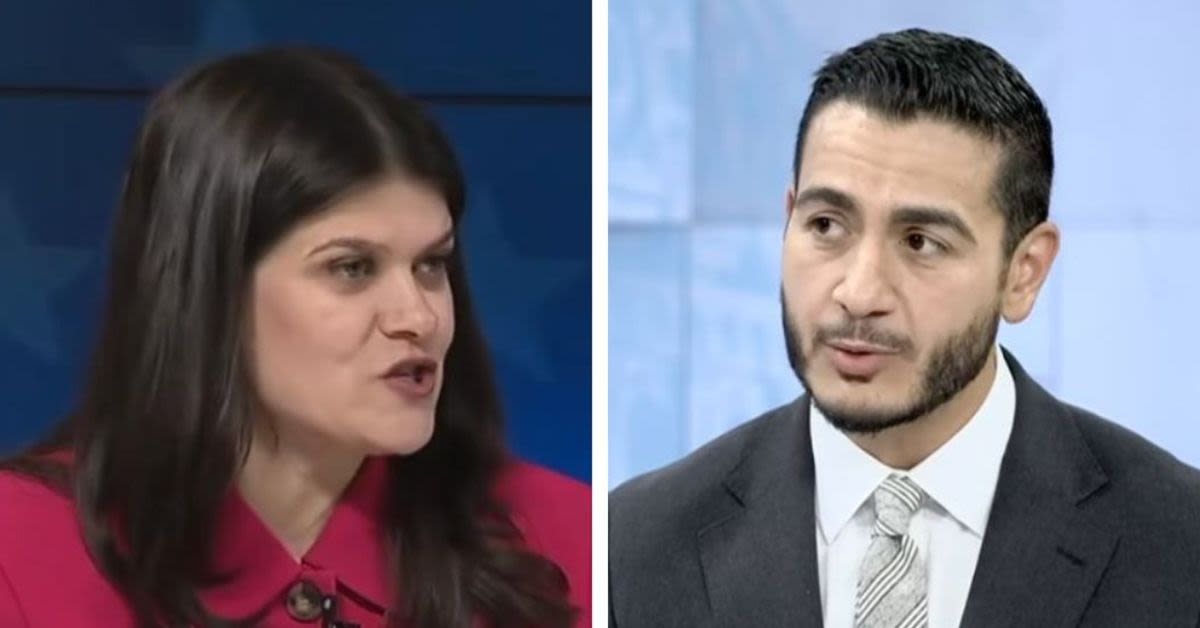
Dr. Abdul El-Sayed narrowly edged out Rep. Haley Stevens in Michigans Democratic Senate primary, handing the partys progressive wing a marquee victory in a critical battleground state.
The Associated Press and other outlets called the race for El-Sayed shortly before 10 a.m. ET, after a long night of counting that underscored just how divided Democrats have become over their partys direction, according to The New York Post. El-Sayed, a left-wing firebrand who has embraced Medicare for all, the abolition of Immigration and Customs Enforcement (ICE), steep tax hikes and an end to US aid to Israel, emerged as the standard-bearer of the partys activist base in a contest that establishment Democrats had once assumed was safely in Stevens hands.
With 99% of the expected vote reported, El-Sayed led by fewer than 15,000 ballots out of more than 1.5 million cast, a razor-thin margin that belied late-campaign polling showing him up by double digits. The unexpectedly close finish suggests that while progressives can dominate the conversation online and in activist circles, a large bloc of Democratic voters remains wary of the partys sharp move left on economics, immigration and foreign policy.
The Michigan contest also shattered spending records, with more than $80 million poured into the race, making it the most expensive Senate Democratic primary in history, according to AdImpact. Outside groups and ideological super PACs treated the race as a proxy war over whether the Democratic Party will be defined by its socialist-leaning insurgents or its more traditional, business-friendly wing.
El-Sayed, who was trounced by Gov. Gretchen Whitmer in the 2018 Democratic gubernatorial primary, now turns his attention to former Rep. Mike Rogers, a Republican with deep national-security credentials and a more traditional center-right profile. For Democrats, the stakes could hardly be higher, as they view Michigan as a must-win if they hope to seize control of the Senate next year and cement a progressive legislative agenda in Washington.
Unlike many of the Democratic Socialists of America (DSA)-aligned candidates who have thrived in deep-blue enclaves, El-Sayeds victory comes in a purple state that backed Donald Trump in both the 2016 and 2024 presidential elections. That reality gives Republicans hope that Michigan voters, who have repeatedly shown an appetite for populist conservatism, may balk at sending a self-described radical reformer to the upper chamber.
If he defeats Rogers in November, El-Sayed would become the first Muslim elected to the US Senate, a milestone his supporters celebrated openly at his watch party at Detroits Majestic Theatre, where several attendees were seen performing Islamic prayers. That historic prospect, however, is likely to become a central flashpoint in a general-election campaign already primed to revolve around questions of cultural identity, religious pluralism and the limits of political correctness.
Rogers, anticipating a bruised and ideologically polarized opponent, argued that the Democrats internal warfare would leave their nominee weakened heading into the fall. Whoever comes out of it is going to have a coalition problem. Remember, voting starts in about five or six weeks. Were in an election cycle now, he told The Post hours before El-Sayeds primary win.
Weve been building toward that day. Theyve been fighting each other and moving further and further to the left. His comments reflect a broader Republican strategy: frame El-Sayed not as a fresh face, but as the embodiment of a Democratic Party captured by its most radical elements and out of step with working- and middle-class voters.
Tuesdays primaries delivered additional wins for the progressive camp in Michigan, with Squad Rep. Rashida Tlaib, state Rep. Donavan McKinney and Bernie Sanders-backed William Lawrence all dispatching more moderate rivals. Taken together, those victories underscore how the activist left has consolidated power in key urban and heavily Democratic districts, even as its appeal in swing territory remains untested.
Yet El-Sayed was clearly the centerpiece of the far-left slate, drawing national figures and online personalities into the state for the final sprint. Among them was controversial streamer Hasan Piker, whose presence highlighted the growing influence of social-media-driven celebrity on Democratic politics, and the degree to which the partys progressive wing is fueled by youth culture and digital fundraising rather than traditional union and local-party machines.
The primary itself turned increasingly bitter as Election Day approached, with El-Sayed launching sharp personal attacks on Stevens competence and integrity. He suggested that Stevens was unable to string together two coherent sentences and implied she was effectively bought by the American Israel Public Affairs Committee (AIPAC), whose super PAC spent nearly $30 million backing her.
Stevens, 43, became a viral curiosity after videos circulated online of her emphatic Midwestern accent and repeated use of the phrase, Stick it to em. Seeking to localize a race that had drawn national money and attention, the congresswoman insisted: Its a Michigan moment for me.
The Democratic establishment lined up firmly behind Stevens, with Senate Minority Leader Chuck Schumer (D-NY), term-limited Gov. Whitmer and retiring Sen. Gary Peters (D-Mich.) all lending their names and time to her campaign. Peters, who campaigned with Stevens on Sunday, underscored how central party leaders view the state to their broader ambitions in Washington.
On the opposing side, El-Sayed enjoyed the backing of the progressive movements most recognizable figures, including Sens. Bernie Sanders (I-Vt.) and Elizabeth Warren (D-Mass.), as well as Rep. Alexandria Ocasio-Cortez (D-NY). Their support helped nationalize the race and further cemented the ideological fault lines between the partys socialist-leaning insurgents and its centrist incumbents.
Early general-election polling suggests a toss-up between Rogers and El-Sayed, with Democrats betting that lingering anger at the Trump administration will be enough to drag their nominee across the finish line in November. Republicans, by contrast, are likely to argue that Michigan voters who twice backed Trump will recoil from a candidate who openly campaigns on dismantling ICE, raising taxes and cutting off Israel, a key US ally.
El-Sayed, for his part, has framed doubts about his viability as a reflection of prejudice rather than policy disagreement. When they say Im not electable, theyre not talking about me, he told supporters during a rally in Grand Rapids on Saturday.
Theyre saying that you couldnt possibly be open-minded enough to elect somebody with a name like mine who prays like I do in a state like ours. That message, casting skepticism of his candidacy as a test of tolerance, may energize progressives but could also alienate swing voters who see the race as a referendum on ideology, not identity.
Democrats must flip a net of four seats to reclaim the Senate for the first time in four years, a math problem that makes Michigan indispensable to their plans. We have a real shot to take the majority of the United States Senate, Peters told reporters Sunday while stumping for Stevens. Thats become increasingly likely as every month goes by. But it doesnt happen if we lose Michigan.
This state is absolutely critical. Whether Michigan voters ultimately embrace El-Sayeds brand of hard-left politics or turn instead to Rogers more traditional conservative message will determine not only the balance of power in Washington, but also whether the Democratic Partys progressive surge can truly compete on swing-state terrain.
Login