
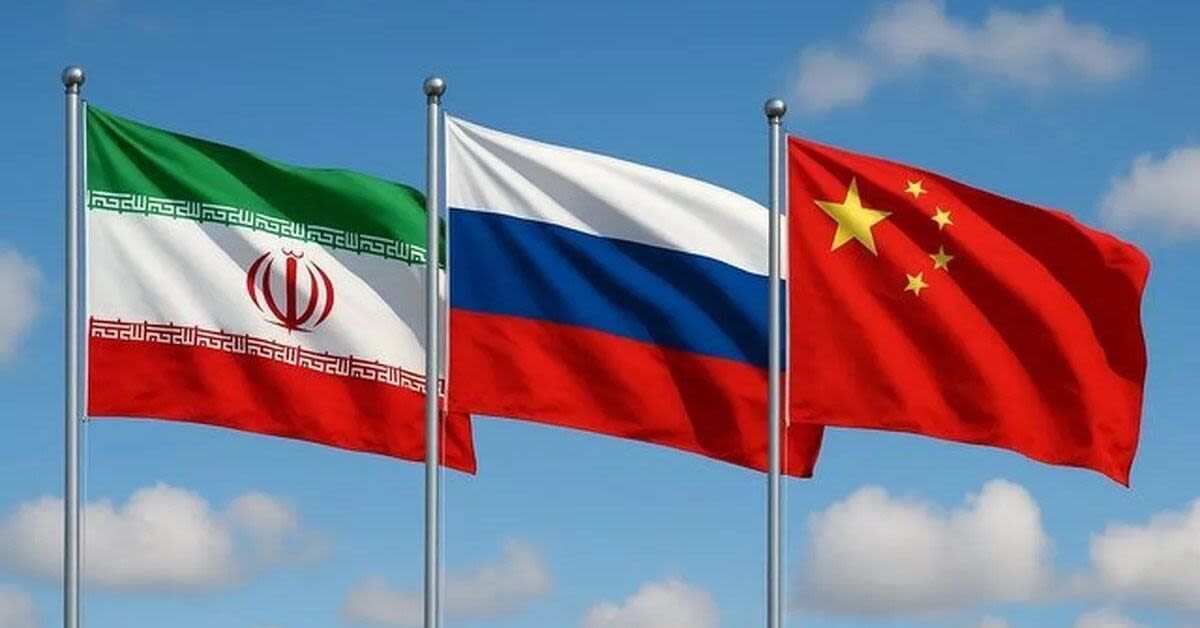
President Donald Trump is downplaying claims that Russia is directly helping Iran target American forces, even as his own officials acknowledge that Moscow and Beijing are quietly bolstering Tehran in other ways.
According to Fox News, Trump has publicly brushed aside Ukrainian President Volodymyr Zelenskyys allegation that Russia supplied Iran with satellite imagery of U.S. military installations in the Gulf, insisting that any such assistance would have been "very unimpactful" in light of the severe damage already inflicted on Irans conventional forces. His skepticism stands in contrast to testimony and briefings from senior members of his administration, who have conceded that Russia and China are "enabling some of the things Iran is doing," even if they argue that foreign aid has not fundamentally improved Tehrans ability to kill Americans.
Trump, speaking to reporters at the end of July, responded to Zelenskyys charge with a characteristic mix of bluntness and personal diplomacy. "Well find out if thats true. Ill ask Putin. Well find out," he said, signaling that he intends to raise the matter directly with Russian President Vladimir Putin rather than accept at face value the claims of a foreign leader whose country is deeply entangled in its own war with Moscow.
The president went further, casting doubt on the scale and impact of any Russian role in Irans targeting efforts. "I dont think theyve been doing it, certainly not at a high level," Trump said, before adding, "And if they have, it has been very unimpactful."
From Trumps vantage point, the battlefield evidence supports his view that Russian assistance has not altered the strategic balance. He has repeatedly pointed to the extensive damage Irans military has suffered during the conflict, arguing that whatever help Tehran may be receiving from Moscow has plainly failed to prevent the United States from destroying large portions of Irans conventional capabilities.
Yet these comments came as the administration was forced to confront a series of separate reports suggesting that Russia and China are aiding Iran in more indirect but still consequential ways. Those allegations, if fully substantiated, would underscore that Americas two principal great-power rivals are quietly backing a regime that is openly at war with the United States, even as Washington continues to shoulder the burden of defending its forces and allies in the region.
War Secretary Pete Hegseth has been more explicit in acknowledging this emerging axis of adversaries. He has said Russia and China are "enabling some of the things Iran is doing," a formulation that stops short of confirming direct operational targeting assistance but clearly places Moscow and Beijing on the wrong side of U.S. interests.
A White House official, however, stressed to Fox News Digital that any such foreign support has not meaningfully enhanced Irans ability to strike Americans. "As the President stated, nothing that any outside actor is doing to help Iran is in any way increasing their ability to target Americans," the official said, echoing Trumps effort to project confidence and deterrence rather than alarm.
Trumps remarks were prompted by two specific reports that have stirred concern among U.S. allies and defense analysts. The first was Zelenskyys allegation that Russia provided satellite intelligence to Iran; the second was a Reuters report that China could send hundreds of shoulder-fired air-defense missiles to Tehran via Pakistan, a claim Beijing has denied and Islamabad has branded "baseless and devoid of truth."
Fresh satellite imagery, if provided, would be no small matter for Irans military planners. Such data could help Tehran locate high-value American and allied assets, refine strike coordinates, and then assess post-strike damage, potentially making its attacks more accurate and more lethal.
Zelenskyy laid out Ukraines case on Saturday, asserting that Russian satellites had begun surveying Gulf countries and U.S. military installations in early July, with the resulting imagery later surfacing in Irans hands. "These images subsequently appear in Iran," Zelenskyy wrote on X, arguing that the pattern of Russian satellite activity and Iranian strikes was too closely aligned to be coincidental.
According to Zelenskyy, Ukrainian intelligence identified what he called a "clear correlation" between Russian satellite observations and subsequent Iranian attacks. He said Moscows satellites collected imagery before strikes to assist in targeting and then returned afterward to assess the damage, a classic intelligence-support cycle that would allow Iran to refine future operations.
The Ukrainian leader also specified that Russian satellites had concentrated on four air bases over a two-day periodtwo in Bahrain and one each in Jordan and Kuwait. He said Ukrainian intelligence services had shared this information with foreign partners, a move clearly intended to rally Western support and highlight the broader threat posed by Russian-Iranian cooperation.
Ukrainian Ambassador to the U.S. Olga Stefanishyna told reporters at a July 30 roundtable that the allegation did not come up during Zelenskyys White House meeting with Trump, citing a crowded agenda. She added that Ukraine had provided the relevant intelligence "through other channels," suggesting Kyiv is trying to avoid publicly embarrassing the administration while still sounding the alarm.
A Ukrainian official told Fox News Digital that Kyiv is wary of "opening a second front" with Iran, given that its primary focus remains the existential struggle against Russia. That caution underscores the geopolitical complexity of the situation: Ukraine is accusing Moscow of helping a U.S. enemy, but it must calibrate its rhetoric to avoid being drawn into a broader confrontation it cannot afford.
Hegseth, testifying before the Senate in July, acknowledged that Russia and China are indeed playing a role in supporting Iran. There was "definitely adversary alignment," he said, noting that Moscow and Beijing were "at different levels, enabling some of the things Iran is doing."
He emphasized that the United States has tools to deter and counter that support, though he insisted that some of those measures must remain classified to preserve their effectiveness. Hegseth also said earlier in the war that the administration knew "exactly" what Moscow and Beijing were doing and was addressing their actions where necessary, a statement intended to reassure both Congress and the public that Washington is not blind to the threat.
Russia, for its part, has flatly denied supplying Iran with intelligence on American military targets. Foreign Minister Sergey Lavrov has argued that the locations of U.S. bases are publicly available, implying that Tehran would not need Russian satellites to find them, and the Kremlin has dismissed earlier reporting about Russian intelligence support for Iran as false.
Trump has also cast doubt on the separate report that Iran could soon receive hundreds of Chinese-made, shoulder-fired air-defense systems routed through Pakistan. He said Chinese President Xi Jinping had personally assured him that Beijing would stay out of the conflict, a pledge Trump appears inclined to take seriously, at least in public.
"That was surprising. I mean, things like that happen, but that would be surprising. He told me very strongly he wouldnt partake, but he knows Id be quite disappointed. Hes coming here, I think, on September 24," the president told reporters Wednesday, signaling that he intends to confront Xi directly if the weapons transfer materializes.
National security expert Matthew Kroenig, a former Pentagon and intelligence official, told Fox News Digital that the reports of Russian and Chinese assistance are "highly plausible," given the deepening cooperation among the three authoritarian powers. "From Russia and Chinas point of view, if they can complicate the U.S. war in the Middle East and raise the cost to Washington, thats a good thing for them," Kroenig said, capturing the cold strategic calculus driving Americas adversaries.
Kroenig suggested that Trump may be choosing to deliver his warnings to Moscow and Beijing privately rather than staging a public confrontation for the cameras. "That might be the most generous interpretation, that its his way of warning China and Russia to knock it off," he said, implying that the presidents public skepticism could mask a tougher line behind closed doors.
At the same time, Kroenig cautioned that Trumps stance would be far more problematic if it were based primarily on personal assurances from Putin and Xi. He urged the administration to make clear that either country would face tangible consequences for helping Tehran. "I think there would be a risk to just discounting this altogether," Kroenig said, underscoring the danger of underestimating the emerging anti-American bloc.
Anna Borshchevskaya, a senior fellow at the Washington Institute for Near East Policy, noted that Moscow has spent years cultivating closer military ties with Tehran. "If this proves accurate, Russia has found a way to help Iran without direct military engagement, and thats why this is significant," Borshchevskaya told Fox News Digital, highlighting how intelligence-sharing allows Russia to undermine U.S. interests while avoiding a direct clash.
Iran, she pointed out, began supplying Russia with Shahed attack drones in 2022, providing Moscow with a cheap, expendable weapon it could launch in swarms against Ukrainian cities and critical infrastructure. Russia later began producing its own variants with Iranian assistance and improved the design, turning the drones into a staple of its campaign against Ukraines power grid and civilian centers.
That earlier Iranian support now hangs over Zelenskyys claim that Moscow is returning the favor by helping Iran target American forces. Satellite imagery, Borshchevskaya observed, would give Russia another avenue to assist Tehran while still keeping Russian troops and assets out of direct confrontation with U.S. forces.
"Its hard to think how the provision of intelligence is insignificant," Borshchevskaya said, implicitly challenging Trumps characterization of any such aid as "very unimpactful." She suggested that the president may be deliberately keeping his public rhetoric measured while U.S. officials deliver firmer messages to Moscow in private.
Borshchevskaya argued that Russia views the wars in Ukraine and Iran as interconnected fronts in a broader campaign to erode American influence and weaken U.S. alliances. U.S. officials, by contrast, tend to treat each conflict as a separate policy problem, managed through distinct bureaucratic channels and regional frameworks.
"The challenge for us is that we often separate theaters, but Russia does not," she said. "Russia looks at all of these conflicts in a much more interconnected way." That divergence in strategic perspective, she warned, risks leaving Washington flat-footed as its adversaries coordinate across regions and domains.
In her view, Russia has deliberately chosen forms of assistance that can strengthen Iran without crossing red lines that might trigger a direct military response from Washington. "Russia is being restrained here," she said. "Theyre playing a much more nuanced game."
Trump, for his part, reiterated his surprise at the report that Iran could receive hundreds of Chinese-made, shoulder-fired air-defense systems through Pakistan. He has emphasized that Xi gave him a firm personal assurance that China would not become involved in the war, a pledge that the president clearly regards as a test of Beijings credibility.
"He told me very strongly he wouldnt partake, but he knows Id be quite disappointed," Trump said, framing the issue as both a matter of personal trust and a potential diplomatic rupture if China is caught arming Iran. For a president who prizes one-on-one relationships with foreign leaders, Xis word appears to carry significant weight.
China has dismissed the weapons-transfer report as "groundless," while Pakistan has rejected any suggestion that it would help route such systems to Iran, calling the allegation "baseless and devoid of truth." Those denials, however, have done little to dispel concerns among U.S. analysts that Beijing may be edging closer to providing lethal aid to Americas enemies.
Kroenig noted that China has already supplied Russia with extensive economic and industrial support during the war in Ukraine, helping Moscow weather Western sanctions and sustain its defense production. Until now, Beijing has stopped short of openly sending lethal weapons, a limit Kroenig had expected it to observe in the Iran conflict as well.
Any transfer of advanced air-defense systems, he stressed, would require explicit approval from the Chinese government, just as Russian satellite intelligence would necessarily come from state-controlled capabilities. "There are no mom-and-pop shops in St. Petersburg selling this data," Kroenig said, underscoring that such assistance, if confirmed, would reflect deliberate state policy rather than rogue actors.
For conservatives who have long warned about the dangers of a tightening Russia-China-Iran axis, the emerging picture validates concerns that Americas adversaries are coordinating to bleed U.S. power and undermine its allies. The central question now is whether Washington will treat these overlapping threats as part of a single, global contest for strategic advantageor continue to compartmentalize them, even as Moscow, Beijing and Tehran increasingly act in concert against the United States and its interests.
Login