
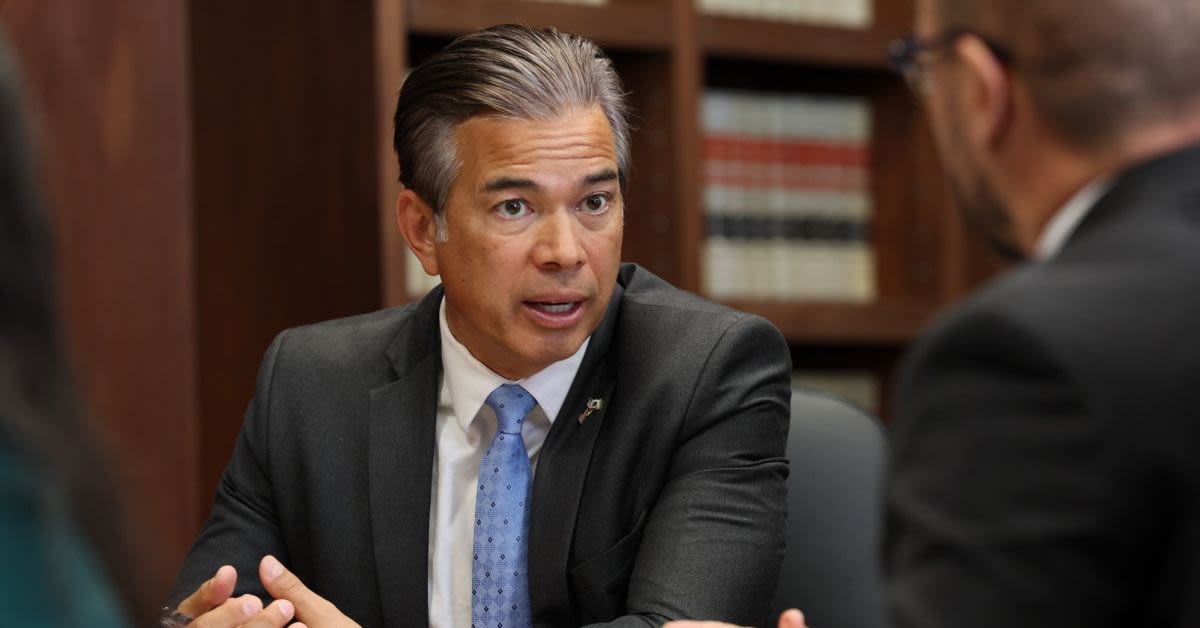
Californias Democratic attorney general is attempting to block a major media merger that federal regulators have already cleared, even as the move risks driving tens of billions of dollars in economic activity out of his own state.
According to Western Journal, Attorney General Rob Bonta has filed suit to stop Paramount CEO David Ellisons proposed $110 billion acquisition of Warner Bros. Discovery, a deal that would create a Hollywood powerhouse at a time when California is already hemorrhaging jobs and investment. The legal challenge comes despite federal approval of the transaction, underscoring how aggressively blue-state officials are willing to wield antitrust law to reshape private business decisions.
For California taxpayers, however, the more immediate concern is that Ellison is now being urged to take Paramounts headquarters and a massive production budget somewhere more welcoming.
Semafor reported on July 13 that friends and advisers of Ellison are pressing him to relocate Paramounts base of operations, along with much of its $30 billion in planned spending, outside the Golden State. The outlet noted that No decisions have been made, these people said, and the considerations may just be a show of brinkmanship, given so much of the industrys production takes place outside of Hollywood already, but the mere possibility highlights how fragile Californias grip on the entertainment industry has become.
Ellison, who grew up in California and last year shifted Paramounts headquarters from New York to Los Angeles after acquiring the company, has reportedly been reluctant to abandon the state altogether. Yet the increasingly hostile regulatory climate, combined with high taxes and soaring costs, is giving even long-time California loyalists reason to reconsider their ties to Hollywood.
Semafor further reported that Paramount could lean more heavily on its leased 300,000 square feet of studio space in Bayonne, New Jersey, if it chooses to scale back in California. Such a move would not only redirect production jobs and related spending across the country, it would also signal that even legacy media giants see more opportunity under friendlier state governments.
Bonta, however, insists the real threat lies in corporate consolidation, not Sacramentos policies. In a statement, he argued that the merger between Paramount and Warner Bros. Discovery would lead to higher prices, lower quality, and less content for film and television. He went on to claim that Consolidation here not only leads to higher prices it also leads to fewer opportunities for important stories to come to life, and fewer ways for audiences to encounter stories, ideas, and perspectives beyond their own experiences.
His lawsuit arrives as a growing list of major corporations have already voted with their feet, leaving California for states with lower taxes, lighter regulation, and a more predictable business environment. Chevron, Charles Schwab, Toyota Motor North America, In-N-Out Burger, Oracle, and McKesson are among the high-profile names that have shifted headquarters or substantial operations out of the state in recent years.
Elon Musks companies have been particularly emblematic of the trend, with Tesla and SpaceX largely relocating their core operations to the Austin, Texas, area. Each departure chips away at Californias tax base and middle-class job market, even as state leaders double down on progressive economic and regulatory experiments.
Bontas complaint contends that the ParamountWarner Bros. Discovery deal violates Section 7 of the Clayton Act, which provides that mergers that may substantially lessen competition or tend to create a monopoly are illegal. The filing asserts that, if the merger proceeds, just three distributors would control 75 percent of major film releases, a concentration the attorney general says would distort the marketplace.
Movie theaters rely on competition between Paramount and Warner Bros. to incentivize creativity and secure competitive prices and terms for themselves and for audiences, Bontas office stated, portraying the lawsuit as a defense of both consumers and exhibitors. Paramounts proposed acquisition of Warner Bros. will end this competition, threatening viewers with higher prices, the decline of theatrical exhibition of films, and a reduction in the variety, quality, and amount of content distributed, the statement continued, framing the case as a bulwark against cultural and economic consolidation.
Attorneys general from Arizona, Colorado, Connecticut, Massachusetts, Minnesota, Nevada, New Jersey, New Mexico, New York, Oregon, and Washington have joined California in the multistate action, reflecting a broader blue-state push to expand government oversight of private mergers. What remains unclear is whether this aggressive posture will actually protect consumers or simply accelerate the exodus of employers and investment from states that treat business as a political target, rather than a partner in prosperity.
Login