
On the final day of its formal legislative session, the Democrat-controlled Massachusetts Senate voted to abolish the states 24-week limit on abortion, advancing a measure that would permit the procedure up to the moment of birth.
The bill, H.5595, titled An Act Prioritizing Patient Access to Care, cleared the Senate on Friday after having passed the House of Representatives last week by a 119-33 margin. According to Gateway Pundit, the House then swiftly enacted the Senate-approved version in a 121-35 vote and transmitted it to Democrat Governor Maura Healey for her expected signature.
If Healey signs the bill, Massachusetts will align itself with some of the most permissive abortion regimes in the country, joining Alaska, Colorado, Maryland, Michigan, Minnesota, New Jersey, New Mexico, Oregon, Vermont, Washington, D.C., and other jurisdictions that impose no gestational time limits. For critics, this marks a dramatic departure from even the minimal safeguards that previously existed for late-term unborn children.
Current Massachusetts law allows abortions after 24 weeks only in tightly circumscribed situations, such as to protect the life of the mother, preserve her physical or mental health, address a lethal fetal anomaly, or respond to a grave fetal diagnosis. Those four statutory categories, which at least nominally recognized the moral gravity of late-term abortion, are entirely removed under the new legislation.
In their place, H.5595 authorizes abortion whenever a doctor deems it appropriate, stating that an abortion may be performed by a physician based upon the professional judgment of the physician. This effectively hands sole discretion to abortion providers, with no explicit legal standard tied to fetal viability, fetal pain, or the health of the mother beyond the doctors own assessment.
Democrat leaders framed the bill as a necessary expansion of reproductive rights in the post-Roe era, positioning Massachusetts as a destination state for abortion. Senate President Karen E. Spilka claimed the measure ensures that if you need reproductive care in Massachusetts, you can get it close to your home, in the state with the best medical care in the world, with a health care provider you trust.
Senator Robyn Kennedy, a primary sponsor, argued that the bill will give women full autonomy over the care they need, when and where they need it. Similar statements came from Senators Joan Lovely and Cindy Friedman, who echoed the progressive narrative that any restriction on abortion constitutes an infringement on womens rights rather than a protection for unborn life.
Opponents, however, warned that the legislation effectively authorizes the destruction of healthy, viable unborn children right up to birth. They contend that by erasing all gestational limits and replacing them with a vague professional judgment standard, lawmakers have chosen ideological extremism over medical ethics and basic human compassion.
Massachusetts Citizens for Life president Myrna Maloney Flynn cautioned that while the bill claims to prioritize access, it does not prioritize a womans safety, and she underscored that late-term abortions occur when unborn children may be capable of feeling pain and surviving outside the womb. Pro-life advocates argue that the law ignores advances in neonatal care and fetal pain science, choosing instead to satisfy the demands of the abortion lobby.
Republican lawmakers in the statehouse echoed these concerns, describing the measure as both morally troubling and far out of step with mainstream public opinion. They stressed that even many Americans who identify as pro-choice oppose abortion in the final months of pregnancy, especially when the child is healthy and viable.
State Rep. Alyson Sullivan-Almeida condemned the House vote as a very sad day in the commonwealth of Massachusetts, declaring that the precedent that were setting is that a mother can get an abortion up until the moment of birth for a healthy, viable baby. State Rep. Joseph McKenna similarly described the bill as a significant change to the law to expand what is already an extremely progressive abortion policy.
Religious leaders also weighed in, with the Catholic Bishops of Massachusetts issuing a formal statement denouncing the measure as a radical and gravely immoral step that removes all remaining legal limits on late-term abortions. They reaffirmed the Churchs teaching on the sacred dignity of human life from conception to natural death and urged the Senate to reject the bill, calling for prayer and a renewed reverence for all human life.
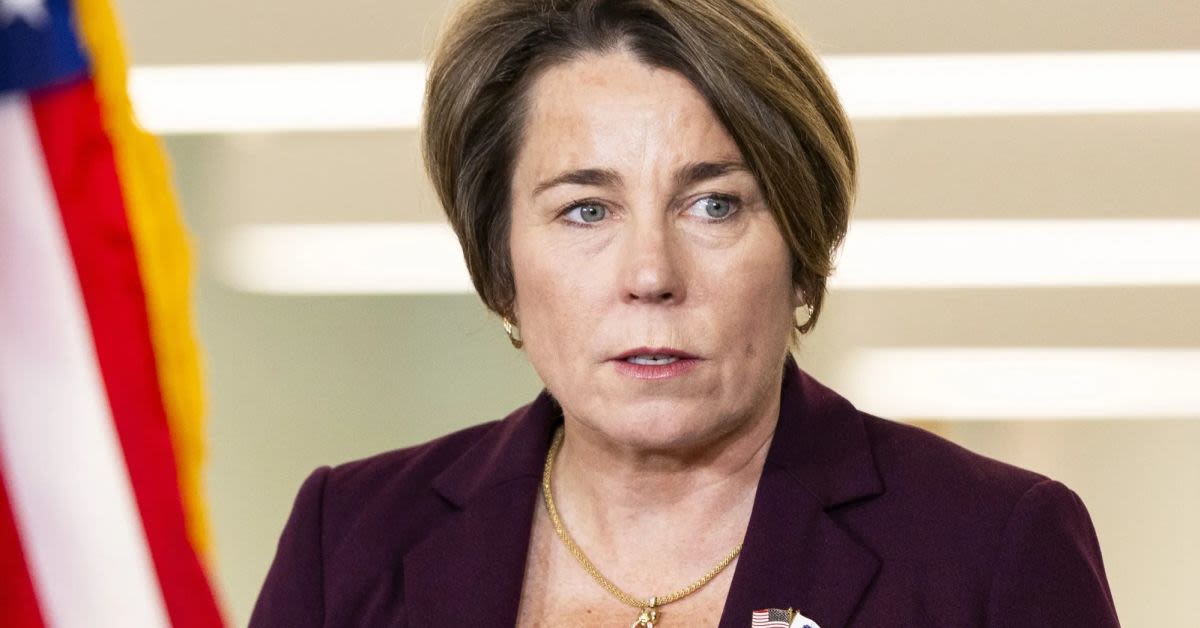
Governor Healey, a staunch supporter of expansive abortion access who has previously stockpiled abortion pills and signed shield laws to protect abortion providers from out-of-state legal challenges, has reportedly endorsed the legislation. As of early Saturday, however, Healey had not yet signed the bill or issued a formal statement on the final version now awaiting her decision, leaving pro-life advocates bracing for what they see as one of the most sweeping pro-abortion laws in the nation.
Login