
The Cornell University undergraduate who boasted that he was not interested in working for a Jew has now been expelled from his parents $1.
75 million Virginia home and is turning to online fundraising to sustain himself.
According to The New York Post, 19-year-old Austin Franco, a rising junior at the Ivy League institution, went viral after rejecting a job interview with New York City startup VryfID for explicitly antisemitic reasons. He then announced on X on Wednesday, My parents are kicking me out, a public plea that quickly drew attention from both critics and admirers in fringe corners of the internet.
While his parents, Alexander and Diana, have decided they will no longer house him, Cornell University has taken a different stance and confirmed that Franco will remain enrolled. The liberal campus, which has tolerated a wave of radical activism in recent years, told the outlet that unlike his parents, it has no plans to kick him to the curb, underscoring the institutions expansive interpretation of free speech protections.
Franco has responded to his domestic eviction by launching a GiveSendGo campaign that has already pulled in more than $7,000 from sympathetic donors. That haul comes on top of roughly $25,000 raised through a separate fundraiser, suggesting that his inflammatory rhetoric has found a paying audience among those who see him as a symbol of defiance rather than disgrace.
On his fundraising page, the student cast himself as a victim of circumstance and a man of principle under siege. I will be kicked out of my home on August 1st. Any support you can provide would be greatly appreciated, as would any advice, he wrote, adopting the tone of a persecuted dissident rather than a privileged college student facing the consequences of his own words.
He went on to stress that his parents reject his ideology and have chosen to sever their financial support as a result. I have reiterated that my parents do not share my views, and it seems they no longer wish to provide me with a home to live in. I know the road ahead will be difficult, but this is the path I chose.
Franco framed his stance as heroic and unyielding, presenting himself as a martyr for his beliefs. I do not regret anything I have done. If I were to die today, I would at least know that I did so believing in myself. Thank you, and may God be with you, he declared, language that has resonated with some on the far-right who view him as a culture-war foot soldier.
The posture of persecution contrasts sharply with his comfortable upbringing in a 6,300-square-foot home in a well-off suburb roughly 30 miles northwest of Washington, DC. The Franco residence boasts five bedrooms and five and a half bathrooms, a reminder that this self-styled dissident is not railing against the system from the margins of society but from a position of considerable material security.
His mother Dianas now-private Instagram account had previously showcased her sons privileged lifestyle, including a photograph of him celebrating his 18th birthday in Paris in 2024. His father Alexander, a Cornell alumnus and patent attorney, and Diana, a senior product manager for a banking regulators trade association, represent the professional class that often bankrolls elite education and expects corresponding responsibility from their children.
In a statement to the outlet, the parents condemned their sons rhetoric and suggested he had been drawn into an extremist online ecosystem. We have seen our adult son fall under the influence of extremist online content. It should go without saying that the rest of our family finds the views he has expressed morally repugnant, and he did not derive them in any way from us, they wrote, distancing themselves from his ideology.
They emphasized that their decision to push back against his views does not mean they have stopped caring about him as their child.
We love our son very much and are doing everything we can to counter the online influences that have afflicted him, they added, reflecting the dilemma of many families confronting radicalization in the digital age.
Franco, however, dismissed the notion that he is merely a product of internet indoctrination, insisting his beliefs are grounded in personal encounters. I cant peer inside their minds and they cant peer inside mine, but its not a result of just being online. Ive had in-person experiences as well, he said, rejecting his parents explanation.
He argued that the internet is simply a modern extension of older forms of communication rather than a unique source of corruption.
All the internet is, is essentially an extension of prior means of communication, what used to be the printing press. Its like if my parents were like, Oh boy, hes always reading the newspaper, hes getting all these terrible ideas from the newspaper. When you say that, it sounds completely ridiculous, right? he continued.
Asked how he felt about being forced out of his family home, Franco appeared less certain than in his ideological pronouncements.
Im not sure if I have a good answer for that, he admitted, before noting that he plans to relocate to an apartment near Cornell in Ithaca, New York, where he intends to continue his studies.
Since sending his antisemitic message to VryfIDs Jewish co-founders, Gabe and Aiden Einhorn, via the Handshake job board in June, Franco has leaned into his notoriety and embraced a public identity built around hostility toward Jews. Anti-semitism has not only become mainstream, its become something to be proud of for some, said Dr. Carole Lieberman, a psychiatrist and author of two books on terrorism. People like Austin Franco see themselves as martyrs for the cause.
Franco has repeatedly framed his conduct as an exercise of individual liberty, insisting that his conscience is clear. People may say things that are unkind, but they have the right to say it, he argued. It would be illegal for an employer to say, Im not going to hire you because you are white. It would not be illegal for an employee to say, Im not going to work for you because youre white.
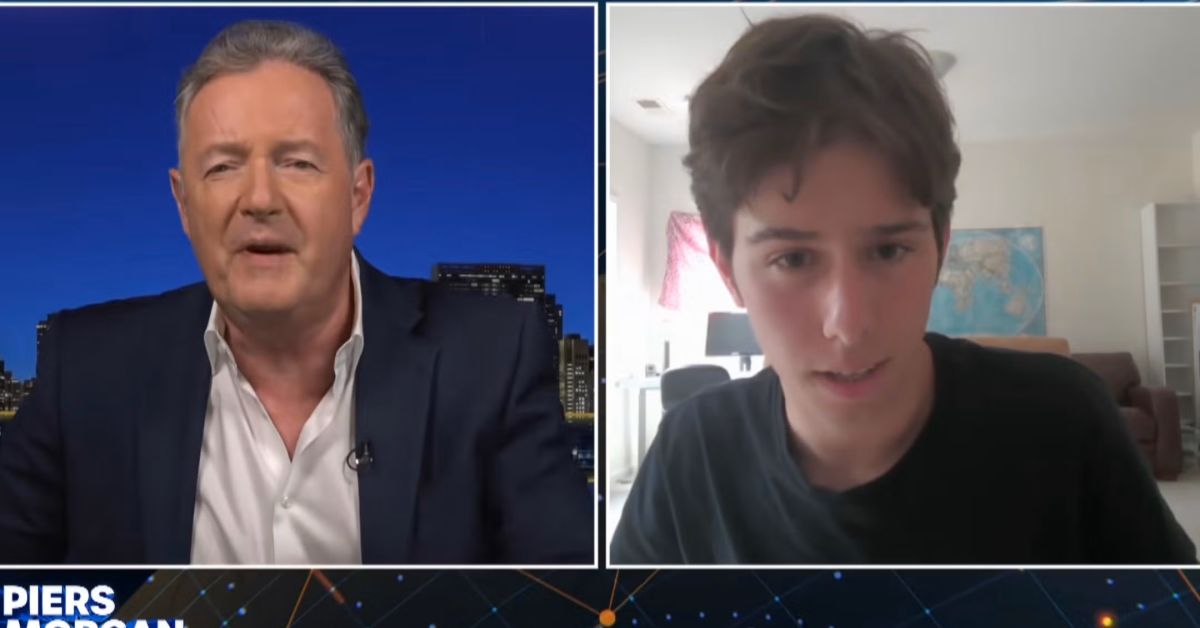
His rhetoric drew a sharp rebuke this week on Piers Morgan Uncensored, where the British broadcaster confronted him over his comments. Franco was branded thick and arrogant during the heated exchange, and later interpreted Morgans tone as a sign that the host felt threatened, saying, That indicated to me that he realized I was making him look bad.
Cornell President Michael Kotlikoff has publicly denounced Francos statements while simultaneously affirming the universitys commitment to protecting speech, even when it crosses moral lines.
As a university built on the solid foundations of our nations democratic freedoms, Cornell has an obligation to fiercely defend freedom of speech even when we find that speech abhorrent, he wrote, a position that will strike many conservatives as a rare instance of an elite campus applying free-speech principles consistently.
Franco, who says he hopes to enter politics after graduation but does not currently align with any specific party, claims he is unconcerned about returning to a campus already roiled by ideological battles.
If you dont want to talk with me or engage with me, youre totally welcome and within your rights to do that, just as I have the freedom to associate with who I want to with respect to work, he said, casting his ordeal as a test case in the broader struggle over speech, responsibility, and the limits of tolerance in American public life.
Login