
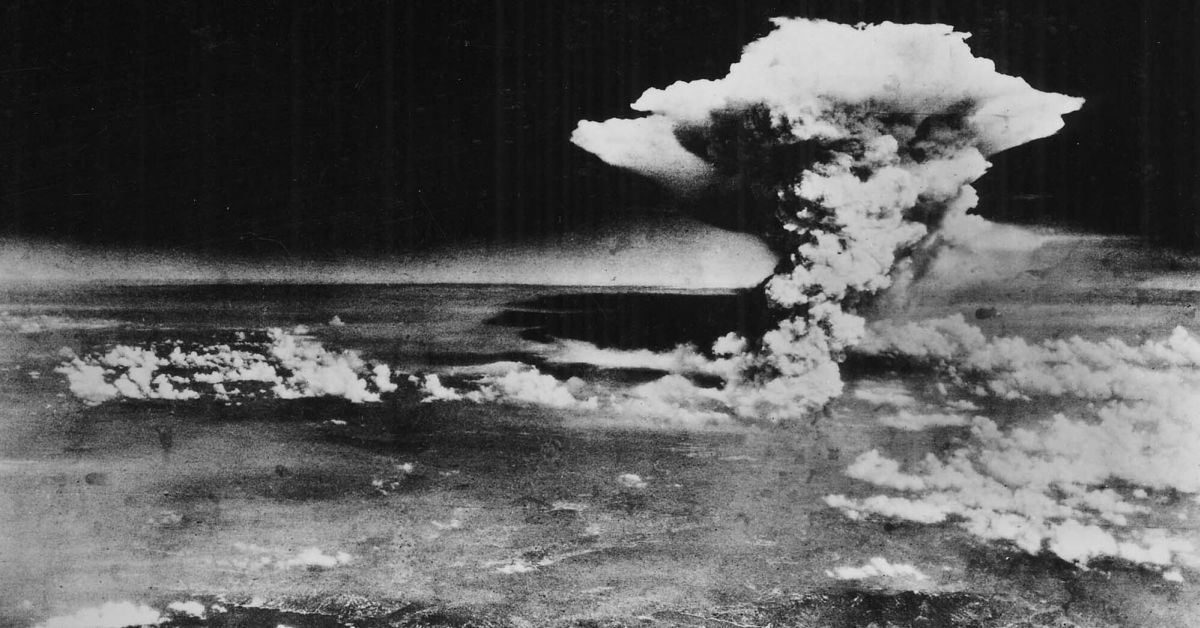
A once-unimaginable fusion of cutting-edge materials science and the horrors of 20th-century warfare has emerged from the sands of Hiroshima Bay.
A peer-reviewed study in the journal Science Advances has identified a previously unknown multicomponent alloy created in the inferno unleashed when the United States dropped the Little Boy atomic bomb on Hiroshima in August 1945, as reported by Western Journal. The researchers concluded that this exotic metal, forged in an instant of devastation that helped end World War II and halt imperial Japans aggression, has remained hidden for decades in the coastal sediments of Japan.
The study notes that the alloy was born out of the extraordinary conditions generated by the nuclear blast. The detonation produced a fireball reaching temperatures exceeding 7000C within seconds, entraining and vaporizing building materials, soils, metals, glass, and water into a turbulent plasma cloud, Science Advances explained.
That searing fireball scattered microscopic metallic fragments across the region, many of which ultimately settled into the sands of Hiroshima Bay. There, shielded from the elements, they lay preserved as a silent testament to both the destructive power of nuclear weapons and the technological turning point that helped secure Allied victory.
According to GBNews, the micrometer-sized grains contain iron, chromium, nickel, manganese, molybdenum, silicon, and aluminium. The alloy reportedly resembles stainless steel, but its atomic structure has never been documented before, marking it as a distinct and unprecedented material.
The grains are embedded in a glassy substance dubbed hiroshimaite, found along the beaches of Hiroshima Bay. According to Science Advances, multicomponent alloys are formed when five or more metallic elements combine, typically under carefully controlled industrial conditions.
Ordinarily, such alloys are engineered in laboratories or factories through measured melting and solidification processes, not in the chaos of war. Interestingly, these multicomponent alloys are almost never seen in nature, underscoring how extraordinary the Hiroshima event truly was.
Apparently, the intensity of an atomic blast is more than enough to recreate the high temperatures and extreme mixing required to create a multicomponent alloy. The scientific journal noted that, due to the aforementioned factors, other never-before-seen alloys could be found, suggesting that even the most tragic chapters of history can yield scientific insightsreminders of both human ingenuity and the grave responsibility that comes with wielding such power.
Login