
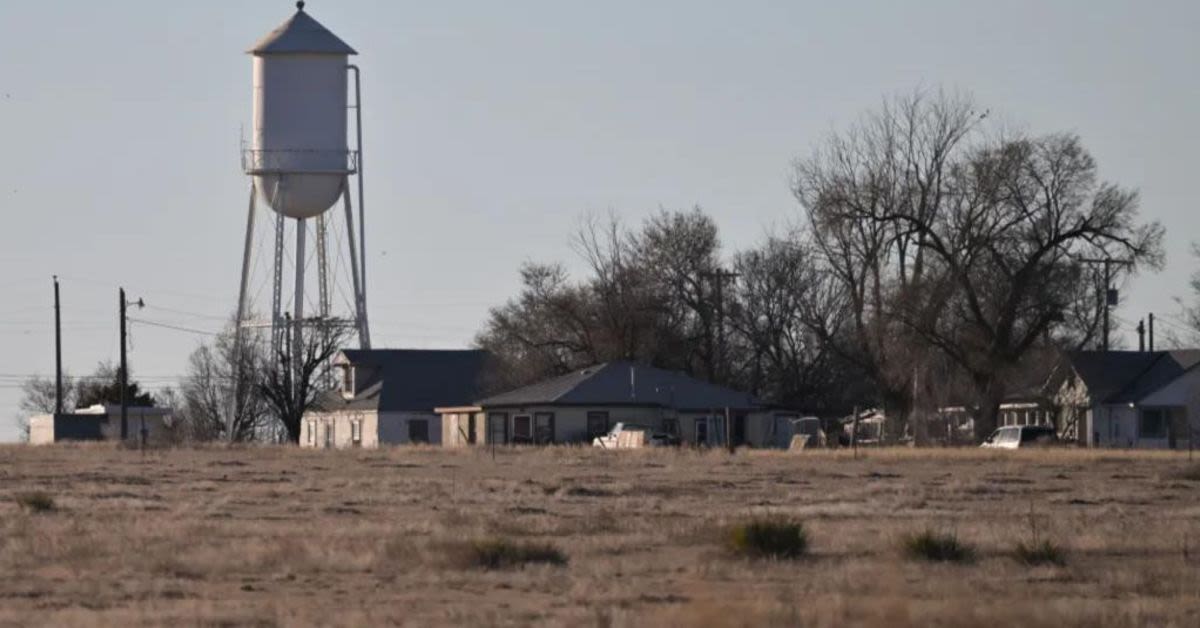
A tiny Colorado community has effectively ceased to exist as a town after its last remaining officials walked away from office, leaving residents with a failing water system that the state now deems a health hazard.
.
The Colorado Secretary of States Office announced this week that Hartman, a southeastern town of roughly 30 people, has been formally declared abandoned after a public hearing revealed that the Town of Hartman had no Board of Trustees or Town Clerk, was unable to hold a town election, and owned infrastructure critical for the treatment or delivery of water to residents, according to Fox News. State officials concluded that without any functioning local government, there was no legal authority left to manage basic services, particularly the towns deteriorating water system, which has been under a boil order for months.
Deputy Secretary of State Andrew Kline, in a written abandonment order, warned that failing to act would only prolong the crisis for residents trapped in a legal and practical vacuum. Importantly, not determining that the Town of Hartman is abandoned as contemplated by 31-3-201(1)(b), C.R.S. (2026), would leave the residents in further legal limbo during a health hazard, with no authority to conduct business, hold elections, or fix their water infrastructure so that clean water can be delivered to the town residents, Kline wrote.
He emphasized that state law offers only one path forward when a municipality has effectively collapsed and can no longer govern itself. Abandonment is the only legal mechanism in Colorado statute that creates an avenue for residents of the area to receive clean water, Kline added, underscoring how the states own regulatory framework leaves little room for local self-determination once a towns leadership implodes.
Hartmans unraveling has been years in the making, but the final break came in January, when its three remaining trustees resigned en masse just one day after a physical altercation erupted between four women following a board of trustees meeting, according to The Denver Post. The towns mayor had already stepped down in October, and Hartman had previously been mired in embezzlement allegations and restraining orders, a pattern of dysfunction that ultimately hollowed out its governing structure.
Our safety was more important than having a government, former trustee Pam Packer told the newspaper, a stark admission that local officials felt personally endangered in the course of public service. That sentiment reflects a broader trend in small-town America, where serving in local office increasingly comes with heightened tensions, legal entanglements, and, in some cases, outright hostility that discourages civic-minded citizens from stepping up.
The formal abandonment process began in mid-June, when Ms. Jessie Simmons, a self-attested resident, landowner, and elector of the Town of Hartman, submitted a written application to the Secretary of State for determination of abandonment for the Town of Hartman alleging that the town does not have a board of trustees or town clerk, is unable to hold an election, and owns and operates water infrastructure needed to treat and deliver water to residents, Kline wrote. Her petition laid out the stark reality that no one remained in office to perform even the most basic governmental functions, from calling elections to signing contracts.
Ms. Simmons further asserted that as of time of her application, the Town of Hartman had lacked chlorine in its water for over one month and the water was not potable and smells horrible. She stated that the Town of Hartman had been under an order to boil water for months, the order continued, painting a picture of residents forced to live with third-world conditions despite millions in taxpayer-funded assistance flowing through state agencies.
At a July 13 hearing, Eric Bergman, director of the Division of Local Government within the Department of Local Affairs (DOLA), testified that the state had been deeply involved in Hartmans affairs for years, trying to keep the town afloat. He testified that he has regional managers throughout the state, and one in Southeast Colorado that has worked extensively with the Town of Hartman for the last 5 or 6 years, according to Klines order.
Mr. Bergman also testified that since 2022, DOLA representatives have been in the Town of Hartman over 30 times helping with elections, turnover, recalls, resignations, budgets, audits, grant administration, and training of new officials. In January of 2026, DOLA received letters of resignation from each of the town's then-Trustees. Since the resignation of these elected officials, no government officials or government remain in the Town of Hartman, the order stated, revealing that even sustained state intervention could not overcome the towns internal turmoil.
With no one left in office, the towns legal and financial machinery simply stopped. There are no government officials in the Town of Hartman who are authorized to approve contracts, spend funds, appoint replacements, certify elections, or make decisions regarding the Town of Hartman's water system. Mr. Bergman testified there is also no clerk or governing body to call, conduct, or certify a municipal election, the order continued, underscoring how the absence of elected leadership paralyzed every aspect of local governance.
Bergman further warned that the situation had escalated into a direct threat to public health. According to Mr. Bergman, the Town of Hartman is facing a public health threat. Mr. Bergman testified that the Town of Hartman has been on a boil advisory since last October 2025, and the water currently needs testing and chlorine. The water tank is compromised and needs repair or replacement, Kline wrote, noting that the towns infrastructure is now literally crumbling.
There is no one operating the water system at this time. DOLA, along with the Colorado Department of Health and Environment had previously provided grants for more than $1 million to the Town of Hartman to work on the water system. Those funds were reimbursement-based. However, without government officials, the Town is unable to enter any contracts that would enable it to access the grant funds, the order added, highlighting a familiar problem in big-government programs: money may be allocated on paper, but bureaucratic rules and local collapse can prevent it from ever reaching the people it is supposed to help.
Following the abandonment order, the Secretary of States Office outlined how Hartmans remaining public assets will be redistributed under state law. It said that All existing streets, avenues, and alleys previously located within the abandoned town that are not owned by a third party shall be vested in in the Board of County Commissioners of Prowers County, effectively shifting responsibility from a defunct town government to the county level.
The order further directs that Ownership of water infrastructure critical for the treatment or delivery of water to residents shall be vested in Prowers County, which shall transfer said infrastructure to an entity whose primary purpose is water treatment or delivery. For Hartmans residents, that means their future now rests not with their own elected leaders, but with county officials and outside water providers, a sobering reminder of what happens when local self-government collapses under the weight of mismanagement, conflict, and an ever-expanding tangle of state oversight.
Login