
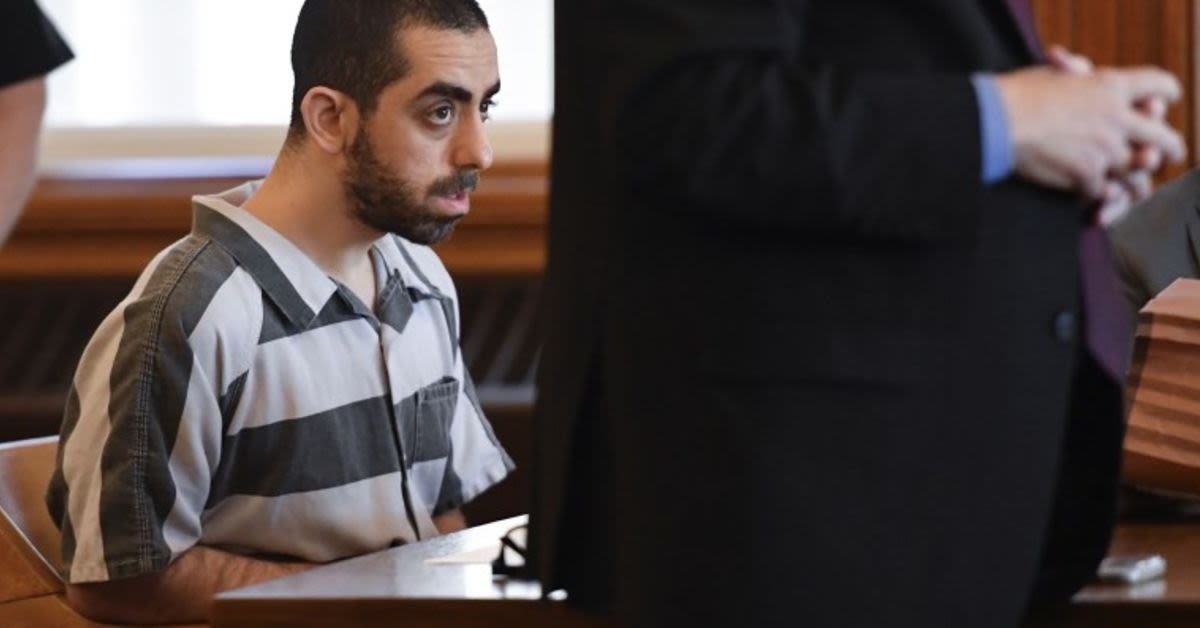
A New Jersey man who nearly killed author Salman Rushdie in a 2022 stabbing has now been convicted on federal terrorism charges for acting in support of Hezbollah and attempting to enforce Irans long-standing religious edict calling for the writers death.
According to The Post Millennial, a federal jury found 28-year-old Hadi Matar of Fairview, New Jersey, guilty of attempting to provide material support to Hezbollah, engaging in an act of terrorism transcending national boundaries, and providing material support to terrorists. The Department of Justice announced Thursday that Matar, who targeted Rushdie on American soil during a public lecture, now faces a maximum sentence of life in federal prison when he appears for sentencing on November 3.
Prosecutors argued that Matars actions were not a spontaneous outburst but the culmination of a long, deliberate radicalization in service to a foreign terror network and the regime in Tehran. "Matar spent more than a year immersing himself in Hizballah's violent ideology and preparing to act on a fatwa issued by Iran's Ayatollahs calling for Mr. Rushdie's murder," Assistant Attorney General for National Security John A. Eisenberg said.
Eisenberg underscored the broader implications of the case for American security and sovereignty, warning that the attack illustrated the reach of hostile foreign powers. "His brutal attack on Mr. Rushdie during a peaceful speaking event is a chilling reminder of the global reach of Iranian terrorism. With today's verdict, justice has been done, and Matar will pay for his crimes."
Federal prosecutors detailed how Matar carefully orchestrated the August 12, 2022 assault at the Chautauqua Institution in western New York, where Rushdie was scheduled to speak about artistic freedom and free expression. Investigators said he spent more than a year studying the 1989 fatwa issued by Iranian Supreme Leader Ayatollah Ruhollah Khomeini after the publication of Rushdies novel The Satanic Verses, a decree later reaffirmed by Ayatollah Ali Khamenei and publicly endorsed by former Hezbollah Secretary General Hassan Nasrallah.
Evidence at trial showed that Matar was not acting in isolation but was in communication with individuals in Iran, Australia, and Canada regarding the fatwa and Hezbollahs backing of it. Prosecutors said he produced propaganda-style videos titled "Rushdie_Fatwa 2.0" and "Rushdie_Fatwa 1.6," which blended material about the religious edict with Nasrallahs 2006 speech endorsing the call for Rushdies death.
Federal investigators testified that Matar steeped himself in Hezbollah imagery and martyrdom culture in the lead-up to the attack, surrounding himself with pictures of fallen operatives. He traveled to the Chautauqua Institution under the alias "Hassan Mughniyeh," a name prosecutors said was chosen to honor both Hezbollah leader Hassan Nasrallah and Imad Mughniyeh, the former head of Hezbollahs External Security Organization responsible for numerous terrorist operations.
On the morning of the stabbing, prosecutors said Matar accessed a Hezbollah website and captured screenshots commemorating militants killed in the month of August, further underscoring his ideological motivation. "Hadi Matar, who was born and raised in the United States, chose to align his values with the terroristic values of the leaders of Iran, which often promote violence, and in this case, the call for murder," US Attorney Michael DiGiacomo said.
DiGiacomo emphasized that Matars preparations were extensive and calculated, reflecting a desire to emulate terrorists he revered rather than any personal grievance with Rushdie. "The defendant spent months planning and preparing to carry out what he hoped would be the execution of Salman Rushdie and possibly follow in the footsteps of martyrs he admired. Instead, his attempted act of terror failed, and Salman Rushdie survived, thanks to courageous members of the public and law enforcement, who saved Rushdie and captured Matar."
Assistant Director Jarod Brown of the FBIs Counterterrorism Division stressed that the evidence dismantled any suggestion that the stabbing was a sudden or emotionally driven act. The attack, he said, was the product of ideological commitment to a designated foreign terrorist organization and the enforcement of a theocratic death sentence issued by Irans rulers.
Brown was blunt in his assessment of Matars intent and allegiance, tying the assault directly to Hezbollahs agenda and Tehrans fatwa. "Matar conducted a violent attack in support of a designated foreign terrorist organization and wanted to carry out a fatwa against the victim," Brown said.
Rushdie, who has long been a symbol of free speech and resistance to Islamist intimidation, survived after being stabbed approximately 15 times but was left blind in one eye and with permanent, life-altering injuries. Earlier this year, Matar received a 25-year sentence in New York state court after being convicted of attempted murder and assault, and the new federal convictioncarrying the possibility of an additional life termsignals that the United States is prepared to respond forcefully when foreign-backed extremism targets individuals on American soil and seeks to export theocratic violence into the heart of the West.
Login