
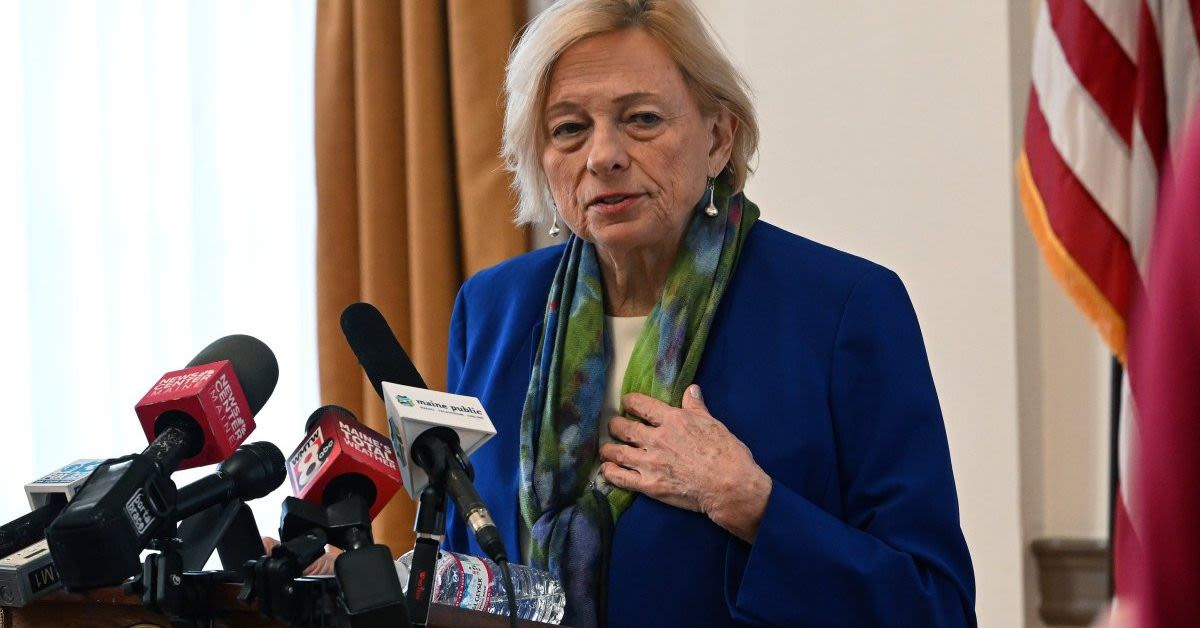
Maines Democratic governor, Janet Mills, has escalated her attacks on Sen. Susan Collins, R-Maine, declaring that the five-term incumbent is vulnerable and should be defeated in 2026 while conspicuously withholding an endorsement of the Democrats hastily selected challenger, Troy Jackson.
According to Newsmax, Mills delivered her broadside during an interview with Portland television station WMTW while visiting Dresden for the states sixth annual Wild Blueberry Weekend, using the occasion to frame Collins as politically weakened and morally culpable for a range of national and local grievances. We haven't spoken, but clearly Susan Collins is vulnerable, and she should be defeated, Mills said, even as she sidestepped questions about whether Democrats internal maneuvering to install Jackson as their nominee might leave some voters feeling shut out of the process. Instead of addressing concerns about party transparency and grassroots input, the governor pivoted to a familiar Democratic script, castigating the Trump administration and tying Collins to what she portrayed as failures in Washington.
Jackson, a former Maine Senate president and fifth-generation logger, emerged as the Democratic nominee not through a broad primary vote but via a special convention in Bangor, where party delegates selected him after primary winner Graham Platner abruptly exited the race. Platner withdrew following a sexual assault allegation that he has denied, leaving party insiders to scramble for a replacement and raising questions about whether the Democratic establishment, not rank-and-file voters, is effectively determining who will face Collins in one of the nations most closely watched Senate contests.
Mills, however, appeared more interested in national partisan narratives than in defending the legitimacy of her own partys selection process, insisting that Collins vulnerability transcends party labels and stems from what she described as a failure to stand up to the Trump administration. She accused the senator of neglecting her oversight responsibilities in Congress, a charge that fits neatly into Democrats broader effort to paint Republicans as enablers of executive overreach, even as Collins has often styled herself as a moderate willing to break with party leadership.
To underscore her argument, Mills cited the July 13 fatal shooting of a Colombian man by a U.S. Immigration and Customs Enforcement officer in Biddeford, casting the incident as emblematic of what she called federal mismanagement and lack of accountability. She asserted that Collins bears responsibility because of her role in Congress, effectively attempting to link a tragic law-enforcement encounter on Maine soil to the senators record in Washington, despite the fact that operational decisions at ICE are made by the executive branch, not individual lawmakers.
Collins, for her part, has responded by calling for a full, impartial investigation into the shooting and joined the rest of Maines congressional delegation in requesting a review by the Department of Homeland Securitys inspector general. In a letter answering Mills criticism, the senator detailed concrete steps she has taken, noting that she helped secure $20 million for body-worn cameras, $2 million for deescalation training, and a 17% funding increase for the inspector general's office, measures aimed at increasing transparency and accountability in federal law enforcement rather than simply scoring political points.
Mills also attempted to tie Collins to economic pain felt by Maine families, blaming the Trump administrations tariffs for higher prices on vehicles, construction materials, and groceries, as well as rising housing and mortgage costs. Nothing's gotten better for families in Maine. It's only getting worse, Mills said, adding, And that lies at the doorstep of Senator Collins and the Republican majority in the United States Senate, a sweeping claim that overlooks the complex mix of inflationary pressures, regulatory burdens, and state-level policies that also drive up costs.
From a conservative perspective, Mills rhetoric reflects a broader Democratic strategy of personalizing systemic issues and shifting blame away from progressive policies that have contributed to economic strain, particularly in blue-leaning states with heavy regulatory regimes and high tax burdens. By pinning tariffs and cost-of-living increases solely on Republicans, the governor sidesteps debates over energy policy, spending, and regulation that have intensified inflation and made it harder for working families to get ahead, even as Collins has often supported bipartisan compromises and resisted the most aggressive elements of the lefts economic agenda.
The dynamics of the race underscore the contrast between Collins long-standing statewide profile and Jacksons late entry under unusual circumstances, with the senator entering the campaign with a substantial fundraising edge and a reputation for constituent service that has helped her weather past political storms. Jackson, by contrast, has just over three months to introduce himself to voters across Maine, and he must do so while carrying the baggage of a nomination secured through a delegate convention triggered by scandal, rather than a clear mandate from primary voters.
For conservatives, the stakes extend beyond a single Senate seat, as Democrats seek to turn Maine into a proving ground for their strategy of tying every Republican to Donald Trump and national controversies, regardless of individual records or local priorities. The contest will test whether Maine voters, who have repeatedly rewarded Collins for her independent streak, will accept Mills attempt to nationalize the race and hold the senator responsible for every perceived failure of the Trump era, or whether they will view the governors attacks as partisan overreach that ignores Collins tangible efforts on oversight, law enforcement accountability, and pragmatic governance.
Login