
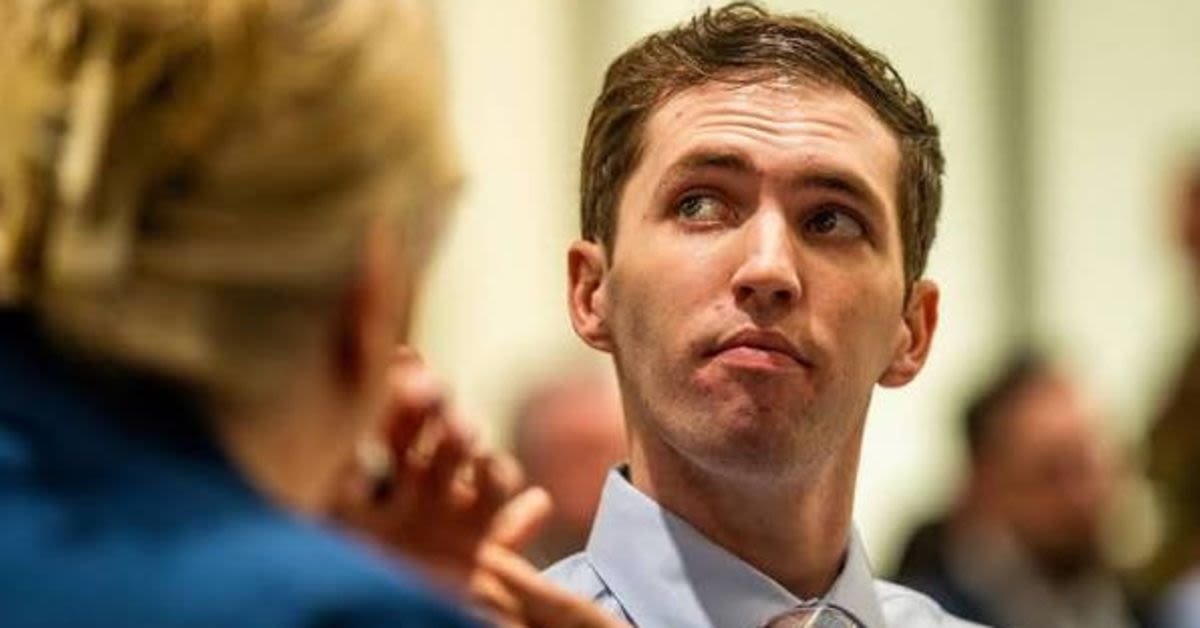
Utah County prosecutors are pressing a state judge to move forward with a capital murder trial for Tyler Robinson, arguing that the evidence tying him to the assassination of conservative activist Charlie Kirk is overwhelming and direct.
According to The Post Millennial, prosecutors submitted a 28-page memorandum to Judge Tony Graf urging him to bind Robinson over for trial following a weeks-long preliminary hearing that concluded in early July. In that filing, they described the case as exceptionally clear-cut, writing, "This is likely as straight-forward a bindover decision as this Court will ever see," and laid out a detailed account of Robinsons alleged actions before and after the shooting at Utah Valley University.
Prosecutors contend that Robinson not only carried out the killing in front of thousands of witnesses but later confessed to multiple people in his inner circle. "After admitting to several friends, including his roommate and romantic partner, that he assassinated Charlie Kirk at Utah Valley University on September 10, 2025, in front of approximately 3000 eyewitnesses, Defendant surrendered to law enforcement for that crime," the states attorneys wrote, emphasizing that these admissions were central to establishing probable cause.
During the preliminary hearing, the state presented those alleged confessions alongside physical and forensic evidence that they say firmly links Robinson to the crime. Confessions were presented as well as testimony from that roommate and romantic partner, Lance Twiggs, who prosecutors say heard Robinson describe the shooting in his own words.
The states filing stresses that the case does not rest solely on statements from friends or associates, but is reinforced by scientific and visual proof. "DNA testing, surveillance video, and eyewitness testimony buttress those elements and demonstrate probable cause to support the remaining elements," prosecutors argue, before concluding, "The court should bind Defendant for trial over on all counts."
Judge Graf previously indicated that he would issue a decision on whether Robinson will stand trial by September 1, leaving the defense a narrow window to counter the states narrative. The preliminary hearing featured extensive video evidence, law enforcement testimony, and DNA analysis allegedly tying Robinson to what investigators believe was the murder weapon, while defense attorneys repeatedly objected and sought to undermine the reliability and interpretation of the DNA evidence.
Robinsons path into custody began when his parents, after seeing FBI-released surveillance footage of the suspected shooter on campus, believed they recognized their son and urged him to come forward. Robinson was arrested after he turned himself in at his parents' urging on September 12, 2025, just two days after Kirk's murder, which occurred as Kirk was speaking to students at Utah Valley University on behalf of Turning Point USA when a shot rang out and hit him in the neck.
Prosecutors state that "On the evening of September 11, 2025, Defendant surrendered himself to law enforcement in connection with Mr. Kirk's assassination... Defendant also admitted to Mr. Twiggs and other friends that he had shot Mr. Kirk." Those alleged admissions, combined with the timing of his surrender and the familys recognition of him in surveillance images, form a central pillar of the states case.
The charges against Robinson are severe and reflect the gravity of targeting a high-profile conservative figure on a college campus. Robinson has been charged with the capital felony of aggravated murder, first-degree felony discharge of a firearm causing serious bodily injury, obstruction of justice for concealing or removing the firearm he used to shoot Mr. Kirk and destroying, concealing or removing the clothing he wore during the commission of that crime.
In addition to the homicide-related counts, prosecutors have layered on further allegations that could significantly increase his potential sentence if convicted. He has also been charged with tampering with a witness and a violent offense committed in the presence of a child, for which prosecutors have sought sentencing enhancements.
In their memo urging Graf to bring Robinson to trial, prosecutors walk through each count and the evidence presented to support each one, methodically tying witness accounts, forensic findings, and Robinsons own alleged words to the statutory elements of each offense. As to the probable cause that Robinson pulled the trigger to knowingly and intentionally kill Kirk, prosecutors recount the evidence shown at the preliminary hearing and insist it leaves little room for doubt.
"The evidence further demonstrates a reasonable belief that Defendant was the shooter. Defendant repeatedly admitted that he shot Mr. Kirk using Defendant's grandfather's rifle, including:" the filing states, before listing a series of messages and statements that prosecutors say came directly from Robinson.
"I had the opportunity to take out Charlie Kirk, and I took it." "I am [the one who did it, I'm sorry."
"Why did I do it? ... I had enough of his hatred. some hate can't be negotiated out. "if I am able to grab my rifle unseen, I will have left no evidence. going to attempt to retrieve it again, hopefully they have moved on. I haven't seen anything in the news about them finding it."
"[I have been planning this] a bit over a week I believe."
"i'm wishing I had circled back and grabbed it as soon as I got to my vehicle because it sounds like the police couldn't get in for a long while because of the traffic."
"remember how I was engraving bullets? the fuckin messages are mostly a big meme. if I see 'notices bulge uwu' on fox news I might have a stroke."
"judging from today I'd say grandpas gun does just fine idk"
"I'm going to turn myself in willingly."
"Hey guys, I have bad news for you all. it was me at UVU yesterday. im sorry for all of this. im surrendering through a sheriff friend in a few moments."
"it was [me]. ... look at the pictures from the surveillance footage. it was me. ... im serious."
For many on the right, the case underscores the increasingly hostile climate faced by conservative speakers on campus, where ideological intolerance can escalate from protests to threats and, in this instance, an alleged political assassination. As the court weighs whether to send Robinson to trial on capital charges, the prosecutions detailed accountrooted in confessions, forensic evidence, and eyewitness accountsraises profound questions not only about individual culpability, but about a culture that too often treats violent attacks on conservative voices as just another chapter in the nations political strife.
Login