
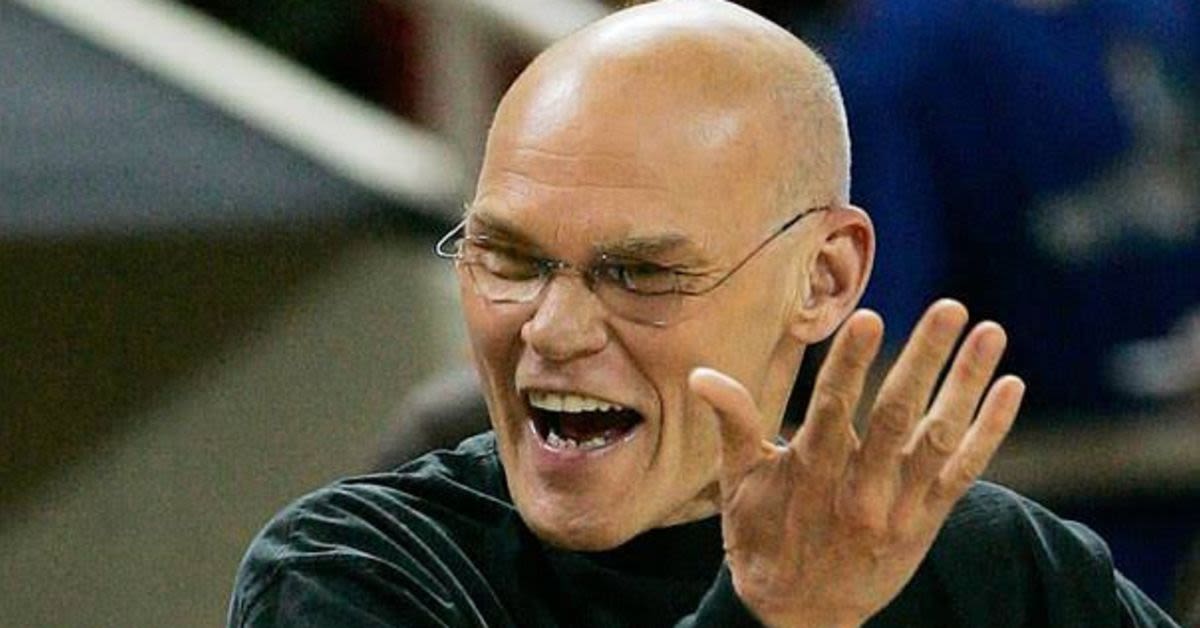
Democrats internal turmoil has reached such a spectacle that even veteran party strategist James Carville is now floating David Hogg a man he recently derided as a contemptible little twerp as a potential savior for the Democratic National Committee.
According to Western Journal, the spectacle is unfolding against the backdrop of a party that controls the White House and both chambers of Congress yet finds itself mired in financial distress and leadership chaos in a critical midterm election year. While Republicans certainly face their own challenges, conservatives can hardly be blamed for taking some satisfaction in watching the Democratic National Committees mounting money woes and the public unraveling of DNC Chair Ken Martin.
The latest round of embarrassment began with a lengthy report in The New York Times, published Sunday, under the headline, Inside the Phone-Throwing Drama at the Troubled, Broke Democratic Party. The article painted a picture of a national party apparatus that is not merely struggling but verging on meltdown, with the DNC reportedly $2 million in debt while the Republican National Committee sits on a war chest of roughly $130 million in cash.
The Times described a chairman increasingly consumed by paranoia and insecurity, to the point of demanding that staff and associates sign non-disclosure agreements before meetings about the partys cash-flow crisis. It further alleged that Ken Martin has been pressuring vendors to delay billing until after the midterm elections, a move that would artificially improve the DNCs financial optics while doing nothing to address its underlying fiscal mismanagement.
From The New York Times: At the center is Ken Martin, the 53-year-old party chairman, who has found himself increasingly isolated, gripped by the fear that he will lose his job and relying on a vanishingly small circle of people he trusts, according to interviews with more than two dozen Democrats, including current and former D.N.C. officials and members. Most of them spoke on the condition of anonymity to discuss the partys troubled state of affairs.
The report continued: Mr. Martins fraying nerves are showing. In a pique of frustration in early July, he threw his phone at the desk of a junior aide while upbraiding the person. The phone-tossing incident resulted in a formal complaint to the D.N.C.s human resources department
The Times also noted that Martin has taken to dark humor about his own tenure, despite his term not ending until 2029. Around the office and beyond, Mr. Martin has taken to making macabre jokes to colleagues about how long he will remain in his post, even though his term does not end until 2029. He is frustrated with the tarnished public image of a party that he plainly loves and has devoted his life to and that remains bullish about November given President Trumps low approval ratings.
For conservatives, the irony is rich: a party that endlessly lectures the country on competence and norms is being led by a chairman reportedly throwing phones at junior staffers and hiding invoices to mask red ink. Yet Martins emotional volatility is not a brand-new revelation, and it is precisely here that David Hogg reenters the story, underscoring just how far the DNCs internal culture has drifted toward the activist left.
Hogg, who rose to prominence as a Parkland school shooting survivor and quickly reinvented himself as a high-profile gun-control crusader and far-left agitator, was elevated to a DNC vice chair position after Democrats 2024 electoral setbacks as part of a much-touted youth movement. That experiment quickly soured when Hogg vowed to deploy $20 million from his own political action committee to primary older, more moderate Democrats, effectively declaring war on the partys aging establishment rather than on Republicans.
The DNC ultimately expelled Hogg, insisting the move was based on procedural issues, but not before audio leaked of a confrontation in which Hogg reportedly pushed Martin to the brink of tears. For anyone who believes leadership in a major political party should involve a measure of fortitude, the idea of a national chairman nearly breaking down over a dressing-down from a 20-something activist hardly inspires confidence.
The seeds of this clash were planted when Hogg first announced his plan to spend that $20 million targeting what he saw as asleep at the wheel Democrats. That pledge prompted James Carvilles now-famous broadside, in which the longtime strategist no conservative himself blasted Hoggs priorities as dangerously misguided at a time when Democrats were supposed to be focused on defeating Republicans, not cannibalizing their own ranks.
Does he really think the problem that were facing in the United States today is because we got 65-year-old Democrats in office? Why dont you take on a Republican? Thats your job, Carville said in the spring of 2025, dismissing Hogg as a contemptible little twerp and ridiculing his fixation on purging older Democrats instead of confronting the opposing party.
The two later squared off on a podcast, where Carville refused to back down and instead escalated his criticism of Hoggs approach. He accused the young activist of engaging in jack**ery of the highest level, a phrase that captured the exasperation of many establishment Democrats who saw Hoggs crusade as a self-destructive purity test at a time when the party could ill afford internal warfare.
Im not into beating Democrats; Im into beating Republicans, Carville said during that exchange, making clear that his loyalty, however partisan, was at least oriented toward winning general elections rather than scoring ideological points in primaries. And Im going to tell you right to your face: I think its abominable that you have anything to do with the DNC if youre going to go and raise $20 million to beat other Democrats.
When Hogg pressed him on what his plan would be, Carvilles answer was blunt and to the point. Win elections. Win elections.
For all his flaws and the diminishing returns of his media ubiquity, Carville still grasps a basic truth that many on the left seem determined to forget: political parties exist to win elections, not to serve as therapy sessions for activists or vehicles for ideological purges. Yet the DNCs current dysfunction has become so pronounced that Carville now appears willing to entertain the idea that even David Hogg might be an improvement over Ken Martin.
In a video recorded from his bed as he recovers from hernia surgery, the 81-year-old strategist weighed in on the DNCs latest embarrassment and the Times expos. Regarding the report, he said that its just difficult to do anything with it, and its all true.
Carville then delivered the line that has raised eyebrows across the political spectrum, effectively throwing open the doors of the DNC to the very activist he once excoriated. If David Hogg wants to take it over, I aint stopping you, he said. Go ahead, man, I dont really care. And I dont think, at the end of the day, well, they might be fine people. I know some of them are not particularly determined.
His assessment of the DNC under Martin was even more scathing, suggesting that the rot has become so entrenched that even longtime loyalists have checked out. The fact that theyre now discovering that their own people are turning on them not just the people like us, s***, we were gone a long time ago DNC dysfunctional, water wet, gravity real. Next, please.
Even David Hogg appeared taken aback by Carvilles sudden about-face, highlighting the surreal nature of the moment. Im old enough to remember when Carville called me a twerp for challenging asleep at the wheel Democrats and now Im his DNC pick. What a year, he wrote, capturing the whiplash of a party establishment so desperate it is now flirting with the very radicalism it once tried to keep at arms length.
From a conservative vantage point, the spectacle is instructive as well as entertaining. A party that has spent years drifting leftward, empowering activists who view traditional institutions with contempt, now finds its central committee paralyzed by infighting, debt, and leadership that appears both emotionally fragile and operationally inept.
The prospect of David Hogg at the helm of the DNC should alarm any Democrat who still believes in incrementalism, coalition-building, or basic political pragmatism. Hogg has made no secret of his affinity for crypto-socialist politics and his hostility toward the older, more moderate figures who once defined the partys national brand, and his rise would further cement the influence of figures such as Zohran Mamdani, Alexandria Ocasio-Cortez, and Graham Platner.
For Republicans and conservatives, however, the calculus is different. A DNC chaired by a hard-left activist more interested in ideological purification than broad-based appeal would likely accelerate the partys drift away from working-class voters, religious Americans, and anyone wary of expansive government and cultural radicalism.
Ken Martins tenure has already demonstrated how quickly a national party can squander institutional advantages through mismanagement, secrecy, and a bunker mentality. If the alternative on offer is a DNC remade in the image of David Hogg and the activist left, Democrats may soon discover that they truly do have, as the conservative critique suggests, nothing to lose but [their] elections.
Login