
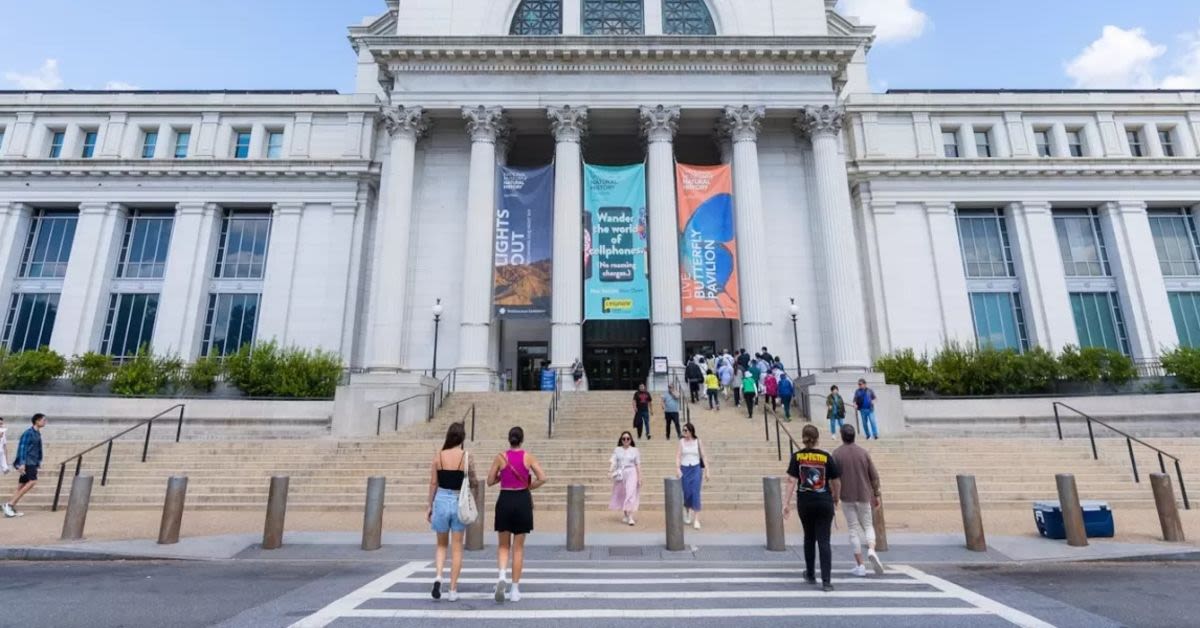
President Donald Trump has moved to confront what his administration describes as ideological indoctrination at the Smithsonian Institution by ordering bluntly worded warning signs posted outside the National Museum of American History.
According to WND, the action follows a 162-page report from the White House Domestic Policy Council concluding that the museum has embraced a hard-left political agenda at the expense of honest historical instruction. The report found that the museum has effectively abandoned straightforward historical education and scholarship and replaced it with an extreme political activism that seeks to transform our country.
That activism, the report contends, routinely disparages Americas founding principles, its historical achievements, and the character of its people, echoing the broader progressive project of recasting the nation as fundamentally unjust. With the presidents authority limited when it comes to removing Smithsonian leadership, the White House turned instead to the National Park Service, which controls the sidewalks and exterior areas around the museum and answers directly to the president.
New signage now being installed above each entrance delivers an unvarnished message to visitors: Warning: the exhibits in this museum were prepared by people who dont want you to love your country. The signs will also direct the public to the Domestic Policy Councils report, giving Americans the opportunity to review the documented evidence of bias for themselves rather than relying on the museums self-portrayal.
Trump and his administration have long argued that the Smithsonian, which receives roughly two-thirds of its $1 billion annual budget from federal taxpayers, has repeatedly elevated leftist narratives while sidelining factual, balanced accounts of U.S. history. In March, Trump instructed Vice President JD Vance and the Domestic Policy Council to remove improper ideology from Smithsonian museums and to recommend actions necessary to fully effectuate such policies, according to the report.
The president also moved to scrutinize and potentially restrict funding for programs that advance divisive narratives and improper ideology, signaling that taxpayer dollars should not subsidize political propaganda masquerading as scholarship. Those concerns intensified after a series of controversies at the National Museum of American History, including an exhibit implying that Mickey Mouse was racist and another sexually explicit LGBT display, among other ideologically charged presentations.
Anthea Hartig, director of the Smithsonian National Museum of American History, appeared before Congress and rejected the reports findings, insisting that the criticisms misrepresented the museums work. She nevertheless conceded the institution is not above reproach, stating, There is always room for improvement. But I also know the beauty and the inspiration and the expertise that lies in our collections, our exhibits, and our programming.
Smithsonian Secretary Lonnie Bunch likewise defended the institution, asserting that it is guided by scholarship, nonpartisanship, independence, accuracy, and integrity. Yet those assurances were sharply undercut during a congressional exchange when Rep. Brandon Gill, R-Texas, pressed Hartig on whether basic civility remains a virtue.
Hartig readily agreed that politeness is important, a seemingly uncontroversial point. Gill then highlighted the museums own materials, which astonishingly classify being polite as an attribute of white supremacy, exposing the ideological lens through which even ordinary behavior is now interpreted.
The clash over the Smithsonians direction underscores a broader national struggle over who controls the narrative of American historythose who see the United States as fundamentally flawed, or those who, like President Trump, insist that its story be told with honesty but also with respect for its achievements and ideals.
By forcing transparency through public warnings and tying federal funding to the removal of radical ideology, the administration is signaling that institutions sustained by taxpayers must serve education, not indoctrination, and that Americans have a right to museums that encourage them to understand their country, not to despise it.
Login