
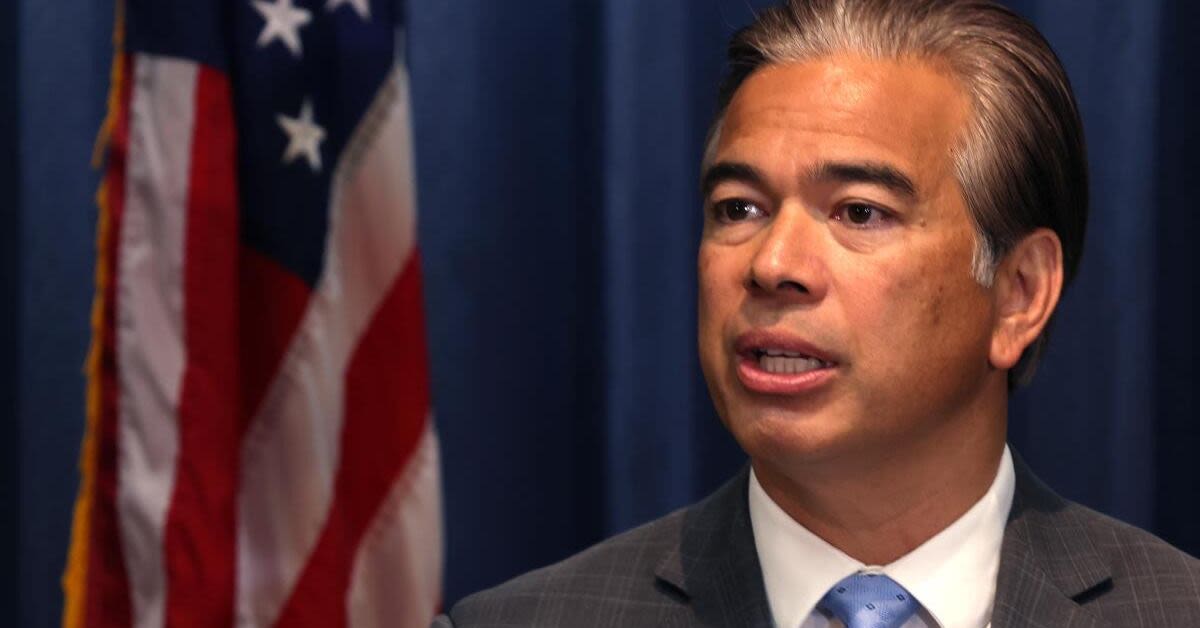
Republican leaders in California are charging that Democrat Attorney General Rob Bonta is attempting to rig the states 2026 election by quietly rewriting the official description of a voter ID ballot initiative in a way they say is designed to kill it at the polls.
As reported by Gateway Pundit, Proposition 39 has already qualified for the 2026 statewide ballot and would require voters to prove U.S. citizenship when registering to vote, a basic safeguard long supported by conservatives and a majority of Americans. When grassroots organizers were gathering signatures last year, Bontas office issued a neutral-sounding title and bullet-point summary describing the measures intent and mechanics.
Now, with only months remaining before the November vote, Bonta has dramatically altered the title and wording, a move Republicans argue is a calculated attempt to frighten casual voters and undermine a legitimate election integrity reform.
Republican Assemblyman Carl DeMaio, who also chairs the reform group Reform California, warned that the new language could decisively tilt the outcome. The ballot title is being manipulated to try to encourage people to vote no, to scare voters away. Theyre trying to falsely claim that citizens would be prohibited from voting, Carl DeMaio said on Wednesday.
DeMaio did not mince words about what he views as a partisan abuse of power by the states top law enforcement officer. It is so illegitimate. It is so corrupt. It is so dishonest what this attorney general has decided to do, because he does not support this initiative, DeMaio said, arguing that Bonta is using his office to protect a system that makes it easier for non-citizens and ineligible voters to slip through the cracks.
According to Fox 40, the original, more straightforward description of Proposition 39 read: ESTABLISHES ADDITIONAL VOTER IDENTIFICATION AND CITIZENSHIP VERIFICATION REQUIREMENTS. INITIATIVE CONSTITUTIONAL AMENDMENT. It then explained that under current law, individuals registering to vote must declare under penalty of perjury that they are U.S. citizens and provide basic identifying information such as birthdate, drivers license, or Social Security number.
The initial summary stated that the measure would amend the California Constitution to further require that voters present government-issued identification at the polls or provide the last four digits of a government-issued ID number when voting by mail. It also required the state to provide voter ID cards upon request and mandated that election officials annually report the percentage of each countys voters whose citizenship had been verified.
Bontas revised version, however, now carries a far more ominous title: PROHIBITS CITIZENS FROM VOTING UNLESS THEY PRESENT GOVERNMENT-ISSUED IDENTIFICATION. INITIATIVE CONSTITUTIONAL AMENDMENT. The new language emphasizes restrictions, declaring that the measure Prohibits voting by mail unless voter designates a government-issued identification number for their voter registration.
The updated summary further warns that the initiative Invalidates mail ballots if envelope does not include last four digits of government-issued identification number matching the number designated in the voters registration (e.g., if voter designates Social Security number for registration, but provides drivers license number on envelope, their ballot would not count).
It continues by stressing that the proposal Prohibits voting in person without presenting government-issued identification and Requires elections officials to annually report percentage of each countys voters whose citizenship status they have verified.
For conservatives who have long argued that secure elections depend on verifying both identity and citizenship, the clash over Proposition 39 underscores how far Democrat officials in deep-blue states will go to resist even modest safeguards. With President Trumps second administration prioritizing election integrity nationwide, the fight in California over a simple voter ID requirement is likely to become a high-profile test of whether state officials can use bureaucratic word games to thwart reforms that enjoy broad public support.
Login