
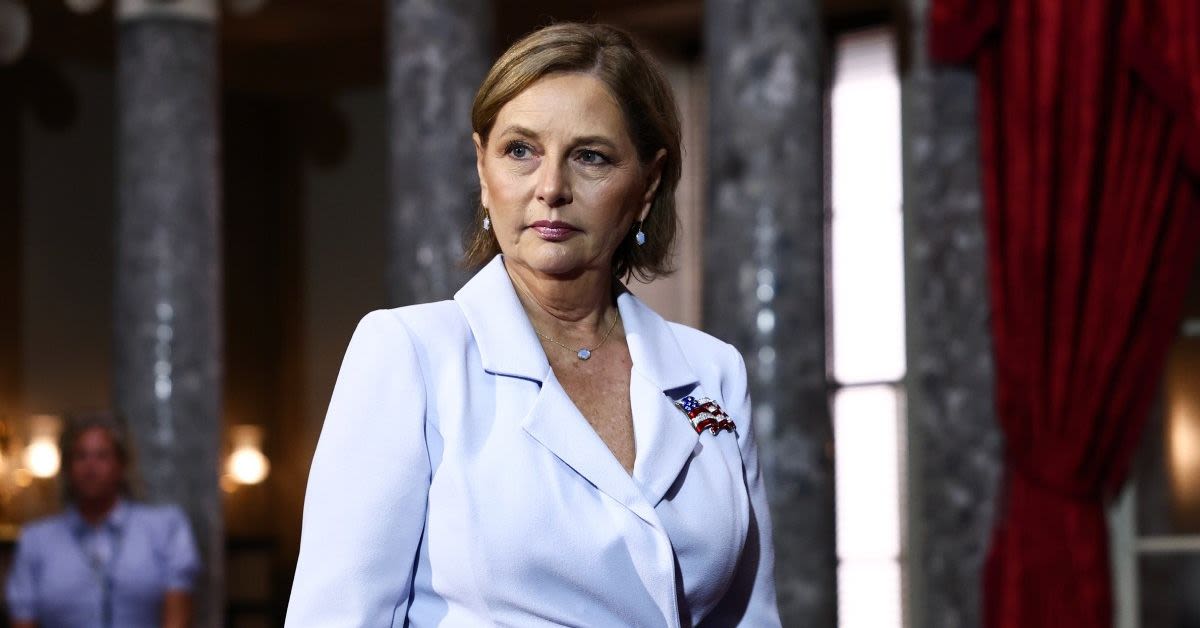
The late Sen. Lindsey Grahams unyielding devotion to public service ultimately cost him his life, his sister and successor, Sen. Darline Graham, R-S.C., told colleagues in a deeply personal tribute on Capitol Hill.
Speaking at the Senate Budget Committees first hearing since Grahams sudden death on July 11 from an aortic dissection linked to cardiovascular disease, Darline Graham described a brother whose work ethic and sense of duty routinely overrode concerns for his own health.
According to Newsmax, she framed his passing not as an accident of fate, but as the tragic culmination of years spent pushing himself to the limit in service to South Carolina and the nation.
"Just the absolute outpouring of love and support and all of the personal stories, how he just personally touched so many people is just absolutely amazing to me," she said, her voice breaking as she recounted the response from constituents and colleagues.
"That has meant so much to me over this last week."
Holding back tears, Darline Graham emphasized that her brothers legendary work habits were not a political talking point but a lived reality that worried those closest to him. "He worked harder than anyone I have ever known. And I'm not just saying that because he's my brother," she said.
She recalled pleading with him to ease his pace, aware that such an intense schedule was unsustainable even for someone as driven as Lindsey Graham. "I begged him to slow down. I knew it was not going to be good."
Darline Graham said she had long sensed that the same relentless drive that made her brother a formidable force in the Senate might one day exact a devastating price. "I had already prayed and knew in my heart that one day something was going to happen," she said.
"He was not going to stop. He loved serving the people of South Carolina. He loved serving this country. And I ultimately, like you, I feel like it took him from us." Her remarks underscored a conservative ideal of sacrificial public service, portraying Lindsey Graham as a statesman who placed duty above personal comfort or safety.
The hearing also marked a transition in leadership, with Sen. Ron Johnson, R-Wis., newly installed as chairman of the Budget Committee following Grahams death. Johnson, a fellow Republican known for his own hawkish stance on national security and fiscal restraint, echoed Darline Grahams belief that the senators punishing workload contributed directly to his passing.
"I think it cost him his life," Johnson said, noting that Graham had just returned from high-stakes trips to Turkey and Ukraine in the days before his death. "He dedicated his life. He gave his life to this country."
Johnson urged colleagues to treat Grahams death as more than a moment of mourning, suggesting it should prompt a renewed effort to restore civility and cooperation in a sharply divided Senate. He called the loss "maybe a wake-up call," arguing that if lawmakers truly wished to honor Grahams memory, they would recommit themselves to serious, good-faith legislating rather than partisan theatrics.
Several Democrats, often Grahams adversaries on policy, joined Republicans in recognizing his ability to bridge partisan divides without abandoning his conservative principles. Their tributes highlighted a lawmaker who could be a fierce opponent yet still sit down to negotiate, a quality increasingly rare in Washingtons polarized climate.
Sen. Sheldon Whitehouse, D-R.I., who frequently clashed with Graham on judicial nominations and other high-profile issues, acknowledged that the Senate had lost one of its most capable dealmakers. "We are a grimmer and a dumber place without Lindsey Graham," Whitehouse said, adding that the chambers capacity to confront complex challenges had been diminished.
For conservatives, Grahams career represented a blend of robust national defense, constitutionalism, and a willingness to engage across the aisle when it served the countrys interests. His final days, spent traveling to volatile regions like Turkey and Ukraine, reflected a worldview that saw American strength and engagement abroad as essential to preserving freedom at home.
Darline Graham, now stepping into her brothers role and committee assignments, signaled that while her familys grief remains raw, she intends to carry forward the standard he set.
"His legacy will live on," she said. "Thank you so much."
Her words left the clear impression that Lindsey Grahams life and death stand as a testament to a particular vision of public office: one rooted in hard work, patriotic duty, and a willingness to endure personal sacrifice for the sake of the republic.
As the Senate adjusts to his absence, both allies and former adversaries face the question of whether they will merely praise that legacy or strive to emulate the seriousness, resolve, and cross-party engagement that defined his conservative statesmanship.
Login