
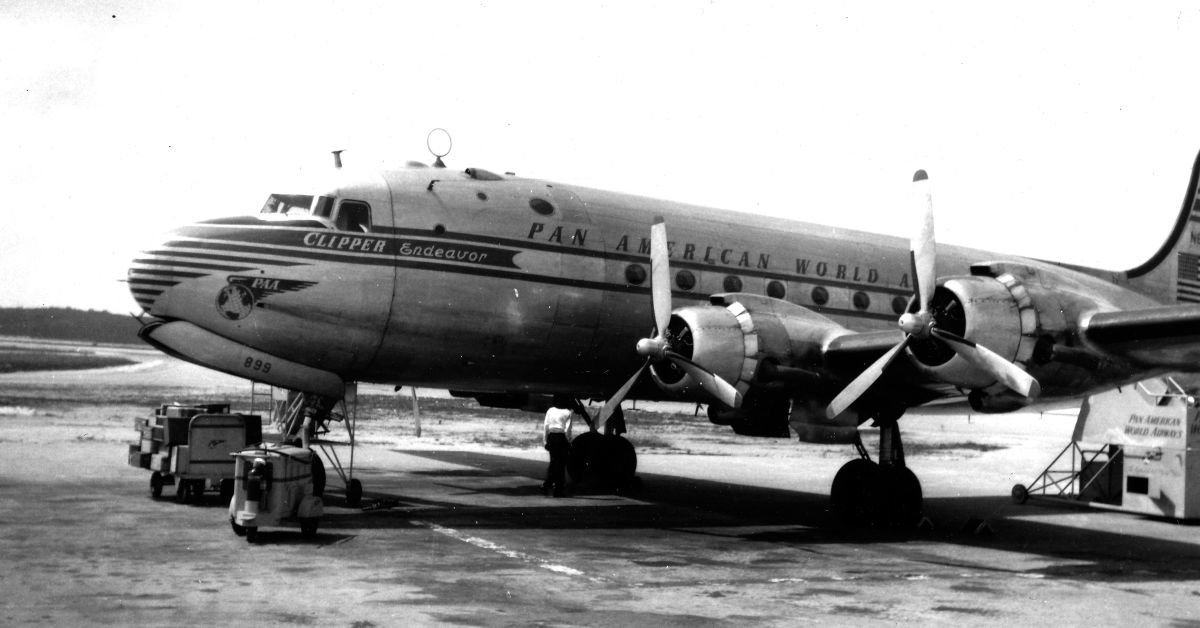
It was a catastrophe that unfolded in less than nine minutes and went on to reshape commercial aviation for generations.
For many modern travelers, the preflight safety briefing has become little more than background noise, an oft-repeated ritual that can feel tedious or even pointless. Yet, as reported by RedState, those instructions about life vests, flotation cushions, and emergency exits are not mere formalities; they are the hard-earned legacy of a disaster that claimed 52 lives in the Atlantic Ocean and forced regulators and airlines to confront the deadly consequences of passenger confusion and inadequate preparation.
The rediscovery of the wreckage of Pan American World Airways Clipper Endeavor, more than seven decades after it vanished beneath the waves, is a sobering reminder that safety procedures are written in blood, not bureaucracy.
The Pan Am flight, a Douglas DC-4 carrying 64 passengers and five crew members, departed San Juan, Puerto Rico, on April 11, 1952, bound for New York City. The aircraft barely had time to climb before both right-side engines failed in quick succession, leaving the pilot with no option but to ditch the plane in the Atlantic.
The flight lasted less than nine minutes, the right two engines losing power in quick succession as the Douglas DC-4 made its initial climb from San Juan, Puerto Rico, en route to New York. All 69 people on board survived the initial impact with the water, but what followed in the chaotic minutes after the ditching turned a survivable emergency into a mass-casualty event.
The pilot of the Pan American Clipper Endeavor had no choice but to ditch the plane at sea. All 69 of the passengers and crew members survived the initial crash on April 11, 1952, only for panic and confusion to hit in the precious few minutes after the water landing. The tail section broke off, the fuselage began to sink, and in the absence of clear, drilled-in safety procedures, panic overwhelmed many of those on board.
The planes tail section broke off and the fuselage sank, an accident that claimed 52 lives and became a catalyst for airline safety briefings and procedures for generations to come. Although 17 people were ultimately rescued, the remaining passengers and crew went down with the aircraft, a tragedy investigators later linked directly to the lack of effective safety briefings and preparedness.
Although all passengers survived the initial impact, only 17 were rescued, while the others sank with the plane, which investigators blamed on a lack of safety briefings. In the wake of the disaster, airlines and regulators instituted the now-familiar preflight safety announcements, ensuring that passengers would at least have a fighting chance to respond calmly and correctly in an emergency.
Because of the incident, airlines adopted the safety briefings we hear before takeoff today. For decades, the general area of the crash site off Puerto Ricos coast was known, but the exact resting place of the Clipper Endeavor remained elusive despite repeated attempts to locate it.
Despite decades of searches, the aircraft remained lost beneath the sea. That changed this year, when a coordinated effort by private-sector innovators and explorers finally succeeded where earlier searches had failed.
A years-long investigation led by the Air/Sea Heritage Foundation (ASHF), in partnership with Deep Sea Vision, Eco Minerals Company, and Discovery Channels Expedition Unknown, culminated in the discovery of the wreck in June. Air/Sea Heritage Foundation, along with Discovery Channels Expedition Unknown show, found the wreckage of the Pan Am Clipper Endeavor at the bottom of the Atlantic Ocean off Puerto Ricos coast.
Josh Gates, host of Expedition Unknown, announced the breakthrough in a video message that underscored both the historical significance and the emotional weight of the find. In April 1952, Pan Ams Clipper Endeavor crashed into the Atlantic Ocean just minutes after takeoff. The tragedy will go on to change aviation forever, leading to safety procedures that continue to protect passengers today.
He emphasized how long the mystery had endured. Despite decades of searches, the aircraft remained lost beneath the sea. Now, he said, that chapter has finally been closed thanks to modern technology and persistent effort.
Now, more than 70 years later, Josh Gates and a team of experts from the Air/Sea Heritage Foundation and Deep Sea Vision have successfully located and identified the long-lost wreck of the Clipper Endeavor. Gates elaborated on the mission and its outcome in a formal statement.
I am proud to announce that a new expedition led by Air Sea Heritage, Expedition Unknown, and Eco Minerals Company/Deep Sea Vision, has located Pan Am Clipper Endeavor nearly 2,000 feet down on the ocean floor, largely intact. He added that the story will receive extensive treatment on his program later this year, bringing the details of the search and discovery to a wider audience.
News about the discovery is breaking now, and it will be featured in depth in a special episode of Expedition Unknown coming later this year. Gates made clear that this was more than just another deep-sea curiosity for his team.
I can't wait to share this story with you. It is remarkable. Speaking to NBCs Today show, he described the moment the wreckage finally appeared on their screens.
Seeing the bright aluminum fuselage shining back at us from the ocean floor was a hugely emotional moment, he recounted, underscoring how the past suddenly felt very present as the Clipper Endeavor emerged from the darkness. For Gates, the link between that long-ago night and every modern flight is unmistakable.
Every time you step onboard an airplane today, you are safer because of what happened to Clipper Endeavor and her passengers three-quarters of a century ago. That observation reflects a broader truth conservatives often stress: real safety improvements tend to come not from abstract regulation for its own sake, but from hard lessons learned and then applied through practical, clearly communicated procedures.
The rediscovery of the Clipper Endeavor is a testament to private initiative, technological innovation, and historical memory working together to honor the dead and educate the living. ALERT: Research team found the Pan Am flight that crashed 74 years ago, killing 52 people, and changed airline industry standards forever.
A Pan Am flight on April 11, 1952, was headed from Puerto Rico to New York with 64 passengers and five crew members aboard. It crashed shortly after takeoff due to both right-side engines failing. Those stark facts, now paired with the visual confirmation of the wreck nearly 2,000 feet down, reinforce why those much-maligned safety briefings exist and why they should be taken seriously.
When discoveries like this are made, the first duty is to remember the human cost, not to indulge in spectacle or politicized narratives. This find answers a question that has lingered since the mid-20th century and, in doing so, highlights how the sacrifice of 52 souls helped drive life-saving changes that protect millions of travelers today.
Perhaps, as we fasten our seat belts and half-listen to the flight attendants, it is worth recalling that those instructions were born from real terror and real loss, not from bureaucratic whim. Rest in Peace, Clipper Endeavor passengers.
Login