
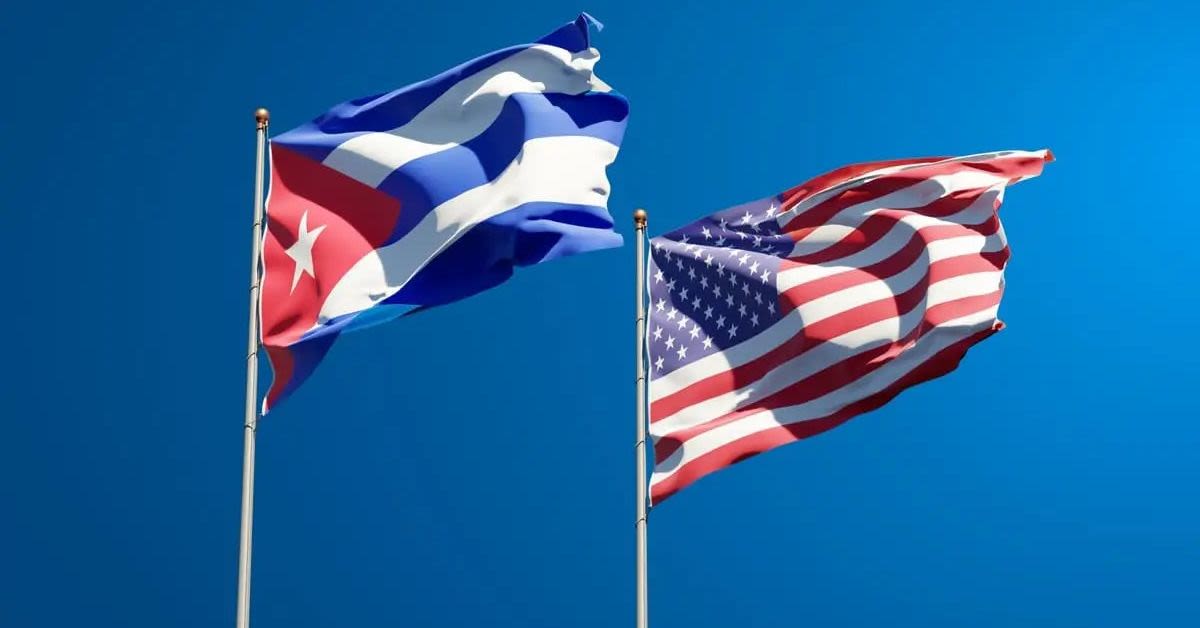
Cubas communist regime has spent decades quietly waging an ideological and intelligence war against the United States, a newly released State Department report warns.
The document, framed as a long-overdue accounting of Havanas covert operations, traces a continuous campaign of subversion from the early days of Fidel Castro to the present, as reported by Western Journal. It echoes and amplifies the concerns of Secretary of State Marco Rubio, who has long argued that the island dictatorship is not merely a regional nuisance but a central engine of radical leftist agitation in America and across the West.
For more than six decades, the Cuban regime has been the leading sponsor of radical leftism and Third Worldism in the United States, Rubio posted on X, underscoring that the threat is not theoretical but deeply embedded in the nations political and cultural life. The State Department is exposing the full history of Cuban espionage and subversion in our country. The American people deserve to know, he added, framing the report as a necessary act of transparency after years of downplaying or ignoring Havanas reach.
Rubio, the son of Cuban migrs who fled the very system now under scrutiny, has used his own family history to highlight what he sees as the naivet of American elites toward Marxist regimes. In a presentation last week to a global forum on left-wing terrorism, he warned that The Cuban regimes sprawling intelligence and ideological network helped to build the far-left in our country and in our hemisphere, and it remains inextricably linked to the far-left groups and movements across and beyond the West, according to comments posted on the State Department website.
That assessment is now formally backed by the departments report, which contends that the Cuban regime has waged a sustained campaign of subversion against the United States.
Far from being a relic of the Cold War, the report portrays Cuba as an active and adaptive adversary that has learned to compensate for its military weakness with sophisticated political warfare. It is a campaign that has infiltrated the highest reaches of the U.S. government, recruited and cultivated generations of American activists, backed an unprecedented wave of left-wing terrorism on American soil, and carried out one of the most durable and damaging foreign intelligence penetrations in American history, the report said.
The Cuban campaign against America is unique. It is irregular and covert even at the peak of its military power, Havana never possessed the capacity to defeat the United States in a conventional armed conflict, it continued, emphasizing that the battlefield is the American mind and the American institution, not the conventional front line.
Instead of tanks and missiles, Havana has invested in ideas, networks, and infiltration, according to the State Departments findings. Instead, the Cubans perfected a new model for a long war of attrition, organized around espionage, infiltration, sabotage, proxy networks, and a revolutionary infrastructure designed to turn America against itself, the report added, describing a strategy that weaponizes domestic discontent. The specific and peculiar form of Marxism that the Cuban government helped to develop and seed was uniquely fitted for this purpose, the report said, observing, Since the 1960s, the regime has served as the beating heart of a new and distinct kind of Marxism, forged around an overriding resentment and fundamental hatred of the United States and the broader West.
While Cubas socialist experiment has produced economic collapse, repression, and mass emigration at home, the report argues that its external ideological project has been disturbingly effective. The regimes internal failures have not prevented it from scoring victories on what the document calls the ideological battlefront, where narratives of grievance and revolution have been exported into American classrooms, streets, and media.
Many of the most significant upheavals in recent American political history from the George Floyd riots to the rise of Antifa to the explosion of pro-terrorist activism on American college campuses can be linked, in some way, shape or form to Cuban influence, the report said, drawing a direct line between Havanas propaganda machine and the radicalization of segments of the American left.
The report singles out the summer of 2020 as a moment when Cuba openly reveled in American turmoil. It notes the Cuban regimes gleeful support of the George Floyd uprisings, highlighting how Havana seized on the unrest to discredit the United States on the world stage. As protests and riots swept American cities in the summer of 2020, Cuban state media and officials issued daily commentary portraying the United States as a systemically racist country morally unfit to criticize Cubas human-rights record, the report said, illustrating how foreign adversaries exploit progressive narratives about Americas alleged irredeemable racism.
According to the State Department, this is not accidental but the culmination of a deliberate strategy dating back to Castros seizure of power in 1959. The report said that since then, Cuba has embraced the novel and insidious method of persuading the children of the West to turn against their own inheritance. And in the institutions of the modern American left in its universities and its nonprofits, its street movements and its media that campaign has enjoyed a success its founders could scarcely have imagined. The regimes method was never primarily premised on kinetic warfare, although it was not above utilizing violence and terror when it suited its interests. It was subtler, and far more dangerous: to attack the United States not from without but from within to turn Americans into instruments of their own nations undoing, the report said, warning that the true danger lies in Americans who have internalized and now advance Havanas worldview.
Beyond its own operations, Cuba is portrayed as a crucial hub in a broader anti-American axis that includes other authoritarian powers. The report said Cuba serves as the connective tissue of a broader anti-American coalition, a staging ground where the ambitions of Moscow, Beijing, and Tehran converge with the radical movements operating inside our own borders. At a time when Cuba itself is staggering under the weight of an American ban on Venezuelan oil, the regime appears to be doubling down on the one arena where it still wields outsized influence: ideological warfare against the United States and the West.
For conservatives who have long warned that Marxist ideology and foreign subversion are not relics of the past but present dangers, the State Departments findings will be seen as overdue validation. The report raises hard questions for policymakers and citizens alike: how many of todays radical movements are truly organic, and how many have been nurtured by a hostile regime that for more than six decades has sought to turn Americans into instruments of their own nations undoing?
Login