
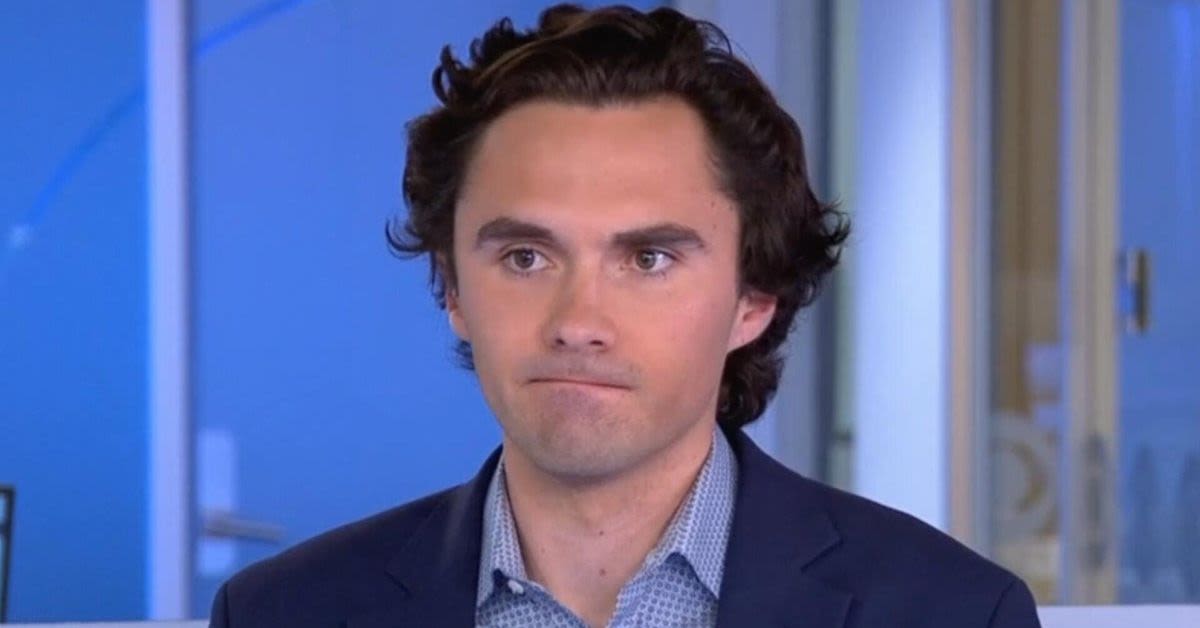
Former Democratic National Committee (DNC) Vice Chair David Hogg has sharply criticized his partys House campaign arm for backing what he called terrible candidates just months before the November midterm elections.
Speaking at the College Democrats of America convention in Washington, D.C., Hogg vented frustration with the Democratic Congressional Campaign Committee (DCCC), declaring, Imagine if there was a non-evil version of the [Democratic Congressional Campaign Committee (DCCC)] that existed. According to The Hill, his remarks underscored a widening rift inside the Democratic Party over how its leadership intervenes in primary contests and allocates resources in key races.
Hogg, who has fashioned himself as a reformer willing to challenge party orthodoxy, did not hold back in his assessment of the DCCCs track record. No offense. Like, we need their funding in general elections, but man, they really know how to pick terrible candidates sometimes. But its fine. They usually lose, he added, suggesting that the committees choices often fail to resonate with voters even in favorable political environments.
His broadside came on the heels of an upbeat assessment from DCCC Chair Rep. Suzan DelBene (D-Wash.), who recently predicted that Democrats are poised to reclaim the House majority in November. Despite their attempts to gerrymander, starting in Texas, we still have opportunities to pick up seats, DelBene said of Republican redistricting efforts while in conversation with The Hills Amie Parnes at the Hill Nation Summit, framing GOP map-drawing as an obstacle Democrats can still overcome.
DelBene pointed to several Texas races as evidence that Democrats can make gains even in traditionally conservative territory. She said newcomers Bobby Pulido and Johnny Garcia have opportunities to flip districts in the Lone Star State and said incumbent Democratic Reps. Vicente Gonzalez (Texas) and Henry Cuellar (Texas) are in strong positions for re-election, signaling confidence that the party can both defend and expand its foothold in the state.
The DCCC chair argued that Republican strategists have miscalculated by focusing on district lines rather than everyday concerns like inflation and the cost of living. All this, all of the things they did to try to continue to change districts, et cetera, it backfires because theyre not focused on the issues that matter, DelBene said of her strategy to beat Republicans on the issue of affordability, casting Democrats as more attuned to economic anxieties.
She further claimed that GOP lawmakers are out of touch with their own voters, leaving an opening for Democrats to present themselves as the authentic voice of local communities. Theyre not listening to their communities, and people know that they want folks who are going to stand up for them, she added, even as many Americans continue to associate soaring prices and economic uncertainty with Democratic policies in Washington.
DelBenes optimism, however, has collided with deep skepticism from progressives and insurgent Democrats who argue that the DCCC routinely meddles in primaries to protect establishment favorites. Hoggs comments over the weekend follow his decision to step down as DNC vice chair in June of 2025 following intense backlash over his Leaders We Deserve super PACs plans to fund primary challenges against incumbent Democratic lawmakers in the House, a strategy that mirrored the lefts own efforts to unseat moderates.
The uproar over his super PAC prompted the DNC to call a rare revote on his leadership role, a move that effectively forced a choice between the partys old guard and its self-styled reformers. The controversy prompted the DNC to hold a revote on his position, leading Hogg to forgo running again as he said he would focus on his advocacy group, stepping aside rather than continue an internal war that party leaders clearly wanted to contain.
While the DNC publicly attributed the revote to technical concerns, many observers saw a clear political message aimed at reining in internal dissent. While the DNC cited procedural issues and parliamentary violations from the original election as the reason for the revote, the move was widely viewed as a referendum on Hoggs confrontational approach to party reform, highlighting the leaderships discomfort with aggressive primary challenges against sitting Democrats.
Hogg himself acknowledged that his vision for the party clashed with that of senior officials who prefer tighter control over candidate selection and messaging. Hogg noted there was a clear fundamental disagreement between himself and senior party members regarding the role of a DNC vice chair, underscoring how little tolerance there is for internal checks on the partys central apparatus.
The DCCCs intervention in primaries has also drawn fire from members of the partys progressive wing, who typically favor more left-leaning candidates but in this case demanded neutrality. In May, Reps. Pramila Jayapal (D-Wash.), Greg Casar (D-Texas), Maxwell Frost (D-Fla.), Delia Ramirez (D-Ill.), Chuy Garcia (D-Ill.), Jamie Raskin (D-Md.) and Lloyd Doggett (D-Texas) shared a statement raising concerns with the DCCCs actions in a California House primary, signaling rare public unity against the partys own campaign arm.
Those lawmakers objected to the committees decision to elevate one Democrat over another in what was supposed to be a competitive contest. The lawmakers took issue with the campaign arm endorsing California Assemblymember Jasmeet Bains over another Democratic candidate and adding her to its Red to Blue program, which ensures organizational and fundraising support, effectively putting a thumb on the scale before voters had their say.
In their statement, the Congressional Progressive Caucus PAC leaders framed the DCCCs move as an affront to grassroots democracy and local decision-making. We disagree with the DCCCs decision to attempt to tip the scales in this race. Voters, not the DCCC, should pick Democratic nominees, CPC PAC co-chairs and board members wrote in a statement previously shared with The Hill, making clear that even the left flank of the party resents top-down control when it undermines their preferred process.
They further stressed that the partys official campaign arm should not be in the business of pre-selecting winners in contested primaries, especially in districts that could be competitive in November. The Congressional Progressive Caucus PAC and our members have consistently advocated for DCCC neutrality in competitive House primaries, and the DCCC should have observed that policy in this race, they added in a rare rebuke to the partys campaign arm, even as the DCCC defended its actions, noting Bains status as an elected official in the district and her proven ability to win.
Login