
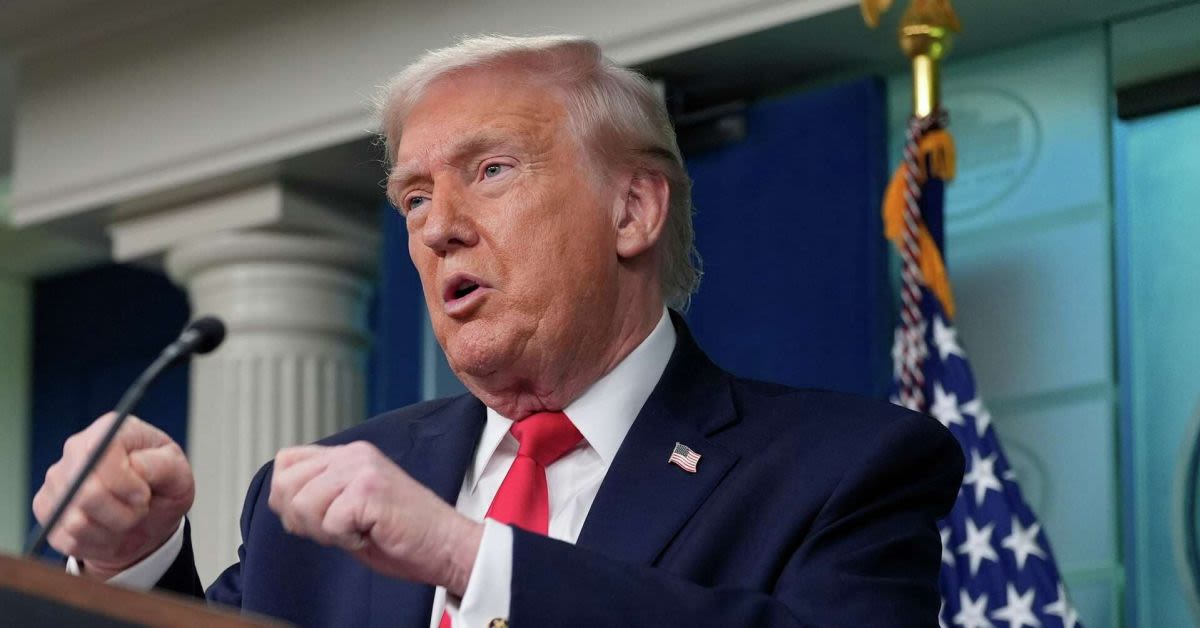
President Donald Trump pressed Senate Republicans to expand a bipartisan Russia sanctions bill to include Iran, tying the move to the legacy of the late Sen. Lindsey Graham, R-S.C., as U.S. forces continued striking Iranian targets for an eighth consecutive night.
According to Newsmax, Trump used his Truth Social platform to call for a tougher line on Tehran at a moment of heightened tension in the Middle East and renewed debate over American power. Republicans should add Iran to the Russian Sanctions Bill, Trump wrote, adding, That's what Lindsey wanted to do, and it was going to happen. IMPORTANT!!! The appeal came as lawmakers prepared to advance Grahams signature legislation, the Sanctioning Russia Act of 2025, which has become both a foreign-policy instrument and a posthumous tribute to one of the Senates most hawkish voices.
Grahams bill, introduced in April 2025, would impose sweeping secondary tariffs of up to 500% on countries that purchase Russian oil, gas, uranium, and other key commodities. The measure stalled for months while Trump pursued direct diplomacy with Russian President Vladimir Putin, a strategy that reflected his long-standing belief that strength at the negotiating table can be more effective than endless bureaucratic sanctions regimes.
Momentum shifted after Graham secured a deal with the White House shortly before his sudden death, transforming the legislation into a bipartisan vehicle for confronting Moscow. Senate Majority Leader John Thune, R-S.D., and Sen. Jeanne Shaheen, D-N.H., the ranking member of the Foreign Relations Committee, have since framed passage of the bill as a fitting way to honor Grahams decades-long campaign for a robust American posture abroad.
Trump first publicly floated the idea of adding Iran to the package during a Tuesday White House availability, signaling a harder edge toward the regime that has long sponsored terrorism and targeted U.S. interests. He told reporters lawmakers would like to add Iran, and they would like to add Hezbollah, according to Time, underscoring the growing recognition that Tehran and its proxies are central pillars of the global axis aligned with Moscow.
Senate aides have suggested that Iran might already be ensnared by the bills existing provisions, which target Russias defense partners and those enabling its war machine. Even so, Trumps call to explicitly name Iran reflects a conservative view that clarity and direct pressure are essential when dealing with state sponsors of terror, rather than relying on vague or indirect language that can be exploited by adversaries and appeasers alike.
Not all lawmakers are eager to reopen the text, however, despite the mounting evidence of Iranian aggression. Sen. Richard Blumenthal, D-Conn., a co-author of the bill, has publicly resisted revisiting the language, arguing that the carefully negotiated package should move forward as written and warning against changes that could upset the delicate bipartisan balance.
Democrats have also raised broader concerns about provisions granting the president expansive tariff authorities, a familiar refrain from a party that often seeks to constrain executive power when it is wielded by a Republican. Those objections intersected with a recently resolved Supreme Court dispute over executive tariff powers, a case that reaffirmed the presidents ability to act decisively on trade and sanctionstools conservatives see as vital to defending American sovereignty and economic security.
The current version of the legislation goes beyond new penalties by codifying sanctions previously imposed through executive orders, making it substantially more difficult for a future president to unilaterally unwind them. That structure reflects a conservative skepticism toward abrupt policy reversals, particularly by administrations inclined toward accommodation with hostile regimes, and aims to prevent a repeat of the Obama-era rush to normalize relations with Iran.
Trumps Sunday post was also his first public statement since the Pentagon confirmed that two U.S. service members were killed and a third remained missing after Iranian ballistic missiles and drones struck Muwaffaq Salti Air Base in Jordan on Friday. U.S. Central Command reported that four additional service members were medically evacuated and later discharged, a stark reminder that Irans aggression is not theoretical but lethal and ongoing.
Speaking to NewsNation, Trump called the deaths a very sad thing, a brief but pointed acknowledgment of the human cost of what many on the right view as years of failed deterrence and mixed signals from Washington. CENTCOM said Saturdays retaliatory strikes were designed to further degrade Irans ability to threaten commercial shipping in the Strait of Hormuz and to punish Islamic Revolutionary Guard Corps units that launched the Jordan attack, signaling a more forceful response than the calibrated pinpricks that characterized prior administrations.
The push to fold Iran into the Russia sanctions package comes as Trump has also signaled stronger support for Ukraine, even as he continues to insist that the war must be brought to a negotiated end. That dual posturebacking Kyiv while pressing for a broader, integrated sanctions regime against both Moscow and Tehranreflects a conservative preference for peace through strength, leveraging economic and military power to compel adversaries to the table rather than conceding ground in the name of restraint.
For many Republicans, explicitly targeting Iran within the Russia bill would align U.S. policy with the reality on the ground: a network of hostile regimes, from Moscow to Tehran to their terrorist proxies, working in concert against American interests and allies. As the Senate weighs whether to heed Trumps call, the debate will test whether Washington is prepared to confront that axis with the clarity and resolve Graham championed, or whether it will settle for a narrower approach that leaves key threats only partially addressed.
Login