
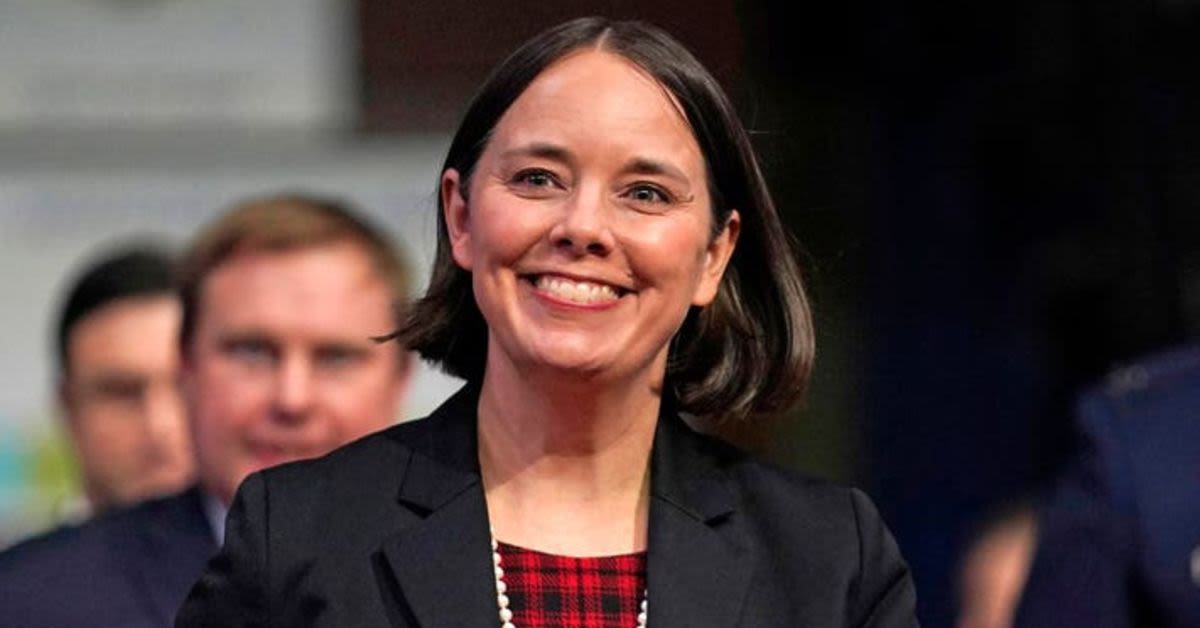
Give Maine Secretary of State Shenna Bellows credit for creativity, if not for competence, because her latest attempt to explain away a disastrous debate performance may be one of the most novel political excuses in recent memory.
The Democrat, long regarded as an establishment favorite, appeared Thursday night in two separate primary debates as one of eight contenders vying to replace disgraced oysterman, Nazi-tattoo enthusiast and accused rapist Graham Platner at the top of the Democratic ticket in this falls pivotal U.S. Senate race. As reported by Western Journal, the stakes were high: With the partys nominee to be chosen at a July 25 convention rather than a traditional primary, any spark of energy or command of the issues could have given Bellows a crucial edge over the prohibitive favorite, former state Senate President Troy Jackson.
Instead, viewers were treated to a political pileup. For those who tune into NASCAR for the wrecks rather than the racing, the debates resembled a two-hour highlight reel of unforced errors, awkward pauses and rhetorical spinouts, with Bellows at the center of some of the most glaring mishaps.
Bellows, unlike several of her lesser-known rivals, entered the evening with the most to lose. As the institutional choice of Maines Democratic establishment, she needed to project steadiness, fluency and electability, particularly against Republican Sen. Susan Collins, who has repeatedly demonstrated her staying power in a purple state.
Jackson, for his part, came across as flat and uninspired, but at least he managed to get through his answers without seizing up. Bellows, by contrast, repeatedly stalled mid-sentence, at times looking like a malfunctioning computer, unable to load even her own well-rehearsed talking points, including her much-publicized but failed effort to bar Donald Trump from Maines 2024 presidential ballot over the events of Jan. 6, 2021.
The morning after, Bellows faced two urgent challenges: She needed to raise money despite the widely panned performance, and she needed to craft some kind of explanation that might reassure nervous delegates and donors. Her chosen strategy, unveiled in a fundraising email Friday, was as audacious as it was revealing.
Rather than concede poor preparation or acknowledge that she simply faltered under pressure, Bellows pointed to a fatal Immigration and Customs Enforcement shooting earlier in the week as the reason she appeared rattled and raw. In her telling, the death of a foreign national at the hands of a federal officer had so shaken her that it disrupted her ability to function on the debate stage.
On Monday, Colombian national Johan Sebastin Durn Guerrero was shot and killed in Biddeford, a coastal city in southern Maine, after an encounter with ICE agents. According to the Associated Press, the vehicle attempted to flee the scene and, fearing for public safety, an officer discharged his weapon, suggesting a rapidly unfolding situation in which the suspect allegedly used his car as a weapon.
The AP further noted that questions have since been raised about the ICE officers mental health, though those concerns surfaced after the debate took place. That timeline makes it difficult to argue that such post-incident speculation could have weighed heavily on Bellows mind as she struggled to answer basic policy questions on live television.
None of that stopped Bellows from tying her halting performance directly to Durn Guerreros death. The pundits said I froze at the debate last night, she wrote in the fundraising appeal, immediately pivoting from media criticism to emotional self-justification.
My friends have said Ive been raw all week. The truth is I am. I dont know how not to be raw after Johan Sebastian Duran Guerrero was brutally killed by ICE in the streets of Biddeford on Monday. In those lines, Bellows cast herself as a deeply feeling public servant, overwhelmed by grief and outrage at federal law enforcement, even as she sought campaign cash off the same incident.
She continued to lean into the emotional framing. Our neighbor is dead, his little girl left without a dad. Of course Im raw. Of course Im afraid for my country and our friends and our communities, she wrote, invoking family tragedy and national decline in a single breath.
But leading in times like these doesnt require that we not be afraid, that we not be raw, or that we not be human. It doesnt require that we always deliver the perfect punchline. What this moment does ask and need of us is action. Working through our grief, organizing in our pain, and fighting through our fear of what happens if we dont. In other words, Bellows suggested that emotional fragility on stage is not a bug but a feature, a sign of her humanity and commitment.
She then tried to recast her week as one of gritty, behind-the-scenes activism rather than campaign missteps. This week Ive been running to where I needed to be, not for the photo op, but for the work, she insisted, before adding that these arent normal times. And so we cannot rely on normal and therefore old playbooks.
Bellows also attempted to reassure Democrats worried about her ability to take on Collins in a general election. Yes, we need leaders who can perform and hold our own especially against Susan Collins, she wrote. And if theres any doubt about whether Im tough enough to stand up to her, just look at my fights and wins against Donald Trump.
That boast, however, glosses over some inconvenient facts. While Bellows has indeed made a name for herself among progressives by targeting Trump, her most visible and consequential confrontation with the president her attempt to keep him off Maines ballot ended in a high-profile defeat, reinforcing concerns about partisan overreach and judicial overstepping.
Her record against Collins is even more sobering. Bellows already challenged the Republican senator once, in the 2014 midterm elections, and lost by more than 30 points, a landslide that underscored Collins enduring appeal to Maines moderate and independent voters and Bellows difficulty connecting beyond the progressive base.
Yet in her email, Bellows invited supporters to believe that a single ICE-involved shooting was enough to derail her ability to answer even the simplest of questions, including one about permanent daylight saving time. Asked about the issue, she produced a meandering, almost childlike response: I love when it gets light in the morning and dark at night.
That kind of free-association rambling sounds less like the considered view of a seasoned public official and more like the internal monologue of a confused character in a Faulkner novel. For a candidate who has spent a lifetime in and around politics, the inability to articulate a coherent position on a straightforward policy question raises serious doubts about preparation and judgment.
At another point in the debate, Bellows appeared to briefly freeze as she tried to recall that she had, in fact, run against Collins before. The moment was fleeting but telling, suggesting either a lapse in focus or an instinctive reluctance to remind viewers of a past drubbing at the hands of the very incumbent she now claims she is best positioned to defeat.
She also stumbled when asked about how she would approach oversight responsibilities in the Senate. Bellows began confidently enough I have many ideas on this one only to pause awkwardly before managing to articulate even a single concrete idea, reinforcing the impression of a candidate who talks in slogans but struggles with substance.
Her defenders might urge voters to forgive her because she was, as she repeatedly emphasized, raw. Yet that framing only underscores the central problem: A U.S. Senate campaign is, in effect, a months-long job interview, and Thursdays debates were a crucial part of that process, testing not just ideology but composure, clarity and resilience under pressure.
The pressures of the Senate itself are exponentially greater than those of a single debate or one controversial law-enforcement incident. Legislators must navigate wars, economic crises, judicial confirmations, national security threats and complex negotiations, often under intense public scrutiny and partisan fire.
Bellows has been a fixture in Maine politics for more than a decade, and by now she should know how to prepare for a high-stakes debate. To claim that she was so emotionally overwhelmed by an ICE shooting that she could not function on stage is less an explanation than an admission that she cannot juggle multiple responsibilities without coming apart.
From a conservative perspective, her response also reveals a deeper ideological reflex: the instinct to blame federal law enforcement first, to cast illegal immigrants or foreign nationals primarily as victims, and to turn every tragedy into a vehicle for progressive fundraising and activism. Rather than acknowledge the difficult split-second decisions officers sometimes must make when a suspect allegedly weaponizes a vehicle, Bellows defaulted to the narrative that ICE brutally killed a man in the streets.
The fact that Bellows was the establishments preferred candidate before the debate says a great deal about the current state of the Maine Democratic Party. Graham Platners rise, despite his alleged crimes and disturbing personal history, already exposed a troubling lack of vetting and seriousness among party elites.
Now, with Bellows melting down on stage and then blaming her performance on being raw over an ICE shooting, Democrats appear unable to field a single candidate who combines energy, competence and basic steadiness under pressure at least not one without glaring character issues or ideological extremism. For voters who value order, accountability and sober leadership, that should be alarming.
By doubling down on her excuse in a fundraising email, Bellows effectively turned a moment of weakness into a campaign theme, inviting supporters to see emotional volatility as a virtue and law enforcement as the villain. For those who believe in personal responsibility, respect for the rule of law and the expectation that public officials can handle more than one crisis at a time, it was a revealing and deeply troubling choice.
Login