
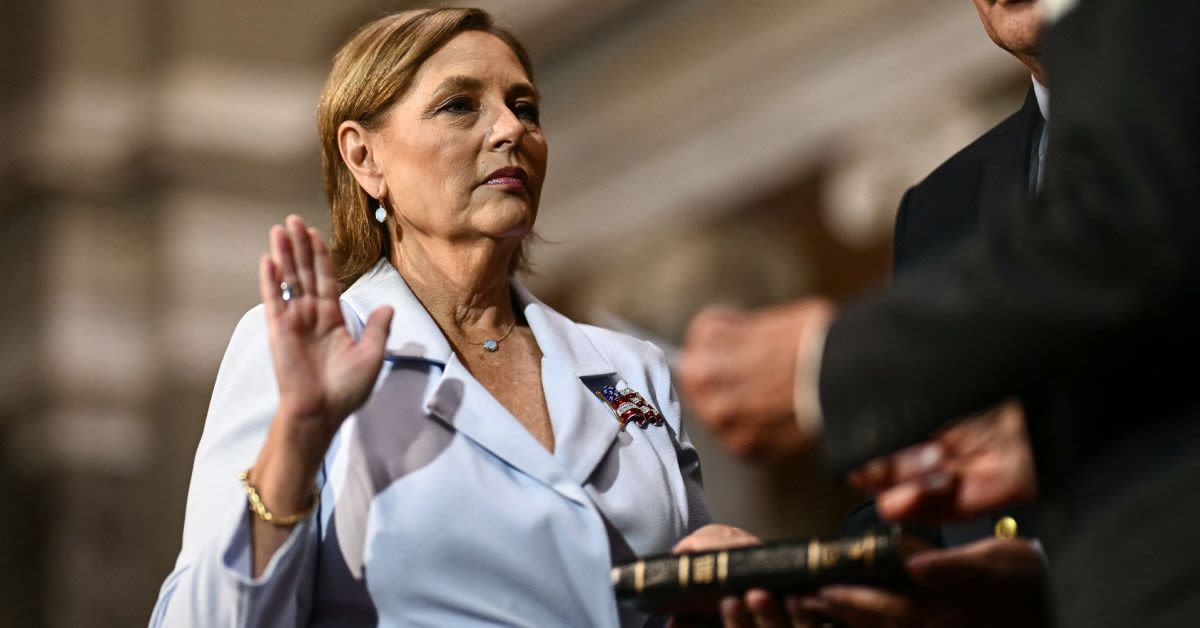
South Carolinas newest senator, Darline Graham, is already signaling she may seek a full term in her late brothers seat, injecting fresh uncertainty into a high-stakes Republican primary that will help shape the future of the party in a solidly red state.
According to Newsmax, Graham, who was sworn in earlier this week to complete the term of her brother, the late Sen. Lindsey Graham, has privately notified the White House that she is weighing a bid for the seat in her own right. The outreach reportedly occurred only days after Republican Gov. Henry McMaster appointed her to serve as an interim senator through the end of the year, a move President Donald Trump had strongly encouraged as a fabulous tribute to her brother.
The appointment was widely interpreted as a strategic pause, giving Trump and his advisers time to evaluate the crowded field before deciding whom to endorse in the Aug. 11 Republican primary. If Darline Graham enters the race, that careful calculus could be upended, potentially pitting Trumps desire to honor a loyal allys legacy against other political and ideological considerations within the GOP.
Graham, who became South Carolinas first female U.S. senator when she took the oath of office Tuesday, has moved quickly to demonstrate she is more than a ceremonial placeholder. Within hours of being sworn in, she joined Sen. Richard Blumenthal, D-Conn., in introducing legislation aimed at strengthening sanctions on Russia, a bipartisan gesture that nonetheless will be closely scrutinized by conservatives wary of open-ended foreign entanglements and heavy-handed economic penalties.
Her lack of prior elected experience is likely to be both a vulnerability and a selling point in a Republican electorate increasingly skeptical of career politicians. Graham previously worked as an optician and held positions in several South Carolina state agencies, a rsum that may appeal to voters who favor practical, real-world experience over Washington credentials, particularly in a state that has long rewarded plainspoken, conservative leadership.
The emotional backdrop to this political drama remains the sudden death of Lindsey Graham, 71, who, according to a preliminary report from the Washington medical examiner, died last weekend from an aortic dissection. He had raised his younger sister after their parents died, and his passing not only created a vacancy in the Senate but also left a personal and political legacy that many South Carolina Republicans will be reluctant to see diluted or redirected away from his staunch support for President Trump and a robust national defense.
Under South Carolina law, the GOP nominee will be selected in a special primary on Aug. 11, with a runoff scheduled for Aug. 25 if no candidate secures a majority. The winner will face Democrat Annie Andrews in the Nov. 3 general election, a contest Republicans are favored to win but cannot afford to take lightly in an era when Democrats have repeatedly tried to nationalize Senate races and pour outside money into traditionally conservative states.
The Republican field is already taking shape, underscoring how coveted the seat remains in a party that sees the Senate as a critical bulwark against the Biden administrations progressive agenda. Businessman Mark Lynch, who unsuccessfully challenged Lindsey Graham in last months primary, has announced another run, while Reps. Nancy Mace, Russell Fry, and Ralph Norman, Lt. Gov. Pamela Evette, and former Rep. Mark Sanford are all considering bids, setting up a potential clash between populist conservatives, establishment figures, and libertarian-leaning voices.
National Republican Senatorial Committee Chairman Tim Scott, R-S.C., has offered early praise for Darline Grahams performance, signaling that party leaders are watching her closely. Scott said she has been off to a remarkable start and could be a seriously good fit for the state, comments that will be read as a subtle but significant boost for a possible candidacy rooted in continuity with Lindsey Grahams record on defense, judicial appointments, and support for Trump.
Sen. Ted Cruz, R-Texas, made clear that Trumps endorsement remains the central variable in the race, reflecting the presidents enduring influence over Republican primaries. Like many Republicans, I am waiting to see what the president decides, and watching with great interest, Cruz told Semafor, encapsulating the cautious posture of many national conservatives who want to align with Trumps choice while also ensuring the nominee is reliably conservative on spending, border security, and cultural issues.
Trumps role is especially pivotal given his personal relationship with Lindsey Graham, one of his closest allies in the Senate and a key defender during impeachment battles and judicial confirmation fights. The presidents earlier push for Darline Grahams appointment as an interim senator suggests he sees symbolic and political value in keeping the Graham name in the seat, but whether that translates into a full-throated endorsement in a contested primary remains an open question.
For grassroots conservatives, the emerging contest will likely revolve around which candidate can most credibly promise to resist the Biden administrations regulatory overreach, secure the southern border, and protect religious liberty and Second Amendment rights. Darline Grahams swift move to co-sponsor Russia sanctions legislation may help her project seriousness on national security, yet she will also need to reassure fiscal hawks and America First voters that she will not drift toward the bipartisan spending habits that have frustrated many on the right.
As the August primary approaches, South Carolina Republicans face a choice that blends personal loyalty, ideological conviction, and strategic calculation about the future of their party. Whether Darline Graham ultimately steps into the race or remains an interim caretaker, the contest to replace Lindsey Graham is poised to become one of the most closely watched GOP battles of the year, testing Trumps sway, the appeal of outsider candidates, and the enduring strength of conservative principles in a changing political landscape.
Login