
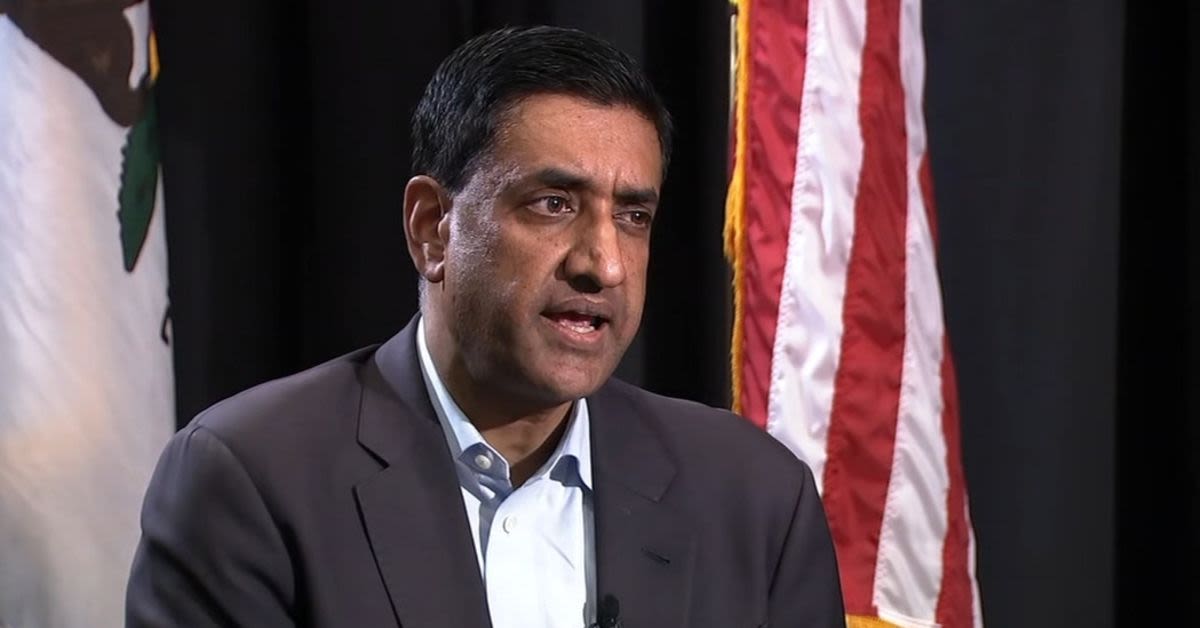
Democratic Rep. Ro Khanna of California, once marketed as a Silicon Valleyfriendly moderate, is rapidly emerging as a case study in how far left-wing pandering can go off the rails.
According to RedState, Khannas recent behaviorfrom his bizarre defense of disgraced Maine Senate hopeful Graham Platner to his now-ridiculed tale of being violently detained in the West Bankappears to be part of an informal rollout for a 2028 presidential bid that is already backfiring. Instead of projecting seriousness or leadership, he has managed to highlight the ideological chaos inside todays Democratic Party, where radical posturing often seems to matter more than coherent policy or respect for voters judgment.
Khannas latest effort to burnish his progressive credentials came in the form of a social media post that may qualify for what conservatives would call the pandering hall of fame. In it, he attempted to transform two defeated far-left House members into racial martyrs over their opposition to U.S. aid for Israel.
Today over 100 Democrats voted for the Massie Amendment to zero aid to Israel, Khanna wrote, invoking a measure sponsored by libertarian-leaning Republican Rep. Thomas Massie. My brother @RepBowman & @CoriBush lost their seats for this stand 2 years ago. As a colleague told me, Black martyrdom is normalized in America. Today I want to recognize their courage. He repeated the same message again: Today over 100 Democrats voted for the Massie Amendment to zero aid to Israel. My brother @RepBowman & @CoriBush lost their seats for this stand 2 years ago. As a colleague told me, Black martyrdom is normalized in America. Today I want to recognize their courage.
The rhetoric was so over the top that it raised an obvious question: What the heck is he even talking about? Neither Jamaal Bowman nor Cori Bush is dead, imprisoned, or persecuted by the state; they simply lost Democratic primaries, the most basic expression of voter accountability in a constitutional republic.
Those defeats were not the result of some shadowy plot but of ordinary citizens deciding they had seen enough of radical, anti-police, anti-Israel politics. Both Bowman and Bush were ousted by fellow Democrats, which means that if Khanna is serious about Black martyrdom, he is effectively accusing his own partys voters and candidates of sacrificing black politicians on the altar of political expediency. That logic becomes even more strained when one remembers that Bush lost to Rep. Wesley Bell, a black man, making it impossible to credibly frame her defeat as a racial injustice.
Equating a primary loss to martyrdom is not just logically incoherent; it is deeply disrespectful to those who actually suffered or died in the struggle for black civil rights. To compare a failed campaign to the sacrifices of figures who faced fire hoses, lynch mobs, and prison cells trivializes real heroism in favor of social media theatrics.
Khannas languagecalling Bowman my brother while invoking Black martyrdomreads less like solidarity and more like a clumsy attempt to curry favor with black voters through identity politics. Even as he boasted that over 100 Democrats backed the Massie Amendment, he conveniently omitted that 313 members of the House voted against it, including every Republican except Massie and 98 Democrats, ensuring the measures defeat.
That tally underscores a reality Khanna would rather obscure: for all the confusion and drift inside the Democratic caucus, a majority of House Democrats still reject his most radical positions on Israel. It is also worth noting that Israeli Prime Minister Benjamin Netanyahu himself has spoken about zeroing out direct aid while maintaining close security cooperation, a far more nuanced stance than the simplistic war and genocide narrative pushed by the far left.
Khannas broader narrative of Black martyrdom fits neatly alongside his earlier claim that he was violently detained in the West Bank and his glowing portrayal of Graham Platner as a model candidate. Each episode reflects the same pattern: dramatic, self-serving storytelling designed to impress the activist left rather than persuade mainstream Americans.
Cori Bush, for her part, responded to her own defeat with a familiar progressive talking point. The people have spoken, she declared, adding, The people have spoken. They want to see their tax dollars spent on housing, healthcare, and education here at home, not war and genocide overseas. @bell4mo's not listening.
Yet the people did speakand they rejected Bush in favor of another black Democrat, undermining the racial grievance narrative Khanna and his allies are trying to construct. Voters in her district did not abolish representation; they chose a different representative, one presumably more aligned with their priorities than with the defund and anti-Israel agenda that has become toxic even within Democratic strongholds.
Khannas post drew a swift and scathing backlash online, where critics saw through the theatrics. One user summed up the mood by writing, I present you the slimiest most pandering congressman in all of the land, ladies and gentlemen while another observed, Hall of fame level pandering and theater kid energy just dropped. Ro Khanna calling Jamaal Bowman my brother and a black martyr is next level.
For conservatives, the episode is revealing: a party that once claimed to champion civil rights now cheapens the very concept of martyrdom to shield its most extreme members from democratic accountability. Instead of respecting the will of voters and engaging in honest debate about foreign policy and public spending, figures like Khanna retreat into racialized rhetoric and victimhood narrativesan approach that may thrill the activist base but risks alienating the broader electorate he hopes to court in 2028.
Login