
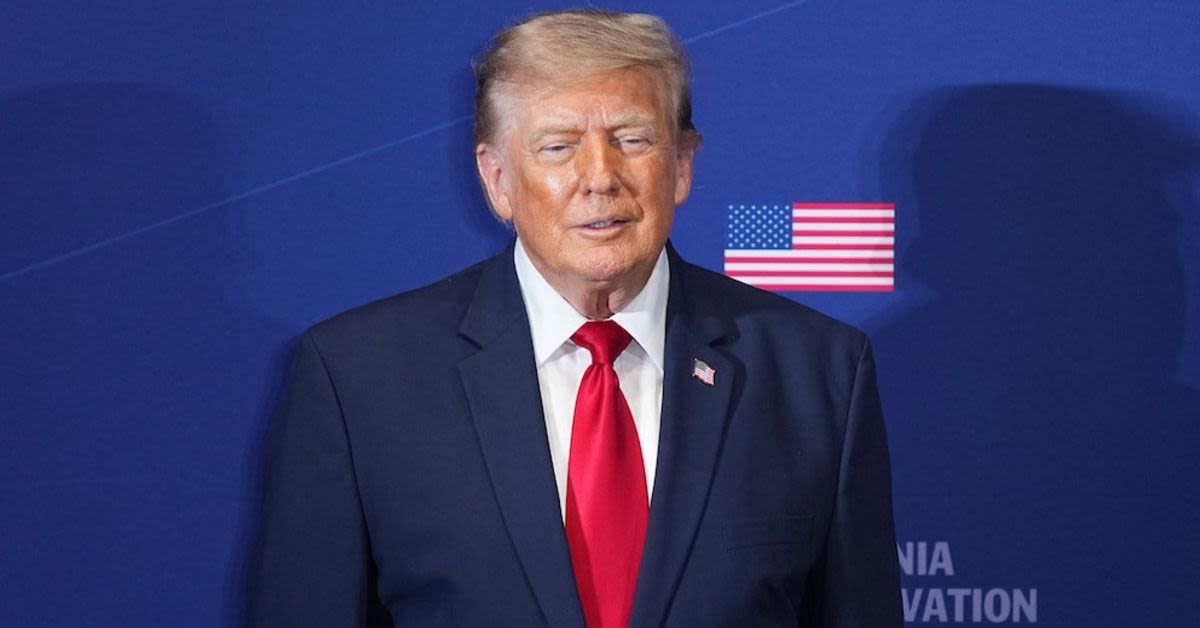
President Donald Trump announced that Iran has released an American woman who was "wrongfully detained" in the Islamic Republic for the past year and a half.
The freed American has been identified as Iranian American citizen Dena Karari by her attorney, Jared Genser, who confirmed her release and safe departure from Iran. As reported by Fox News, Karari had reportedly faced espionage accusations tied to her work with a U.S.-based nonprofit that assists impoverished children, a charge that fits a familiar pattern of Tehran criminalizing humanitarian or civil-society engagement linked to the West.
In a post on his Truth Social platform, Trump emphasized that Kararis ordeal began on President Bidens watch, saying she was detained in December 2024 and only recently permitted to leave Iran. "Iran has allowed an American Citizen, who was wrongfully detained in December of 2024 under the presidency of Sleepy Joe Biden, to leave the Country," Trump wrote, underscoring his long-standing criticism of what he views as the current administrations weakness toward Tehran.
Trump indicated that Karari is now safely outside Iran and in good condition following her release, a rare positive development in a relationship otherwise defined by escalating tensions and proxy clashes. Her freedom marks the first time an American has been released from Iranian custody since 2023, a notable milestone amid ongoing military confrontations and the regimes continued defiance of Western pressure.
Following news of her release, Trump publicly thanked Iran for what he characterized as a symbolic step toward de-escalation. "The United States of America appreciates this gesture of Goodwill by Iran!" he wrote, a remark that simultaneously acknowledges the move while highlighting that such gestures were far more common when Washington projected strength rather than accommodation.
Genser, a prominent human-rights lawyer, issued a statement shortly after Trumps announcement, stressing that Karari had been "trapped in Iran on bogus charges of collaboration with a hostile state and espionage," but is now en route back to the United States. According to Genser, Iranian authorities targeted her after linking her to the Children of Mehr Foundation, a U.S.-registered nonprofit that provides books, literacy programs and other humanitarian support to poor children in rural parts of Iran.
Under the hardline regime, any affiliation with U.S.-based organizations operating inside the country is often treated with deep suspicion, especially when those groups promote education, civil society, or Western-style charity. Such ties can quickly be twisted into allegations of espionage or collaboration with a hostile state, giving the regime leverage to intimidate citizens and pressure foreign governments.
Genser explained that Karari was never placed in a formal prison but was effectively held hostage inside Iran through a "coercive exit ban." During this period, she was reportedly interrogated dozens of times by Irans Ministry of Intelligence and Security (MOIS) and "suffered enormous physical and psychological hardship," a reminder that the regimes tools of repression extend far beyond prison walls.
The attorney urged Tehran to halt its campaign against those associated with the Children of Mehr Foundation and to clear their names. "We urge Iran to drop all the remaining charges against those who worked locally in support of the Children of Mehr Foundation, who are innocent and committed no crimes," Genser said, adding, "And I personally call on Iran to release both all wrongly imprisoned Americans and those subjected to coercive exit bans and all Iranian political prisoners."
Behind Kararis case lies a broader pattern of hostage diplomacy that has intensified under the current Iranian leadership. Sources told Fox News Digital in January 2026 that Iran may be holding more than eight American citizens and residents, a figure that exceeds publicly available data listing five American hostages and suggests the regimes appetite for political bargaining chips is growing.
Among the known detainees are Kamran Hekmati, a 61-year-old Jewish man held since May 2025, and Reza Valizadeh, a 49-year-old journalist and dual Iranian American national detained since March 2024. Their continued imprisonment underscores how Tehran targets vulnerable minorities and dual nationals, confident that Western governmentsespecially under Democratic administrationswill eventually pay a price to bring them home.
A U.S. State Department official previously told Fox News Digital that "President Trump is working to secure the release of detained Americans around the world." The same official condemned Tehrans tactics, stating, "The Iranian regime has a long history of unjustly and wrongfully detaining other countries citizens as hostages for use as political leverage. Iran should release these individuals immediately," a stance that aligns with a more hardline, pressure-based approach favored by conservatives.
According to United Against Nuclear Iran, Tehran routinely detains foreign nationals on vague national-security charges and then uses them as "bargaining chips" to extract concessions, including the unfreezing of financial assets blocked by international sanctions. The group notes that Iran frequently targets dual American-Iranian citizens, refusing to recognize their U.S. nationality and thereby limiting their access to American consular assistance, a tactic that allows the regime to operate with near-total impunity.
The most recent major prisoner exchange occurred in September 2023, when the U.S. secured the release of five Americans who had been held in Iran for years in exchange for authorizing the transfer of $6 billion in frozen Iranian funds. That deal, heavily criticized by conservatives as rewarding bad behavior and incentivizing further hostage-taking, looms over current efforts, raising questions about whether the Biden administrations softer posture has emboldened Tehran even as Trump and his allies push for a tougher line that prioritizes deterrence over concessions.
Login