
President Donald Trump has signed two executive orders dramatically reducing the size of Utahs Bears Ears and Grand Staircase-Escalante national monuments, a move cheered by state Republican leaders and condemned by environmental activists and progressive advocacy groups.
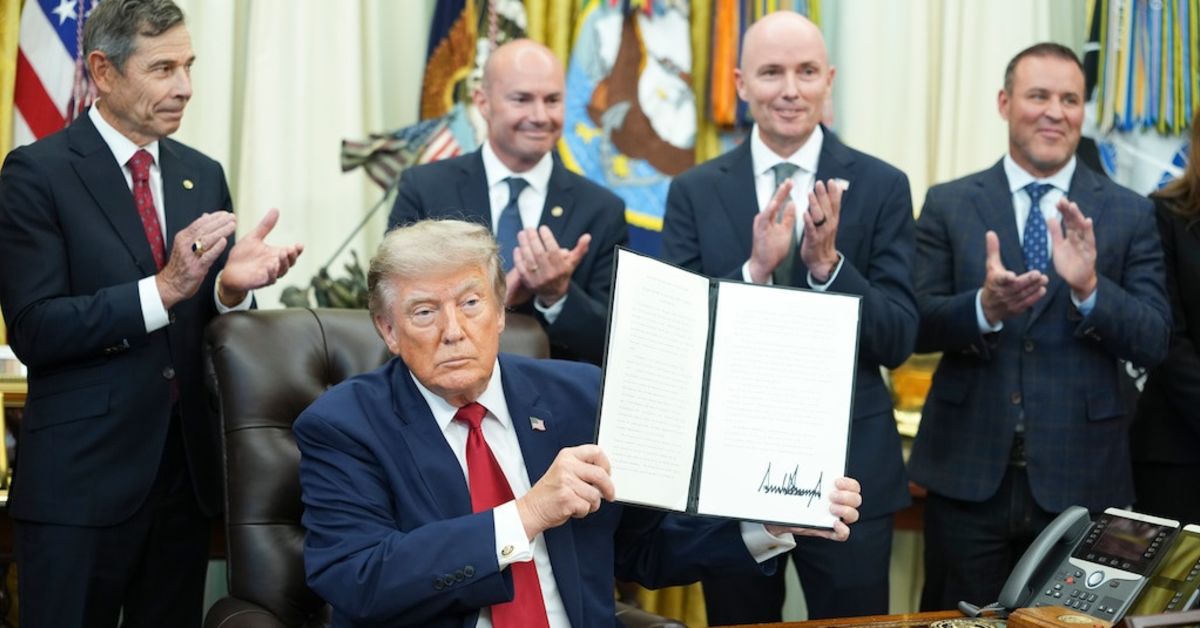
The orders slash Grand Staircase-Escalante from 1.87 million acres to roughly 181,500 acres and Bears Ears from 1.36 million acres to 121,100 acres, returning vast stretches of redrock country to multiple-use management. As reported by Breitbart, Trump finalized the actions in the Oval Office on Monday, flanked by Utahs Republican leadership, including Gov. Spencer Cox, Sens. Mike Lee and John Curtis, and several GOP House members.
This is a big day for Utah, Cox declared, capturing the sense of vindication among conservatives who have long argued that Washington overreached in locking up huge swaths of the state. The governor and other Republicans have spent years pressing for a rollback of what they view as monument designations driven more by ideological environmentalism than by the law.
The new orders are the latest chapter in a nearly decade-long struggle over the scope of federal control in the West, particularly in Utahs rugged canyonlands. Republicans have opposed the 1.7?million?acre footprint of Grand Staircase-Escalante since President Bill Clinton unilaterally created it in 1996, and they similarly objected when President Barack Obama rushed to designate Bears Ears in late 2016.
During his first term, Trump moved aggressively to curb those designations, shrinking Bears Ears by 85 percent and cutting Grand Staircase-Escalante nearly in half. President Joe Biden, bowing to environmental and tribal lobbying, reversed course in 2021 and restored both monuments to their expansive Obama- and Clinton-era boundaries.
Cox and other Republicans argue that such sweeping designations violate the Antiquities Act, which requires that monuments be confined to the smallest parcel of land needed to protect specific objects. In a White House fact sheet, the Trump administration contends that the statutory phrase objects of historic or scientific interest has been distorted to justify locking up entire landscapes and broad claims of biodiversity.
Now, we care. We definitely care about protecting these antiquities and will continue to do so. The problem is with these giant monument designations, there are resources that come with those, Cox said at the White House, underscoring that the dispute is about scale and federal reach, not whether artifacts and sites deserve protection. Were grateful that the president has made a determination that we need to rightsize these monuments.
Cox insisted that the new, smaller boundaries will not strip protections from genuine cultural and historical treasures but will instead align federal promises with actual management capacity. He argued that the change will make the monuments more manageable so that we have the resources necessary to continue to protect these antiquities.
Trump, for his part, blasted the prior designations as a de facto land grab that locked ordinary Americans out of their own public lands. You cant go hunting. You cant go fishing. You cant do anything. You can virtually not even walk on it, he said, reflecting a widespread perception in rural communities that monument status is a pretext for ever-tightening restrictions, even as Utah officials note that hunting and fishing technically remain allowed.
Environmental organizations, which have treated the monuments as a beachhead for broader preservation campaigns, immediately denounced the orders and vowed legal challenges. They argue that Grand Staircase-Escalante was set aside for its rich scientific and historic resources and that Bears Ears followed a proposal by five Tribal Nations seeking to protect sacred sites.
Scott Braden, executive director of the Southern Utah Wilderness Alliance, framed the move as part of a broader conservative effort to rein in federal land control. He said the orders show that Utah is the epicenter of Republican efforts to dismantle and obliterate Americas system of public lands.
These two landscapes deserve to be protected for current and future generations of Utahns and Americans, not opened to exploitation, Braden added, promising to take the fight to court. We are confident that President Trumps reckless and unlawful acts will be rejected and the monuments restored.
Progressive policy shops quickly echoed that alarmist narrative, warning that resource industries could soon gain access to areas removed from monument status. According to the Center for Western Priorities, the orders may allow former monument lands to be sold or leased to oil, gas, mining, and logging companies within 60 days.
The people of Utah and the entire country have spoken with one voice: These lands belong to all of us, not Mike Lee, President Trump or the mining companies his kids are in business with, CWP Executive Director Aaron Weiss claimed, leveling a partisan attack that typifies the lefts response to any attempt to balance conservation with economic use. With lawsuits looming and the Antiquities Act once again at the center of a national debate, Trumps move sets up a fresh test of whether presidents can be held to the statutes requirement for modest, targeted designations rather than sprawling, politically driven monuments.
Login