
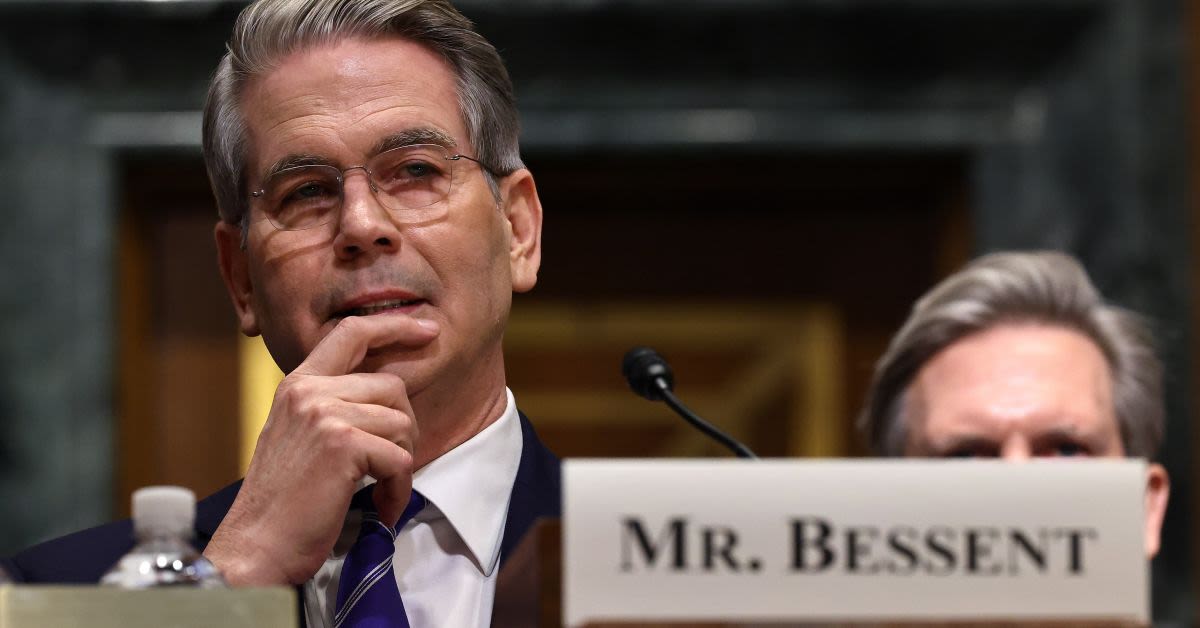
Treasury Secretary Scott Bessent turned what could have been a dry policy segment into a lively civics lesson and a sharp rebuke of modern communism as he hosted Fox News Jesse Watters inside the Treasury Department in a segment that aired Monday.
According to RedState, the visit showcased both the lighter and more serious sides of the new administrations economic team, as Bessent walked Watters through a secret vault, unveiled fresh currency bearing President Donald Trumps signature, and dismantled the romanticism of socialism that has taken hold on the American left. The treasury chief, who recently appeared at a Southern California event promoting Trump accounts and bantered easily with conservative actor Kelsey Grammer, again displayed an affable, humorous style that stands in stark contrast to the gray, technocratic image of past Treasury officials.
Bessent did not mince words when the conversation turned to the resurgence of socialist and communist ideas among Democrats and their activist base. They make it more affordable by making people worse off! Things are very cheap in CUBA. Things are very cheap in Venezuela because NOBODY HAS ANY MONEY, he declared, in a pointed reminder that price controls and state domination of the economy do not create prosperity, they simply spread misery.
He went further, underscoring the devastation that follows when governments destroy their own currencies in the name of equality and revolution. I think the money supply in Venezuela went down 90 something percent. So you can level things off and make everyone the destitute, which is like a Bolshevik revolution again, he said, drawing a straight line from 20th-century communist catastrophes to the policies now being romanticized by Democratic Socialists in the United States.
Watters, ever the provocateur, noted that Trump has joked he could be the best communist by promising free rent and free food for everyone. Bessent laughed, but immediately cut to the heart of the matter: Yeah, and the shelves will be empty, he replied, invoking the all-too-familiar image of barren store aisles in failed socialist states.
He recalled his own firsthand experience in the aftermath of Soviet collapse, when he traveled to the former USSR shortly after the Berlin Wall fell. He said he saw only destitution and observed that there was just nothing there, a stark rebuttal to the nave nostalgia for communism that now circulates in elite universities and progressive enclaves.
That kind of ideological blindness is not theoretical; it is already creeping into American politics through figures like New York City Mayor Zohran Mamdani and other self-styled Marxists who openly champion radical redistribution and state control. This is what NYC Mayor Zohran Mamdani and his ilk will bring to America if their Marxist revolution is allowed to succeed, the segment suggested, yet Bessent expressed confidence that the country is not prepared to surrender its freedoms so easily. I think the American people are going to push back, he said, signaling faith in voters common sense and lived experience.
The visit was not all warnings and economic history, however, as Bessent also treated Watters to a first look at the new, hot-off-the-presses currency featuring Trumps signature, scheduled to circulate this fall as part of the America 250 commemoration. Dont smudge it, Bessent joked as he handled a sheet of crisp $100 bills, prompting Watters to quip that it might be the smallest signature Trump has ever produced.
Bessent then revealed the backstory behind the unusually modest autograph. He used a mini-sharpie. The more cash that people in the US or around the world are willing to hold, then the better it is for our budget. I think people are going to want to hold the president's signature, he said, making a serious fiscal point beneath the humor: global demand for U.S. currency effectively finances American government at lower cost, and a popular, trusted presidents name on the bills only strengthens that demand.
For taxpayers wary of gimmicks, Bessent emphasized that the redesign is not some extravagant vanity project. The Treasury Secretary also reiterated that the new currency wont cost taxpayers a dime because its routine to change things up with different printings, a normal part of maintaining secure, modern banknotes.
The segment opened with a flourish as Bessent led Watters to the door of a top-secret vault deep inside the Treasury complex, offering a tantalizing glimpse of the institutions inner sanctum. He stopped short of actually letting the Fox host cross the threshold, however, quipping, too much money in there, Jesse, and preserving at least a bit of mystique around the nations cash reserves.
Bessent used the moment to pivot into a concise history lesson on the evolution of the American greenback, reminding viewers that the stable, uniform currency they now take for granted was once anything but guaranteed. I can't tell you what's in there now, but Americans used to come and cash their checks here. Banks could present, and it'll get greenbacks, he explained, describing how the Treasury once functioned as a direct point of redemption for the public and financial institutions alike.
He credited one of his predecessors with imposing order on what had been a chaotic patchwork of competing notes and local currencies. Salmon Chase, who was the treasurer, or treasury secretary, during the Civil War, created the greenback. We used to have states [who had] their own money, banks used to issue their own money, and he consolidated into the greenback, so people could swap for greenbacks here, Bessent said, underscoring how a strong national currency underpins both economic growth and national unity.
For a Washington bureaucracy often perceived as opaque and aloof, the segment offered a rare, humanizing look at a Cabinet official who is comfortable mixing humor with hard truths about economics and ideology. It is a reminder that the people now steering federal policy are not faceless technocrats but individuals willing to defend free markets, expose the failures of socialism, and open the doorsif only slightlyon how the nations financial machinery actually works.
Login