
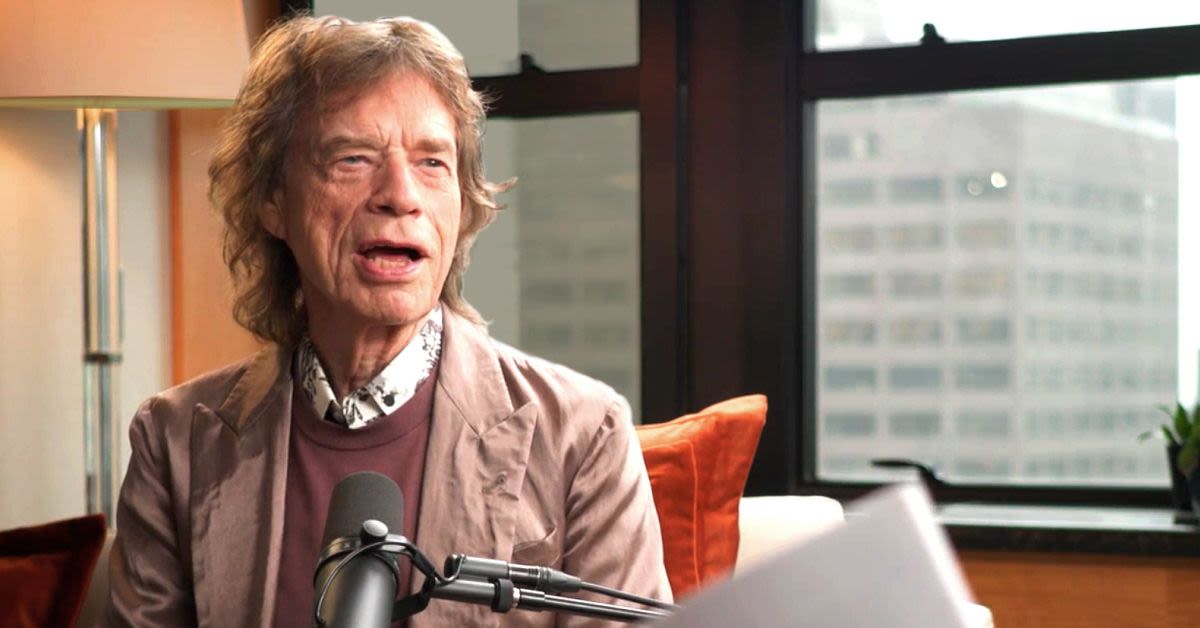
Mick Jagger, the indomitable frontman of the Rolling Stones, has offered a refreshingly old-fashioned view of what entertainers owe the people who pay to see them: a good time, not a political lecture.
In a recent appearance on The New York Times The Interview podcast, the 82-year-old rock legend told host David Marchese that performers whether musicians or athletes should concentrate on their craft instead of using their platforms for ideological crusades, according to Western Journal. Jaggers comments stood in stark contrast to the increasingly common spectacle of celebrities turning concerts and sporting events into partisan rallies, often skewing left and alienating large portions of their audiences.
And you dont want to lecture them, Jagger said in a clip posted to the social media platform X. That simple line cut against the prevailing trend in the entertainment industry, where many stars seem to believe that ticket buyers are a captive audience for their political grievances.
Marchese framed the discussion by bringing up Bruce Springsteen, another icon of classic rock who has become known as much for his political broadsides as for his music. Springsteen, a longtime liberal, has repeatedly used his stage time to attack President Donald Trump and his supporters, turning what once were unifying cultural events into partisan forums.
Jagger, by contrast, articulated a more traditional and frankly more respectful understanding of the performer-audience relationship. My job in the live music world is [for] those people that come is to make [them] have the best time they possibly can, he said, emphasizing service to the crowd rather than self-indulgent grandstanding.
He elaborated that an entertainer should help paying customers to forget all their problems, and the problems of the world, and their mortgages, and their whatever. In other words, the purpose of a concert is escape and enjoyment, not indoctrination or moral scolding from wealthy celebrities far removed from ordinary life.
Its similar to going to a sports event, really, he continued, because everything else is shouted out. Youre just watching whos going to win. Youre not worrying about everything else. That analogy underscored a basic truth: people attend live events to step away from politics and daily anxieties, not to have them shoved back in their faces by performers who mistake fame for wisdom.
Jagger also reflected thoughtfully on how his relationship with an audience shifts depending on the venue and context. At large festivals, he noted, many attendees have not come specifically to see the Rolling Stones, so he cannot treat them as he would the bands most devoted fans, and must instead work to win them over.
He observed that cultural differences shape how crowds respond, pointing out that concertgoers in Finland, though outwardly reserved, might be enjoying themselves every bit as much as the exuberant audiences in Argentina. Such comments revealed an artist attuned to the people in front of him, rather than preoccupied with using them as a backdrop for political messaging.
In short, Jagger answered Marcheses question by putting himself in the audiences shoes. That perspective stands in sharp relief to the attitude of Springsteen, who has signaled that he is largely unconcerned with whether his political tirades alienate segments of his fan base.
I dont worry about it, Springsteen said earlier this year when asked about possible audience displeasure. My job is very simple: I do what I want to do, I say what I want to say, and then people get to say what they want to say about it.
That posture essentially, take it or leave it typifies a broader trend among left-leaning entertainers who appear more interested in signaling their ideological purity than in uniting diverse audiences. And when it comes to Trump-hating celebrities, the Born in the U.S.A. rocker is hardly an outlier.
Neil Young, now 80, has likewise devoted energy to anti-Trump songs and gestures, and has tried to punish platforms and organizations that refuse to conform to his uncompromising liberal agenda. Such efforts often look less like principled stands and more like attempts to police speech and thought, a stance at odds with the free expression artists once championed.
On the opposite end of this spectrum, alongside Jagger, stands British comedian Ricky Gervais, who has made a career out of puncturing Hollywoods self-importance. In 2020, hosting the Golden Globes, Gervais delivered a now-legendary monologue in which he bluntly told a room full of celebrities to spare the public their political sermons.
If you do win an award tonight, Gervais said in a clip posted to X, dont use it as a platform to make a political speech, right? Youre in no position to lecture the public about anything. You know nothing about the real world. Most of you spent less time in school than Greta Thunberg.
So, he continued, if you win, right, come up, accept your little award, thank your agent and your god, and f*** off, okay? The shock that rippled through the room only underscored how insulated many entertainers have become from ordinary people who are tired of being talked down to by the cultural elite.
Taken together, Jagger and Gervais are articulating a countercultural message in todays entertainment world: think less of yourselves and more of your audiences. At a time when much of Hollywood and the music industry treats every microphone as a pulpit for progressive politics, their insistence on humility, professionalism, and respect for the paying public offers a rare reminder that entertainment, at its best, unites rather than divides.
Login