
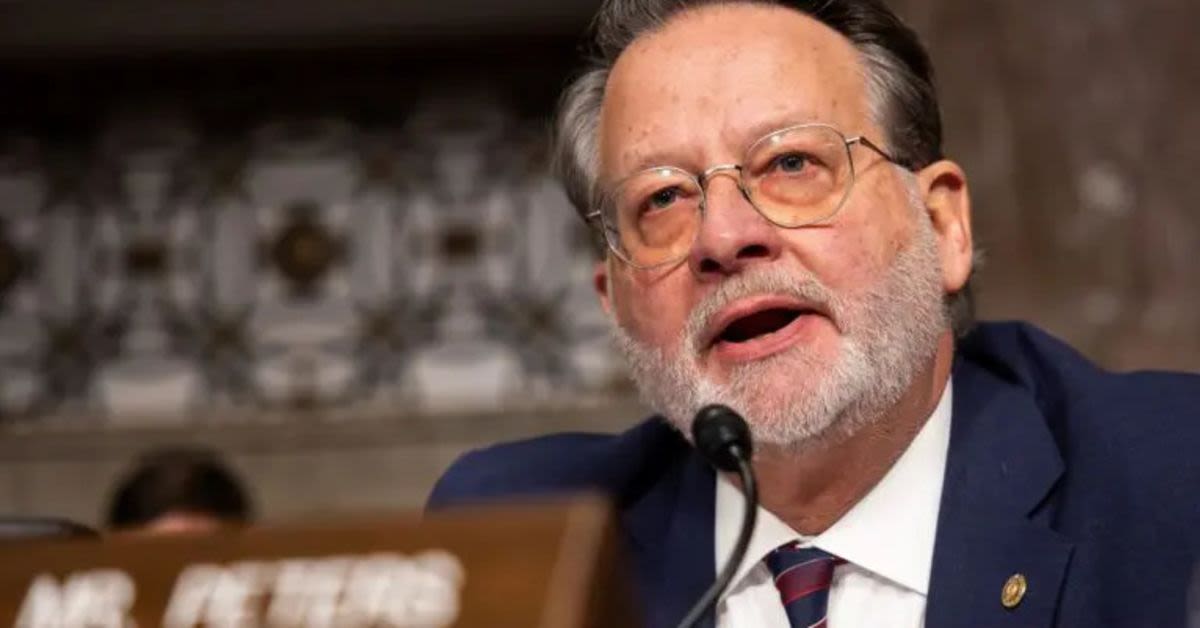
Outgoing Michigan Sen. Gary Peters has thrown his support behind U.S. Rep. Haley Stevens as his preferred successor, intensifying establishment Democrats push to block progressive favorite Abdul El-Sayed in next months primary.
The retiring senators endorsement underscores how anxious party leaders have become about nominating a candidate they fear is too far left to win a pivotal swing-state race in November, according to The Associated Press. Peters, who is stepping down after 12 years in the Senate, declared that Stevens will be ready on day one to fight for Michigan, a pointed signal that he views her as the safer, more experienced option in a year when control of the Senate may hinge on a handful of contests.
His decision represents a notable reversal from late May, when he told The Associated Press he intended to remain neutral, but the political landscape has shifted rapidly as the Aug. 4 primary draws near and concerns mount over El-Sayeds viability in a general election.
For Democrats, the Michigan seat is not merely another line on the map; it is central to their hopes of reclaiming the Senate majority and advancing a national agenda that has struggled to gain traction. Stevens, a four-term House member, has positioned herself as a pragmatic, manufacturing-focused moderate attuned to the economic anxieties of a battleground state that twice helped decide the presidency.
El-Sayed, by contrast, has never held elected office and is running on a sweeping progressive platform that includes Medicare for All and aggressive campaign finance reform, policies that may play well with the activist left but risk alienating centrist and independent voters. He has also been outspoken on the war in Gaza, injecting a divisive foreign-policy fault line into a race Democrats can ill afford to lose.
The stakes in Michigan have only grown after Democrats plans to flip a Senate seat in Maine were thrown into disarray when their nominee, Graham Platner, abruptly withdrew following a sexual assault allegation last week. Party officials there must now scramble to select a new challenger to Republican Sen. Susan Collins, a development that further elevates Michigans importance on the national map.
Against that backdrop, Peters endorsement of Stevens appears less like a personal preference and more like a strategic move by a seasoned campaigner who understands the unforgiving arithmetic of Senate control. Peters previously won two statewide Senate races in Michigan and led Senate Democrats campaign arm during the 2022 and 2024 cycles, giving him a reputation as one of the partys more astute electoral tacticians.
His backing adds to a growing list of establishment Democrats coalescing around Stevens in what has become a proxy war over the partys ideological direction. Senate Democrat leader Chuck Schumer of New York has already endorsed her, joined by Sen. Ruben Gallego of Arizona and Sen. Catherine Cortez Masto of Nevada, signaling that the leadership class sees Stevens as the candidate most likely to hold the seat.
El-Sayed, meanwhile, has drawn support from the partys progressive wing, including Sen. Bernie Sanders of Vermont and, more recently, Sen. Chris Van Hollen of Maryland, who view the race as an opportunity to push the caucus further left. The result is a primary that pits the partys activist base against its institutional leadership, with Michigan voters effectively serving as referees in a broader ideological struggle.
The contest tightened further when state Sen. Mallory McMorrow exited the Democratic primary earlier this month, transforming the race into a direct showdown between Stevens and El-Sayed. McMorrows withdrawal removed a potential spoiler and clarified the choice for voters: a seasoned legislator with a record of incremental, industry-focused policymaking versus a first-time candidate promising sweeping structural change.
Stevens, in a statement responding to Peters endorsement, emphasized the senators understanding of the states political terrain and the qualities she believes Michigan requires in its next representative. Senator Peters knows what it takes to win in Michigan, and he knows what Michigan needs from our next U.S. Senator: grit, effectiveness, hard work, and Michigan common sense, she said, adding, I am honored to have his support.
As the primary has tightened, the tone has grown increasingly acrimonious, reflecting the high stakes for both factions of the party. El-Sayed has attacked Stevens over the tens of millions of dollars in outside spending that have poured into the race on her behalf, including significant support from the American Israel Public Affairs Committee, a frequent target of the progressive left.
Stevens and her allies argue that such backing reflects confidence in her ability to govern responsibly and defend key alliances, not a sellout to special interests. She has countered by criticizing El-Sayed for failing to disclose his personal financial records, raising transparency concerns that could haunt him in a general election.
The friction between the two camps was on full display during a July 7 debate, where each accused the other of running a relentlessly negative campaign. Abdul has spent this entire campaign attacking me, Stevens said, framing herself as the target of a sustained onslaught from a rival more interested in ideological purity than coalition-building.
El-Sayeds supporters contend that their candidate is simply highlighting the influence of big money and pro-Israel groups in Democratic primaries, but that message may resonate more in deep-blue enclaves than in a purple state like Michigan. For voters wary of internal party warfare, the spectacle risks reinforcing the perception that Democrats are more focused on intramural battles than on confronting economic and security challenges.
From a conservative vantage point, the dynamics of the race underscore a familiar pattern: national Democrats, alarmed by the excesses of their own progressive wing, scrambling to prop up a comparatively moderate candidate to avoid electoral disaster. Stevens, while still firmly within the Democratic mainstream, at least speaks the language of manufacturing, jobs, and Michigan common sense, themes that resonate with working-class voters who have drifted toward Republicans in recent cycles.
El-Sayeds agendaMedicare for All, sweeping campaign finance overhauls, and a hard-edged stance on Gazareads like a wish list from the activist left, one that may play well on college campuses but could prove toxic in a statewide contest. Republicans, who have long argued that Democrats are captive to their most radical elements, will see this primary as further evidence that the partys leadership fears its own base.
The likely Republican nominee, former U.S. Rep. Mike Rogers, is running unopposed for his partys nod and is expected to enter the general election with a unified base and a clear message focused on security, economic growth, and restrained government. The Democrat who emerges from this bruising primary will face Rogers in what is widely anticipated to be one of the nations most expensive and closely watched Senate races, with outside groups on both sides pouring in resources.
For conservatives, the contrast could not be clearer: a seasoned Republican with national security credentials versus a Democrat pulled between the demands of progressive activists and the realities of a centrist electorate. As Democrats argue among themselves over how far left to lean, Republicans are poised to make the case that Michiganand the countryneeds stability, not another experiment in progressive governance.
Login