
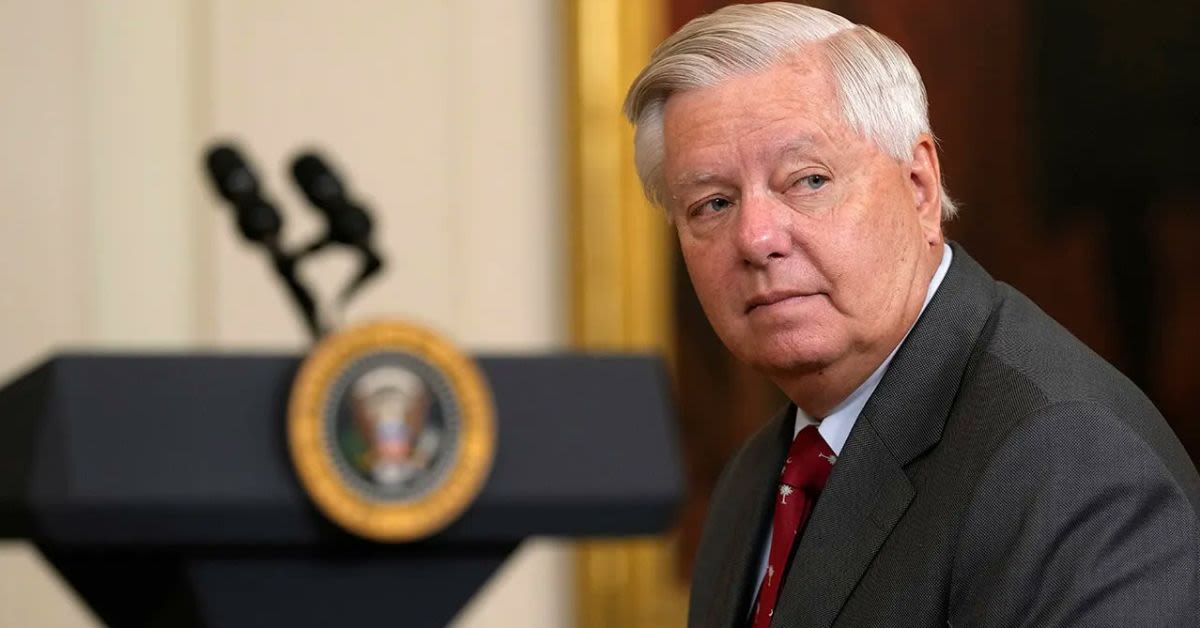
The sudden death of U.S. Sen. Lindsey Graham, R-S.C., has stunned Washington and raised urgent questions about the health risks facing Americas aging political class and the transparency owed to the public.
According to WND, the Office of the Chief Medical Examiner for the District of Columbia released preliminary findings pointing to a catastrophic cardiovascular event. Grahams communications director, Taylor Reidy, stated on X that The preliminary examination findings were: Aortic Dissection due to Arteriosclerotic Cardiovascular Disease. She added that The death certificate will be PENDING until all the toxicological and microscopic testing are finalized and at that point the death certificate will be updated to reflect the cause of death and appropriately classify the manner of death.
Medical experts say the diagnosis reflects a sudden and often lethal failure of the bodys main artery, a condition that can strike with little warning. Dr. Houman David Hemmati, a board-certified ophthalmologist and medical and science author, explained in laymans terms: The aorta is like the water main, a huge artery that sends oxygenated blood to the entire body. Its under extreme pressure every time the heart beats, it expands a little and has to withstand the force of blood pumping. To do this, it has to be elastic able to bounce back after being stretched.
Hemmati noted that long-term arterial damage can turn this vital vessel into a ticking time bomb. In some individuals with atherosclerotic disease (hardening of arteries), the inner aorta wall becomes hardened. Imagine a very old rubber band that is brittle and crumbles when you stretch it rather than stretching and bouncing back. The aorta wall crumbles slightly, allowing blood under high pressure to make its way between the inner and outer walls of the aorta, he said.
Once that process begins, the window for intervention is vanishingly small, even in a city filled with elite medical facilities. After just a few heartbeats (insufficient time to really do much about it in many cases), the blood peels the inner and outer walls of the aorta away from one another, causing it to burst. Ive treated a patient with it and he didnt make it. Its tough to survive, Hemmati explained.
The physician emphasized that prevention, not last-minute treatment, is the only realistic defense against such a crisis. How to avoid this? Tough to detect in advance that itll happen. So Eat well (including fatty fish with Omega 3s), lower your cholesterol, keep your blood pressure normal (exercise and weight loss help a lot), he advised, underscoring lifestyle choices that conservatives often link to personal responsibility rather than government mandates.
Law enforcement has moved swiftly to rule out foul play and reassure a public already wary of politicized investigations. As WND reported earlier Sunday, the FBI is now making every necessary resource available to local authorities in connection with the senator, who died unexpectedly Saturday night at age 71 after returning from Ukraine.
FBI Director Kash Patel confirmed the bureaus involvement in a brief statement on social media. The FBI is assisting local authorities and has made every necessary resource available, Patel said on X, signaling that federal officials are keenly aware of the scrutiny surrounding the death of a high-profile Republican ally of President Trump.
Grahams office released a formal statement acknowledging the shock to his family, staff and supporters across the country. On the evening of Saturday, July 11, U.S. Senator Lindsey Graham passed away from a brief and sudden illness. Senator Grahams family appreciates prayers at this time and asks for privacy during this incredibly difficult period, the statement read.
TMZ published exclusive images showing emergency responders in Washington, D.C., rushing Graham on a stretcher into an ambulance, a stark visual reminder of how quickly life can end even for those at the pinnacle of power. For conservatives who viewed Graham as a key national-security voice and a staunch defender of a strong America abroad, his death raises pressing questions about continuity of leadership, the physical demands placed on senior lawmakers, and the need for honest, timely disclosure whenever a public servants health suddenly fails.
Login