
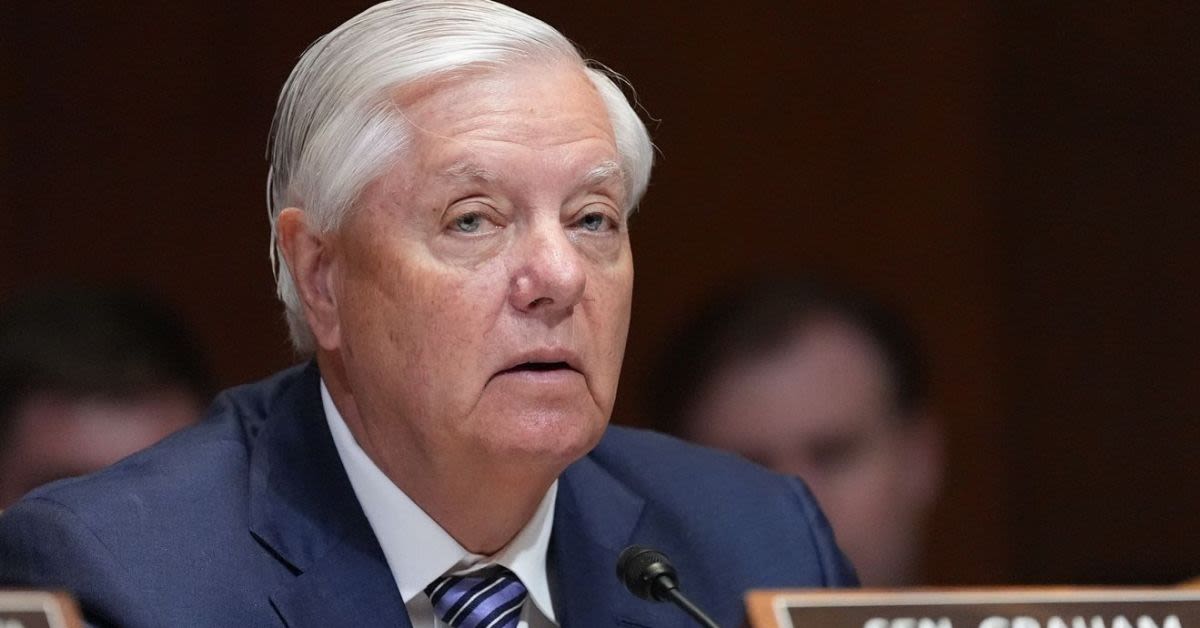
Republican Senator Lindsey Graham of South Carolina, long a fixture in Washington and a defining figure of the modern GOP establishment, has died at the age of 71 after what was described as a brief, sudden illness.
The news of Grahams passing on Sunday sent an immediate wave of reaction through the political world, with tributes pouring in from colleagues, commentators, and citizens who had come to see him as a constant presence in American public life. According to RedState, for many in Generation X and beyond, Graham seemed like one of those elder Republican statesmenmuch like the late Sen. Bob Dole of Kansaswho would always be there, a familiar face in the halls of the Capitol and on Sunday political shows.
On CNNs State of the Union, Senator Tim Scott (R-SC) offered one of the most personal and heartfelt remembrances, using his appearance in part to honor his fellow South Carolina senator and close friend. The segment, which quickly drew attention online, showcased not only Grahams public record but also the private kindness and humor that endeared him to those who knew him best.
Host Jake Tapper invited Scott to share something about Graham that viewers might not know, prompting the junior South Carolina senator to recall a story that captured both Grahams commitment to his state and his irreverent wit. Scott began by emphasizing how Graham had welcomed him into the Senate, particularly mindful of the changing political and cultural landscape in their home state.
...[O]ne of the most important stories about Lindsey Graham is that, when I was a new senator, he welcomed me in. Scott explained that Graham recognized that his path was different, and that he understood the power of change in South Carolina and how much our state had changed. But he was one of the first folks in the Senate to welcome me in with open arms. And I will say that I do a South Carolina prayer breakfast there every year in D.C.
Scott recounted calling Graham about that first prayer breakfast, only to be met with the kind of deadpan humor that became one of Grahams trademarks. And I called Lindsey the first time. And Lindsey says: Tim, if this thing starts before 10:00 a.m., I'm not coming, because I'm not going even if Jesus comes back before 10:00 a.m.
Scott said he just laughed out loud, but the punchline came the next morning. And, of course, it started at 8:30. And he [sic] walked in the door at 8:31? Lindsey Graham. He was just the kind of committed person that you don't really appreciate how much -- how committed he was to America.
That blend of levity and seriousness, of sarcasm wrapped around a core of duty, was a recurring theme in Scotts tribute. He shifted from humor to the hardships that shaped Grahams life, noting that the senators personal story was marked by tragedy and responsibility at an early age.
SCOTT: I can't think, Jake, of a more committed public servant to this country. His family was his sister that he adopted when he was 19 and she was 13 because their parents died within 15 months. Scott underscored that this was not a political talking point but a defining chapter in Grahams character, one that informed his empathy and his policy priorities.
[...] Because of the pain of his past, his father dying of a massive heart attack at I think it was 69 years old, his mother dying of cancer, Lindsey Graham had a passion for so many of the important issues around cancer research and around taking care of people. Scott said Grahams experiences left him determined that no one in his orbit would feel overlooked or forgotten.
He didn't want anyone to feel invisible in his presence. And he used levity and wit to help people go through really hard times. And I got to tell you, it's just a devastating loss for our state of South Carolina, and, frankly, for me as an individual. For Scott, the loss was not merely institutional or partisan; it was deeply personal.
Tapper then turned to one of the more public and sometimes puzzling aspects of Grahams recent political life: his evolving relationship with President Donald Trump. Their journey from bitter rivals in the 2016 Republican presidential primaries to frequent golf partners and political allies has long fascinated both supporters and critics.
SCOTT: Yes, Jake, there's no doubt. Scott reminded viewers that if they rewind more than a decade, they would find Graham as a strong guy running for president, trying to make his case to the American people, and he was as aggressive against Donald J. Trump at the time as he could possibly be. He wanted to win. He had a strong desire to win.
Over time, however, Scott said, Grahams clarity and transparency caught the attention of President Trump. And as a result, they spent more time together. They did not always agree, but they always agreed to disagree without being disagreeable.
Scott acknowledged that, for outsiders, their dynamic could look anything but calm. Now, if you were in the room, as I have been on a couple of occasions, you might not think that. But the truth of the matter is that they figured out how to have a friendship.
That friendship, forged in the crucible of political combat and media scrutiny, became one of the more unlikely alliances of the Trump era. For conservatives, it also symbolized something important: the ability of a traditional Republican hawk and a populist outsider to find common ground on issues like judicial appointments, deregulation, and a robust approach to Americas adversaries.
Grahams sense of humor, which Scott and others highlighted, was on full display during the 2016 primary season, when Trump publicly read out Grahams personal cell phone number at a campaign event after Graham criticized him. Rather than retreat in anger, Graham leaned into the absurdity of the moment.
How to Destroy Your Cell Phone With Sen. Lindsey Graham became the title of a tongue-in-cheek video produced with Independent Journal Review (IJReview), in which Graham theatrically disposed of his phone in a series of over-the-top ways. Lindsey Graham had a sense of humor. In July 2015, during the Republican presidential primaries, Trump retaliated against Graham (who had criticized him) by giving out Grahams cell number to a crowd and encouraging calls to his number. Grahams team worked with IJReview (Independent Journal Review) to produce a tongue-in-cheek video showing ways to dispose of an old phone.
It went massively viral (millions of views across platforms and news coverage). For a Republican Party often caricatured as humorless by the left, Grahams willingness to laugh at himself and turn a political slight into a viral joke was a reminder that conservatives can fight hard and still keep a sense of proportion.
Scott went on to describe how the TrumpGraham friendship deepened not in formal meetings or staged photo-ops, but in a setting many Americans would recognize: the golf course. SCOTT: ...[A] lot of times, friendships happen not at a kitchen table, not, frankly, in the Oval Office, but, for them, it happened on the golf course. And these two guys loved golf. I think Lindsey would say, the president wins more than I do, but he played pretty aggressively against the president.
And I think it was that competitive spirit that they both loved and admired about each other. And Lindsey was super smart and witty. He had the ability to make you laugh, but he was making a point in the midst of it. Scott suggested that Trump appreciated that combination of sharp mind and sharp tongue.
And President Trump really understood that, and their relationship over the next 10 years, so to speak, from the time they were running against each other, became something that Lindsey could count on, and President Trump could count on too. I can tell you, they played golf together more than any two other folks in public office at any time of, I think, in history. In an era when politics is often reduced to social media feuds, their rapport on the fairway underscored that personal relationships still matter in governing.
Scott also touched on another senior Republican figure, former Senate Majority Leader Mitch McConnell (R-KY), who until recently had been recovering in the same hospital where Graham was taken before his death. The mention served as a sober reminder of the aging leadership class in Washington and the fragility of even the most seemingly indestructible political careers.
SCOTT: Well, it's a time for prayer for those folks who are ailing. There's no doubt about it that Senator McConnell deserves our prayers. He served our country valiantly and continues to be in good spirits, from all that I have heard. I texted him over the weekend. I will simply say that we have a lot of work to get done and we will get our work done. But we certainly will miss Lindsey Graham. And as we focus on the next few weeks in the Senate, we will take a step back and remember that we're all human. In fact, we all have families.
We all are just there trying to serve the greatest country on the planet...But in the next 48 hours and probably beyond, we will spend time celebrating the life of Lindsey Graham, mourning the loss of Lindsey Graham, but understanding why he was so important to America, and hopefully doubling down on keeping Americans safe here at home and anywhere we travel. Scotts words reflected a distinctly conservative reverence for service, faith, and national securityvalues that Graham championed throughout his career.
In the days ahead, attention will inevitably turn to the question of who will succeed Graham in representing South Carolina in the Senate. Under state law and political custom, that decision will carry significant weight for the future direction of the GOP, particularly on foreign policy, judicial nominations, and the partys posture toward the ongoing threats facing the United States.
Scott, however, made clear that for him, the loss transcends politics and process. He described Graham as a true statesman, a term often overused in Washington but, in this case, one that reflected decades of service, from his work on the Armed Services Committee to his advocacy for a strong national defense and his willingnesssometimes to the frustration of both the populist right and the progressive leftto stake out positions he believed were in the long-term interest of the country.
Scott told Tapper that beyond the public accolades, the moment was deeply personal. He said, ...I've lost a friend. It is a morning of mourning for me. It's a powerful reminder that life is fleeting, that we are not here very long. For conservatives who saw Graham as a sometimes complicated but ultimately indispensable voice on the world stage, that reminder carries a particular sting.
As South Carolina and the nation reflect on Grahams legacy, what emerges is a portrait of a man shaped by hardship, driven by duty, and sustained by faith, humor, and fierce loyalty to his friends and his country. Rest in peace, Senator.
Login