
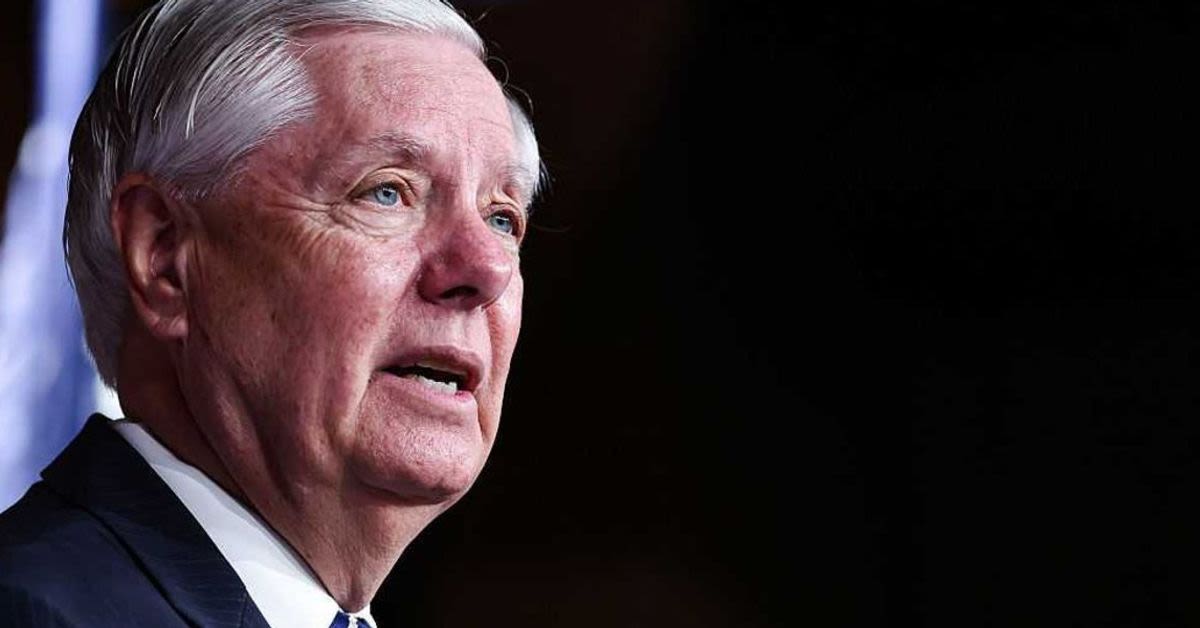
President Donald Trump has indicated he already knows whom he wants to see take the late Senator Lindsey Grahams Senate seat, but he is keeping that choice private for now out of respect for the timing of Grahams death.
As reported by The Gateway Pundit, Senator Graham, 71, died on the night of July 11, 2026, after suffering cardiac arrest in Washington, D.C. Audio from the 911 dispatch revealed that Graham experienced severe chest pains before going into cardiac arrest, underscoring the sudden and alarming nature of his final moments.
According to Senator Lindsey Grahams office, preliminary findings from the Washington, D.C., medical examiner show that Graham died from an aortic dissection, a catastrophic tear in the inner layer of the aorta. The office further stated that the dissection was triggered by arteriosclerotic cardiovascular disease, a condition in which plaque buildup narrows and hardens the arteries, restricting blood flow.
Graham had only recently returned from Kiev, Ukraine, where he met with Ukrainian President Volodymyr Zelensky amid ongoing debates in Washington over continued U.S. funding for the war. His death removes a prominent Republican voice from the Senate at a moment when foreign policy and national security questions are sharply dividing the country.
Speaking on NBCs Meet the Press, President Trump confirmed that he has already identified a preferred successor but refused to name the individual. I have somebody that I think would be great, but I dont want to say it now because its just, you know, its too soon with Lindsey, Trump said. I dont want to even talk about anybody, but I do have somebody that I think is really good.
Under South Carolina law, Governor Henry McMaster, a Republican, will appoint a temporary replacement to serve in Grahams seat until January 3 of next year. That appointment will give conservatives an immediate voice in the seat while voters prepare to decide who will carry the GOP banner in the months ahead.
State election statutes now require a special primary to be held by August 11 to select a Republican nominee to replace Graham, with a runoff scheduled for August 25 if no candidate secures a majority. The eventual Republican nominee will then face Democrat Dr. Annie Andrews in November, setting up a critical contest that will test whether South Carolina voters remain committed to the conservative principles Graham long claimed to champion.
Login