
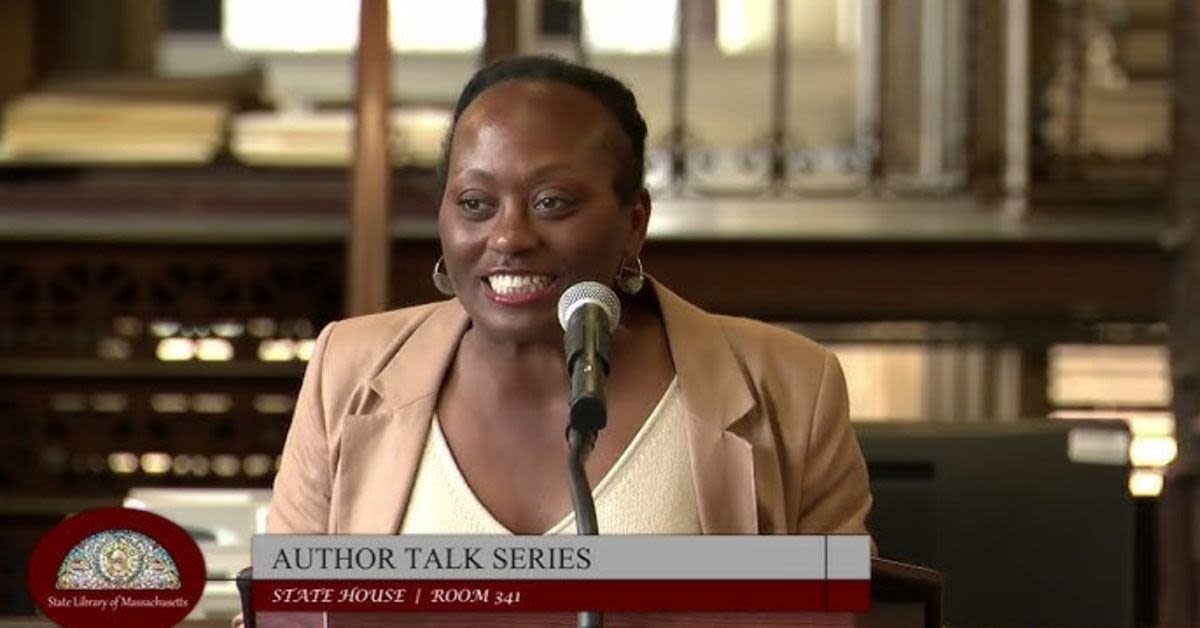
A celebrated black feminist historian whose work is now under fire for serious factual and citation problems is casting the controversy not as an academic reckoning, but as an assault on black women in the academy.
The New York Times recently profiled Kerri Greenidge, whose 2022 book The Grimkes was initially embraced by the academic and publishing establishment for its retelling of a prominent slaveholding familys role in the abolitionist movement, according to Western Journal. The book was widely praised in progressive circles, with Publishers Weekly naming it one of the years top titles and the American Historical Association awarding Greenidge the Joan Kelly Memorial Prize, an honor reserved for scholarship in womens history and feminist theory.
That acclaim has since curdled into controversy, as mounting evidence of what critics describe as a flimsy factual foundation has coincided with Greenidges apparent departure from her tenured post as an associate professor in Tufts Universitys Department of Studies in Race, Colonialism, and Diaspora, as well as the collapse of a book deal. The episode underscores a growing concern on the right that fashionable ideological narratives in academia are too often insulated from rigorous scrutiny until the problems become impossible to ignore.
The first serious challenge to Greenidges work came from Myra Glenn, a retired American history professor at Elmira College, who began reviewing The Grimkes for a scholarly journal earlier this year. I said, Where is she getting this? Glenn recalled, adding, Boy, it became a major problem.
Glenns published review was unsparing, charging that All too often Greenidge lacks the evidence to substantiate many of her major claims. Her work is also riddled with factual errors and repeatedly omits needed endnotes. She further noted that Greenidge attributed key letters to an archive at the University of Michigan that, in fact, did not possess them, raising basic questions about the reliability of the books sourcing.
Rather than concede that such errors might reflect deeper issues in her research, Greenidge has framed the backlash as driven by racial and gender animus. I am heartbroken that a field I have given my life to can treat me this way, she said, insisting, The attack on Black women academics is real.
Greenidge categorically rejected the most serious academic sins, declaring, I have never plagiarized anything in my life. I have never fabricated anything. Yet she simultaneously acknowledged problems with her citations, conceding, Are there citations that were misattributed? Probably.
Tufts University, where Greenidge had held tenure, has been tight-lipped about the precise timing and circumstances of her departure, but spokesman Patrick Collins confirmed that concerns about The Grimkes surfaced almost immediately after its publication. Collins said that by December 2022, the university was aware of allegations that the book contained multiple errors of fact and failed to give appropriate credit to the work of another.
In response, Tufts launched what Collins described as a formal, outside review of Greenidges scholarship. The university initiated a thorough peer review involving a panel of external scholars of American history which identified multiple errors of fact and citation, he said, adding that the institution then took steps to alert the publisher.
In keeping with its commitment to ethical conduct in research, the university proactively moved to correct the public record by informing publisher W.W. Norton of the peer review findings, Collins explained. The book has since effectively vanished from Nortons own website, a remarkable fall from grace for a work that had been aggressively promoted as cutting-edge scholarship in race and gender studies.
Greenidge, however, has suggested that the investigation itself was tainted by personal and racial bias, claiming the probe was triggered by a white woman against whom she had sought a restraining order. Tufts has firmly rejected that narrative, with Collins stating, The independent review by outside experts in the field was fair, fact-based, thorough, and objective, and adding, We stand by the review and strongly deny any allegations of bias.
The historians earlier work is now also facing renewed scrutiny, despite having been showered with establishment accolades. Greenidges 2019 book Black Radical, a biography of civil rights activist William Monroe Trotter, won the Mark Lynton History Prize from the Columbia Journalism School and the Nieman Foundation for Journalism at Harvard University, further cementing her status as a rising star in progressive academic circles.
Yet Stephen Fox, who authored a 1970 biography of Trotter, said he encountered troubling issues when he examined Greenidges research apparatus. It seems well done, except when you look at the footnotes, Fox said, explaining that he was unable to locate the material she cited in the sources she listed.
As Fox dug deeper, his concerns only grew, leading him to question whether the problems could be dismissed as mere carelessness. I started to think maybe it wasnt just sloppy, he said. I think its something deeper.
Login