
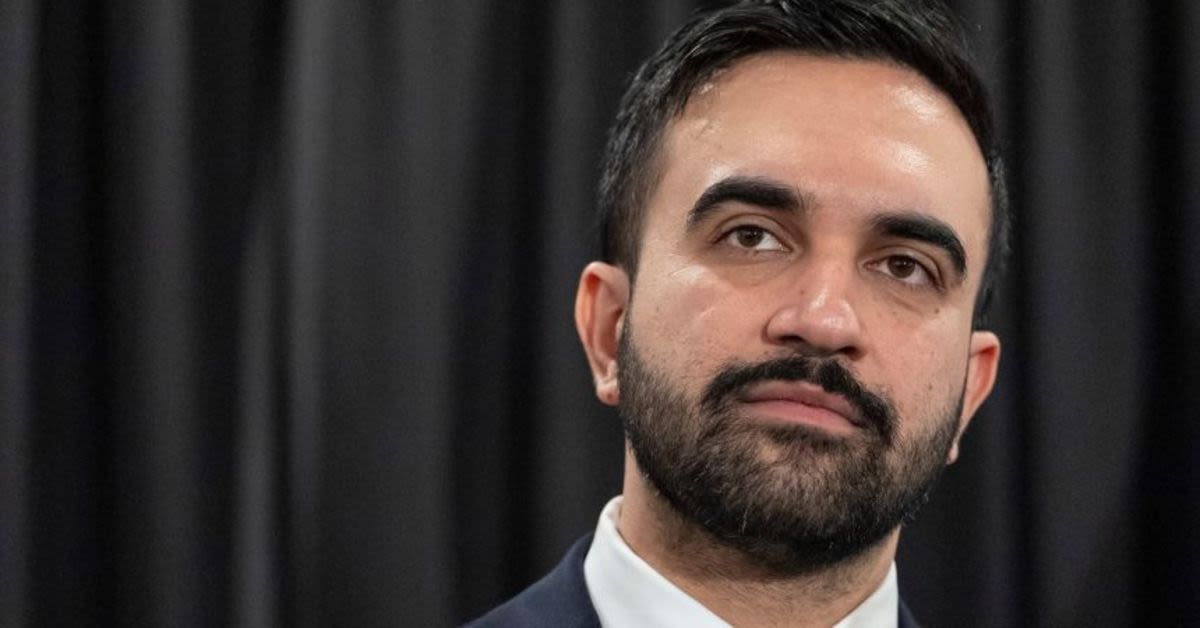
New York Citys latest diplomatic controversy has exposed once again the radical instincts and troubling priorities of Mayor Zohran Mamdanis administration.
According to RedState, the uproar centers on a planned meeting between Mamdanis Office for International Affairs and Irans ambassador to the United Nations, a regime openly hostile to the United States and designated by Washington as the worlds leading state sponsor of terrorism. As first reported by City Journal, Commissioner Ana Mara Archila of Mamdanis Office for International Affairs was scheduled to meet with Amir-Saeid Iravani, Irans permanent representative to the United Nations, at 2 United Nations Plaza, alongside two other senior officials in the Mayors Office for International Affairs on July 7 at 11 a.m.
The sit-down was to occur not in some obscure backroom but at a prominent UN address, underscoring that this was no casual encounter but a formal engagement with a hostile foreign power.
The State Department ultimately intervened and shut down the attempted meeting once it became aware of the plan, according to the report, a remarkable step that suggests federal officials viewed the outreach as inappropriate at best and potentially dangerous at worst. The same reporting noted that Archila allegedly did not inform Mayor Mamdani of the meeting; she was reprimanded for the move and directed to cancel the meeting. That explanation, however, raises more questions than it answers, particularly about how a commissioner could arrange such a sensitive meeting without the knowledge or approval of the citys chief executive.
In a subsequent update to the story, Mamdani was pressed directly about the episode and quickly moved into damage-control mode, insisting that neither he nor his administration had initiated the contact. A defensive Mayor Zohran Mamdani tried to downplay his international affairs commissioners boneheaded attempted meeting with the anti-US Iranian ambassador as he faced heat from aghast GOP lawmakers Friday. He repeatedly stressed that the meeting never actually occurred and dismissed the entire affair as a mere scheduling mishap rather than a deliberate diplomatic outreach.
He repeatedly stressed the sitdown never took place and chalked it up to a scheduling snafu. Seeking to reassure critics, Mamdani told reporters, The commissioner recognizes that this was made in error and were working on a new process in terms of new meeting requests. He further insisted that the initiative did not originate from City Hall, declaring, Again, this was a request that came into the office, not one that originated from the office.
Pressed by a reporter on the matter, Mamdani doubled down on his claim of ignorance. In an exchange captured on video, a journalist stated: Recent reporting shows the international commissioner, Ana Mara Archila, was trying to meet with Iran's ambassador. Mamdani responded: That meeting did not take place, will not take place, & I did not know about it until there was a press inquiry. For a mayor who has aggressively inserted himself into foreign policy debates, the notion that he was entirely unaware of a scheduled meeting with Irans UN envoy strains credulity.
Skepticism is warranted on two fronts: who initiated the contact, and whether Mamdani was truly out of the loop. The claim that the first point of contact came from Iran rather than Mamdanis office is unsubstantiated, and given the ideological leanings of his administration, it is hardly unreasonable to suspect that City Hall may have been more proactive than it now admits. Equally dubious is the idea that a mayor who has loudly opined on U.S. military actions abroad would somehow be blindsided by his own international affairs commissioners outreach to Tehrans representative.
Mamdanis own record undercuts his plea of ignorance. When the United States launched Operation Epic Fury in late February, he rushed to condemn the response, declaring that the strikes mark a catastrophic escalation in an illegal act of war of aggression, and adding that bombing cities, killing civilians, opening up a new theater of war Americans do not want this. These are not the words of a municipal technocrat focused on potholes and public safety; they are the pronouncements of a politician who sees himself as a foreign policy actor in open opposition to his own federal government.
Further, Mamdani has made it abundantly clear that his loyalties do not rest first with the United States, but with a transnational ideological project aligned with socialist and often anti-American regimes. Since taking office in January, he has effectively behaved as a shadow diplomat, justifying his forays into global politics on the grounds that New York is a world city that must maintain its own relationships with foreign governments. Yet the regimes that seem to draw his interest most often are socialist or Islamic governments that share a common hostility to American power and Western values.
Republican New York City Councilwoman Vickie Paladino has been one of the few officials willing to say out loud what many conservatives suspect is really happening. She argues that what is unfolding under Mamdani is not mere overreach but a deliberate attempt to carve out a quasi-independent political entity within the United States. I've said this before and I'll say it again, Paladino warned in a widely shared statement. We are in a soft secession under Zohran. He considers New York an independent city-state with its own foreign policy, immigration policy, and economic policy. He does not recognize the authority of the federal government except to the extent he can extract money or political wins from it.
Paladino contends that the goal is nothing less than using New York Citys vast resources to undermine the rest of the country. The intent is to use the resources and authority of New York City to wage war against the federal government and the rest of the country. The DSA is quite open about it. They're telling us what they plan to do, and Zohran is executing. In her view, the flirtation with Tehran is not an aberration but a logical extension of the Democratic Socialists of Americas broader strategy.
Colluding with the Iranians was just another means to that end. They will collude with any and all of our enemies, because the stated goal of the DSA is to dismantle the country from within. Again, they say all of this out loud. No inferences necessary here. Paladino notes that while the State Department managed to block this particular meeting, there is every reason to suspect that informal channels remain active.
In this particular case, the meeting with the Iranians was sidelined by the State Department. But the intention is crystal clear, and just because a high-profile meeting was stopped doesn't mean there isn't back channel communication and cooperation happening between the DSA/Mamdani admin and the Iranians. Obviously there is. Meetings like this don't just materialize out of thin air, and ties between the DSA and Iranian-linked fronts like the People's Forum are too many to count.
Her warning culminates in a stark question: Now what are we actually going to do about this? Paladino argues that the DSAs actions have moved beyond normal political disagreement into something more akin to an internal insurgency.
We're WAY past the point that it can honestly be argued that the DSA isn't an insurgency determined to bring down the country. I really think it requires a military solution now; take this out of the corrupt civil court system and use the military to roll up the DSA and charge them as revolutionary insurgents. Do it while we still can and avoid inevitable future bloodshed.
Her closing words underscore the gravity with which she views the situation. I've said this before and I'll say it again. We are in a soft secession under Zohran. He considers New York an independent city-state with its own foreign policy, immigration policy, and economic policy. He does not recognize the authority of the federal government except to the
For conservatives, the MamdaniIran episode is not an isolated misstep but a flashing red warning light: a reminder that when radical local leaders treat Americas enemies as potential partners and Washington as the adversary, the stakes are no longer merely partisan but national.
Login