
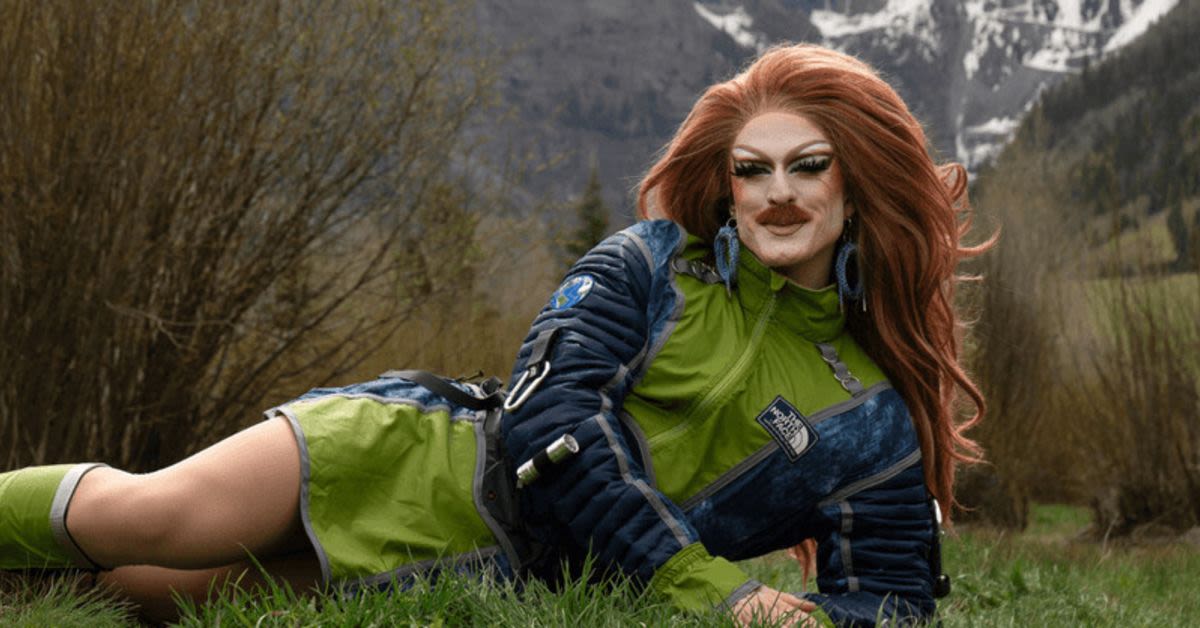
Patagonia is discovering that no amount of corporate virtue-signaling can shield a company from the cultural forces it has long helped to empower when those forces turn against its own interests.
The outdoor apparel giant, famous for aligning itself with nearly every fashionable progressive cause, now finds itself locked in a trademark battle with a left-wing cultural icon of its own milieu: Pattie Gonia, the drag persona of environmental activist Wyn Wiley. According to Western Journal, the clash exposes a deep irony a billion-dollar corporation that once printed vote the a******s out on its clothing tags to telegraph its contempt for political opponents is now being cast as the villain by the very activist class it has so eagerly courted. The dispute, unfolding in federal court, is less about politics than about intellectual property, but it is being aggressively reframed as a culture-war assault on the LGBT community, with Patagonia scrambling to apologize even as it sues to protect its brand.
At the heart of the case is Patagonias iconic trademark: its distinctive font set against the silhouette of the mountain range that inspired the companys name. The company argues that Wileys drag persona, Pattie Gonia, has moved from cheeky homage to outright commercial exploitation, using a confusingly similar name and branding to sell merchandise. For a firm with more than a billion dollars in annual revenue and a global reputation to defend, the stakes are not trivial, particularly in a legal environment where trademark owners are expected to police their marks or risk seeing them weakened.
Wiley has long operated in a gray area near Patagonias intellectual property, building a social media following as an enviro-drag queen who mixes climate activism with LGBT advocacy. According to LGBTQ Nation, Patagonia initially tried to avoid confrontation, saying it had engaged in an open dialogue with Wiley so that Pattie Gonia could continue her [sic] environmental and social advocacy, brand deals, and other work without infringing on our trademarks. The companys strategy was classic corporate progressivism: embrace the activist, flatter the cause, and hope goodwill would substitute for hard legal boundaries.
In 2022, Patagonia went further, indicating it would not object to the drag persona using the Pattie Gonia name for activism, provided it was not used to sell merchandise. In its lawsuit, the company now characterizes this as part of a mutual understanding that the name would not be commercialized in ways that encroached on Patagonias marks, according to The New York Times. Yet the supposed agreement appears to have been more aspirational than contractual, leaving ample room for dispute over what, if anything, was actually binding.
At the time, LGBTQ Nation reported, Pattie Gonias representatives said it would take note of the companys wishes, but never explicitly agreed to them. That carefully hedged phrase take note now looms large, suggesting that Wiley never intended to be constrained by Patagonias preferences once the opportunity to monetize the persona more aggressively presented itself. From a conservative perspective, it is a familiar pattern: activists accept corporate deference and public praise, then proceed as they wish, confident that the company will be too afraid of backlash to enforce its own rules.
By 2025, that confidence was on full display. Pattie Gonia began selling branded merchandise online, including apparel, in direct conflict with what Patagonia says it had tried to prevent. So Patagonia is taking him to court, the company announced in May, arguing that it has little choice if it wants to preserve the distinctiveness of its brand. The move marks a sharp break from the companys usual posture of performative contrition and progressive solidarity, and it has triggered exactly the kind of activist outrage Patagonia has spent years and millions of dollars trying to avoid.
In its complaint, Patagonia accuses Wiley of systematically undermining its brand identity. Given Pattie Gonias failure to follow through on the limitations the parties had discussed, working instead to develop and own trademarks for a PATTIE GONIA enterprise, Patagonia believes that Pattie Gonia will not stop compromising Patagonias famous brand unless Defendants are restrained by the Court, the lawsuit states. The company emphasizes that it is not seeking a financial windfall, but rather an injunction to halt what it views as ongoing harm to its reputation and legal rights.
While Patagonia seeks only nominal monetary damages, the harm Pattie Gonia has caused and will cause to the PATAGONIA brand is irreparable and cannot be remedied by money damages or other remedies short of an injunction. The filing further alleges that the drag persona is irreparably harming Patagonias goodwill and compromising the capacity of Patagonias famous PATAGONIA trademarks to differentiate its products from those that others have created. In other words, Patagonia is making the standard arguments any serious trademark owner must make when a confusingly similar brand begins selling similar goods.
Yet in the current cultural climate, standard legal arguments are quickly recast as ideological aggression. And again, wouldnt you know it? Wiley is claiming that the super-woke corporation is actually a bunch of bigots. The narrative being pushed is not that a multinational company is defending its intellectual property, but that it is targeting a marginalized LGBT activist at a moment of supposed anti-LGBTQ politics and attacks.
The New York Times, in its June coverage, summarized Patagonias position while adopting the fashionable gender-neutral honorifics and pronouns that have become de rigueur in progressive media. According to Patagonias lawsuit, filed in January in the U.S. District Court for the Central District of California, the company met with Mx. Gonia in 2022 and she agreed to restrict her use of the Pattie Gonia name on fonts or designs that mimic Patagonias. The Times reported that In 2025, the drag queen started selling Pattie Gonia-branded apparel online. Patagonia asked her to stop, the lawsuit said, citing the 2022 agreement. Several months later, Mx. Gonia filed a trademark application, seeking to register the name for clothing, marketing and events.
Patagonia, clearly rattled by the optics, has tried to frame its lawsuit as a reluctant last resort rather than an aggressive move against an LGBT figure. In a statement posted late Sunday after several online statements from Mx. Gonia, Patagonia said they had hoped to avoid a lawsuit. We want to acknowledge any hurt it has caused, especially in the LGBTQ+ community, the company wrote. Importantly, we continue to want to resolve this. The company then laid out specific conditions under which it would be willing to stand down.
The company said we can do that if Mx. Gonia agreed to three things: removing the trademark applications, ceasing use of the mountain landscape logo and stopping the sale and promotion of apparel and other products as Pattie Gonia. Those are straightforward demands from a legal standpoint, but they run directly counter to Wileys apparent strategy of turning the persona into a full-fledged commercial brand. For someone who has built a following by challenging norms and pushing boundaries, backing down now would mean surrendering both revenue and cultural leverage.
Wiley/Gonia, unsurprisingly, doesnt want to resolve this, if just because he seems intent upon to borrow Tom Wolfes phrase mau-mauing Patagonias flak-catchers. According to The New York Times, Wiley/Gonia claimed that Patagonia deliberately filed the lawsuit at the height of anti-LGBTQ politics and attacks. The implication is that the company is not merely defending a trademark, but participating in a broader campaign of hostility toward sexual minorities.
They looked at this political moment and thought they could pull this off without a pushback, he said in a social media post. The message is clear: any attempt to enforce legal rights against a prominent LGBT activist will be framed as part of a larger culture-war assault, regardless of the underlying facts. If your executives and lawyers continue to pursue this lawsuit, it will make one thing clear: They are willing to spend hundreds of thousands of dollars to grind me down so far that I cant continue to operate, he added in a letter he sent to Patagonia, according to LGBT outlet Outside.
Faced with this rhetorical barrage, Patagonia has responded with almost ritualistic self-flagellation, even as it presses its case in court. Again, in response to the letter, Patagonia was apocalyptically apologetic. Over the past several years, weve tried to find a path forward that would allow Pattie Gonia to continue their work while also protecting the Patagonia trademark, the letter stated.
These conversations have included multiple proposals each intended to support that path along with ongoing dialogue and genuine efforts to avoid this ending up in court. Unfortunately, we could not reach an agreement. The company is effectively begging not to be seen as hostile to the LGBT community, even while insisting that it cannot simply surrender its legal rights because an activist has decided to weaponize identity politics against it.
From a conservative vantage point, the spectacle is instructive. You can throw yourselves to the wolves, Patagonia, but it doesnt matter. This is going to be played exactly how Wiley/Gonia wants it to be played: Patagonia is going to be seen as suing him because hes hurting its brand image by being a drag queen, when really hes diluting it by basically using intellectual property that isnt his to make money. The companys years of progressive branding have bought it no goodwill now that it stands in the way of an activists commercial ambitions.
Trademark experts, for their part, note that Patagonias legal posture is entirely conventional. Theres a common saying in the trademark world that trademark owners need to actively police and enforce their marks, trademark lawyer Nancy J. Mertzel told The New York Times, noting that trademarks become weaker in the legal realm if there isnt enforcement. Even though Patagonia is a very public benefit-minded corporation, they need to protect their assets, she said. I think theres a lot at stake, certainly for Pattie as a spokesperson, and as an environmental activist.
In other words, this is not some exotic or unprecedented legal crusade; it is a standard infringement dispute dressed up in the language of identity and oppression. Yet the establishment media, ever eager to cast corporate defendants as reactionary when they cross activist priorities, has largely echoed Wileys framing rather than Patagonias. Will Patagonia finally relent and fall down at the feet of the LGBT community? Will it try to offer another compromise that Wiley/Gonia will take note of?
If the company takes the latter path, it should probably listen to the words of Wiley/Gonia himself, regarding what happened in 2022: That wasnt a broad agreement about my future, he said. That admission underscores the core problem: Patagonia believed it had secured a gentlemans understanding with a professional activist whose incentives run in the opposite direction.
Well, his future is up to the courts to decide now. But however it works out, Patagonia is likely to take a lasting PR hit in exactly the kind of liberal/leftist market it has courted for years, as activists and sympathetic media portray the company as yet another corporate oppressor. Whatever the case, talk about two parties to a lawsuit that definitely deserve each other.
Login