
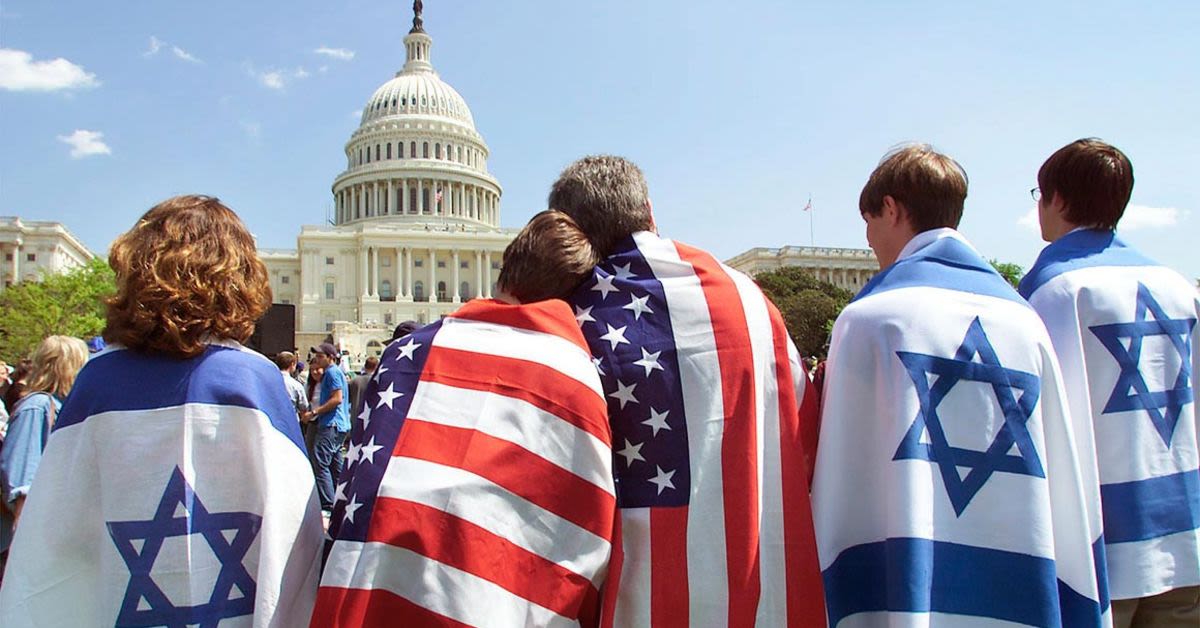
Many Jewish Americans now report feeling unsafe in their own country, with a majority saying their sense of security has deteriorated since Hamas Oct.
7, 2023, assault on Israel.
According to The Associated Press, a new AP?NORC Center for Public Affairs Research survey reveals a sharp shift in how Jewish adults assess their personal safety in the United States in the wake of the Gaza war and the political backlash against Americas longstanding alliance with Israel. As public criticism of Israel has intensified and bipartisan support on Capitol Hill has visibly frayed, the poll suggests that many Jews perceive not merely a foreign-policy debate, but a climate that has emboldened hostility toward them at home.
The conflict in Gaza has fueled months of protests across U.S. cities and campuses, ostensibly aimed at Israels military campaign but often accompanied by rhetoric and incidents that Jewish communities experience as threatening. Those demonstrations have coincided with a documented rise in violent attacks and harassment directed at Jews in the United States, reinforcing a sense that the line between anti-Israel activism and outright antisemitism is being dangerously blurred.
The polls findings underscore a growing vulnerability felt by Jewish adults as the political consensus around Israel erodes and internal divisions deepen over what should be considered antisemitic, especially in the context of protests targeting the Jewish state. For conservatives who have long warned that progressive identity politics and radical campus activism would eventually normalize hostility toward Jews, the data will be seen as confirmation that those concerns were not alarmist, but prescient.
Roughly 3 in 10 Jewish adults report that they or someone in their household has suffered physical assault, verbal abuse, online harassment, or property damage over the past year specifically because of their Jewish identity. That is not a marginal figure; it represents a substantial portion of a small minority community, suggesting that what some on the left dismiss as mere criticism of Israel is, in practice, often accompanied by direct intimidation of American Jews.
For individuals like 30?year?old New Jerseyan Hal Guberman, the threat is not theoretical. He continues to wear a kippah, but does so with unease after a stranger in a passing car shouted a slur at him while he was walking down the street last year, an incident that crystallized how visible Jewishness can invite hostility.
"That person, they don't know anything about me. They don't know my politics. They don't know my beliefs. They don't know my viewpoints," Guberman said. "But they saw me being visibly Jewish, and they made an opinion about me." His experience illustrates a core concern of many Jews: that they are being judged and targeted not for their actions or views, but for their identity alone, even as progressive activists insist their anger is directed only at Israeli policy.
About 6 in 10 Jewish adults now regard prejudice against Jews as an extremely or very serious problem in the United States, a perception especially strong among those who describe themselves as extremely or very emotionally attached to Israel. This heightened concern among more traditionally observant or Zionist Jews suggests that those most closely tied to Jewish religious and national identity feel particularly exposed in the current environment.
When asked about their personal safety, Jewish adults are almost evenly split: about one?third say they feel very or somewhat safe as Jews in America today, while roughly one?third feel very or somewhat unsafe. The remaining 3 in 10 occupy a tense middle ground, saying they feel neither safe nor unsafe, an ambivalence that itself reflects uncertainty about how quickly conditions could worsen.
The sense of danger is more pronounced among those who identify as Jewish by religion, as opposed to those who are religiously unaffiliated but have a cultural, ethnic, or familial connection to Judaism. Those with a close emotional connection to Israel are also more likely to feel threatened, a pattern that aligns with the way anti?Israel rhetoric often spills over into attacks on religious institutions, Hebrew schools, and visibly Jewish individuals.
Overall, about 6 in 10 Jewish adults say they feel less safe as Jews in the United States than they did before Hamas 2023 massacre, including roughly 7 in 10 who are religiously Jewish. Only about one?third say they feel about as safe as before, and almost no one reports feeling safer, a stark indictment of the post?Oct. 7 climate in a country that prides itself on religious liberty.
For some, however, the Hamas attack did not mark a turning point so much as an escalation of a long?standing reality. Erin Baskin, a 36?year?old Pennsylvanian, said her sense of safety did not change after Oct. 7 because she had already encountered antisemitism in her daily life.
"I've always grown up with antisemitism," she said. "Among the rural community I'm in, they conflate Judaism with Zionism all the time. Unfortunately, that's kind of been my experience. It's nothing new." Her account highlights a persistent problem: the inability or unwillingness of many Americans, particularly in left?leaning activist circles, to distinguish between a faith community and the policies of a foreign government.
The survey also finds that some Jews have become more reluctant to identify themselves publicly as Jewish since the Hamas attack. About 4 in 10 say they are now less likely to wear, carry, or display items that might mark them as Jewish than they were before Oct. 7, a sobering indicator that fear is driving people to hide aspects of their religious and cultural identity.
Roughly half of Jewish adults say they are about as likely as before to display such symbols, while about 1 in 10 say they are more likely to do so, perhaps as an act of defiance. Yet the fact that a significant share feels compelled to conceal their Jewishness in the United States a nation founded on religious freedom should trouble anyone who believes in equal protection under the law.
For 24?year?old Illinois resident Caitlin Rosendorn, the decision to stop wearing a Star of David necklace reflects not a rejection of her heritage, but a fear of being miscast as endorsing Israels military actions. She worries that the symbol, which for centuries has represented Jewish faith and identity, is now being misinterpreted by some as a political emblem.
"I don't want to wear a Star of David to work if that's going to alienate somebody who sees the Star of David as a symbol of Israel as opposed to a symbol of Judaism," she said. "I don't want people to get the wrong idea about my views." Her hesitation underscores how the lefts relentless framing of Israel as a pariah state has, intentionally or not, stigmatized Jewish symbols more broadly.
The poll details the concrete forms that antisemitism has taken over the past year. About 1 in 10 Jewish adults say that they or someone in their household has been physically assaulted because of their Jewish background, and a similar share report that their property was damaged or destroyed for the same reason.
Verbal harassment is even more widespread. Around 2 in 10 Jewish adults say they or someone in their household has been called a slur, threatened, verbally harassed, or verbally abused, and a similar proportion report experiencing online harassment or cyberbullying tied to their Jewish identity.
Taken together, about 3 in 10 Jewish adults say they or someone in their household has endured at least one of these incidents in the past year because they are Jewish. These are not isolated anecdotes; they represent a pattern of hostility that belies the progressive narrative that Americas primary problem is Islamophobia or other fashionable categories of oppression.
The risk is especially acute for Jews who are more visibly engaged in religious life. Jewish adults who attend religious services at least once a month are far more likely than Jews overall to say they or someone in their household has experienced attacks or harassment over their Jewish background, a finding that aligns with the spate of targeted attacks on synagogues and other Jewish institutions in recent years.
Among frequent synagogue?goers, slightly less than half report that they or someone in their household has faced verbal harassment, and a similar share say they have experienced online harassment. About one?quarter say they have dealt with physical attacks or property damage, suggesting that regular participation in Jewish communal life now carries a heightened security risk.
For 38?year?old Californian Jon Kessler, who grew up in the Conservative movement of Judaism, the level of security that Jewish communities must consider would likely surprise many non?Jews. He notes that armed guards have become a routine feature of Jewish religious and educational spaces, a reality that stands in stark contrast to the experience of most Christian congregations.
"Most people when they go to church don't have armed security, but every synagogue has an armed security guard," Kessler said. "My son's Jewish daycare has an armed security guard." His remarks highlight a sobering disparity: while many Americans attend worship without a second thought about safety, Jewish parents must factor in the risk of targeted violence even at their childrens daycare.
The political and cultural backdrop to this insecurity includes a wave of protests surrounding speakers and events tied to Israel, from Israeli Prime Minister Benjamin Netanyahus address to Congress to campus appearances by figures perceived as either too supportive or too critical of the Jewish state. These protests have become more frequent since the backlash over Israels war in Gaza, and they have exposed deep divisions within the Jewish community itself over where legitimate dissent ends and antisemitism begins.
Jewish adults are notably split on whether protesting an event related to Israel constitutes prejudice against Jews in general. About half say anti?Israel protests are not a form of antisemitism, while roughly 4 in 10 say they are, a division that reflects broader ideological rifts between more liberal and more conservative Jews over how to interpret the slogans and tactics of the anti?Israel movement.
Many of these protests have centered on criticism of Israels military operations in Gaza, which Palestinian authorities claim have resulted in more than 73,000 deaths since Israel retaliated for Hamas 2023 attack. That figure comes from the Hamas?run Gaza Health Ministry, which does not distinguish between civilians and militants, a fact often downplayed in Western media coverage but crucial for understanding how casualty numbers are weaponized in the propaganda war against Israel.
About two?thirds of Jewish adults say that criticizing Israel for its military actions is not, in itself, antisemitic, reflecting a broad recognition that policy debates are legitimate in a free society. However, those with a close emotional connection to Israel are more likely to view such criticism as antisemitic, likely because they have seen how criticism often morphs into demonization, double standards, and calls for Israels destruction.
Even so, relatively few Jewish adults say it is antisemitic to criticize Israel for any reason, indicating that most Jews distinguish between fair?minded scrutiny and bigotry. Americans overall are less inclined than Jews to label protests supportive of Israel or criticism of Israels military actions as antisemitic, but they are also far more likely to say they simply do not know, suggesting a lack of familiarity with the nuances of antisemitism in contemporary discourse.
Where Jewish opinion is far more unified is in identifying certain actions as unequivocally antisemitic. An overwhelming majority say that vandalizing synagogues or Jewish?owned businesses because of Israels actions is antisemitism, as is denying the reality or scope of the Holocaust, blaming American Jews for the policies of the Israeli government, asserting that Israel should not exist as a Jewish state, or claiming that American Jews are more loyal to Israel than to the United States.
Among non?Jewish U.S. adults, there is less consensus on whether these behaviors constitute antisemitism, with many respondents saying they are unsure. That uncertainty points to a broader educational gap, one that conservatives argue has been exacerbated by left?leaning academic and media institutions that downplay or relativize antisemitism while amplifying other forms of alleged bias.
For Chicago resident Amanda Goldsmith, 53, the most disturbing shift has been the normalization of antisemitic speech in mainstream online spaces. She once believed that such rhetoric was confined to fringe extremist corners of the internet, but now sees it spreading with alarming ease across social media platforms.
"Now, it seems like there was an undercurrent, and it's a free-for-all, and everyone is free to say what they want," she said. "The freedom with which people say horrible things about Jewish people is appalling." Her observation raises uncomfortable questions about the role of tech companies, universities, and political leaders who have been quick to police speech they deem offensive in other contexts, yet often hesitate when the targets are Jews or supporters of Israel.
The AP?NORC poll, conducted June 11?17, surveyed 3,040 adults using a sample drawn from NORCs probability?based AmeriSpeak Panel, designed to be representative of the U.S. population. The poll included interviews with 1,022 Jewish adults, with a margin of sampling error of plus or minus 2.8 percentage points for adults overall and plus or minus 5.0 percentage points for Jewish adults, providing a statistically robust snapshot of Jewish sentiment at a moment of heightened global and domestic tension.
For a nation that has long prided itself on being a safe haven for religious minorities, the picture that emerges is sobering: a sizable share of American Jews feel less secure, more targeted, and increasingly wary of expressing their identity openly. As debates over Israel, free speech, and social justice continue to roil campuses, city streets, and Congress, the challenge for policymakers particularly those who champion limited government yet insist on equal protection under the law will be to defend both robust debate and the basic safety of Jewish citizens, ensuring that America does not repeat the tragic patterns of societies that tolerated antisemitism until it was too late.
Login