
Democrats never tire of casting themselves as guardians of democracy, yet their own conduct keeps undercutting that claim in spectacular fashion.
According to RedState, the party that constantly lectures the country about norms and institutions has shown, time and again, that its commitment to democratic processes is conditional at best. The United States was never designed to be a pure democracy; the Founders deliberately created a constitutional republic, complete with checks, balances, and the Electoral College to prevent the tyranny of the majority. Yet many Democrats openly agitate to scrap the Electoral College and sideline those constitutional guardrails when they become inconvenient to progressive ambitions.
Their behavior in recent years has only reinforced the sense that democracy is, for them, more slogan than principle. After President Joe Bidens disastrous 2024 debate performancewhere he stumbled through answers and even declared, We finally beat MedicareDemocratic power brokers suddenly realized they could no longer conceal his obvious decline. Rather than respect the primary process that had already produced a nominee, they moved swiftly to push Biden aside and elevate Vice President Kamala Harris, a politician whom Democratic voters had effectively rejected in 2020 when she flamed out of the presidential race with dismal numbers.
There was nothing fundamentally new revealed in that debate; conservative outlets had been documenting Bidens cognitive and physical struggles for years. The difference was that Democrats finally grasped that the faade could not hold through November and that they were staring at electoral defeat if they stayed the course. They had misled the American people about Bidens condition, and the liberal media, far from acting as a watchdog, functioned as an accomplice in the cover-up.
So much for protecting democracy, when the candidate who won the primary was unceremoniously swapped out for someone who never earned that mandate from the voters. Harris did not win the trust of Democratic primary voters in 2020; she exited the race before a single ballot was cast in many states, a clear sign that the base was not buying what she was selling. Yet party elites decided they knew better than the electorate and engineered a top-down solution that bypassed the very voters they claim to champion.
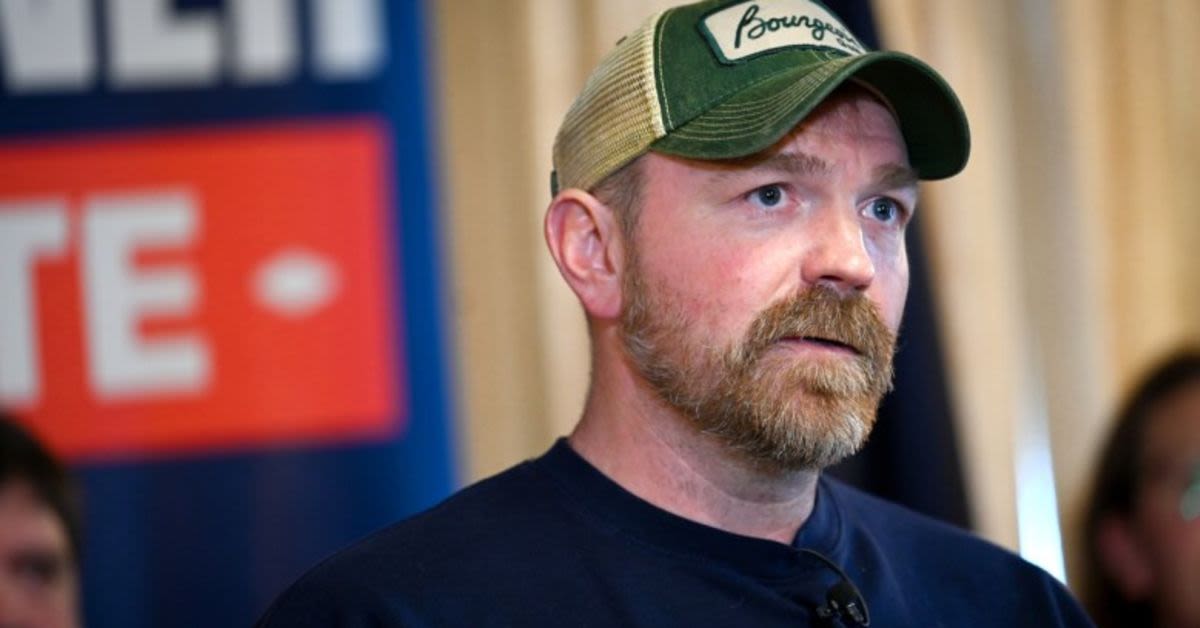
Now, the same pattern is playing out in Maine with Democrat Graham Platner, the partys chosen candidate to challenge Sen. Susan Collins (R-ME). Platner emerged from the primary as the nominee, in part because a disturbing allegation by Jenny Racicotwho has accused him of rapedid not surface until after the primary was over. Even before that, however, Democrats had ample warning signs: a Nazi tattoo, and allegations of abuse from ex-girlfriend Lyndsey Fifield, should have been more than enough to disqualify him in any party that truly cared about character and integrity.
Democratic leaders only turned on Platner when it became clear he was becoming a political liability, not because they suddenly discovered a moral compass. The Racicot allegation may have been the final straw, but they had already shrugged off the Nazi tattoo and the alleged abuse of Fifield when it suited their electoral needs. What changed was not their conscience but the polling: Collins, a seasoned Republican incumbent, began pulling ahead of Platner in multiple surveys, and the numbers suggested that Maine voters were recoiling from the chaos, extremism, and moral baggage surrounding the Democrat.
Voters in Maine, it turns out, do care about character, alleged abuse, and Nazi imagery, and those concerns were dragging Platner down after the primary. As RedState noted, Collins has historically outperformed her polling by six to eight points in her last two races, meaning that even a modest lead on paper could translate into a decisive victory on Election Day. For Democrats, the writing was on the wall: sticking with Platner meant walking into a buzz saw, much as clinging to Biden would have done at the national level.
Platner, for his part, did not go quietly. As Jennifer Oliver OConnell reported, he clashed openly with the Maine Democrat Party (MDP), which wanted him to simply step aside and accused his team of trying to put their thumb on the scale in the process of choosing a replacement. The Platner camp denied that charge, yet simultaneously admitted they wanted the eventual nominee to mirror Platners own far-left positions, effectively demanding ideological continuity even as the candidate himself was being pushed out.
The MDP reportedly plans to convene a nominating convention to select a new candidate, and ambitious Democrats are already lining up to seize the opportunity. But a convention is not a primary, and grassroots leftists know it; they are furious on X, convinced party insiders will slip someone by them who does not reflect their hardline views. Many are now insisting that the replacement must hold similar positions to Platner and complaining that the party is not listening to its basehardly a ringing endorsement of the Democrats supposed devotion to democratic choice.
As RedState has reported, Platners campaign staff is also in open revolt, accusing the party of betraying the voters who backed him in the primary and cutting off his supporters. One Platner campaign official even resigned from his post within the Maine Democrat Party, a rare public crack in the faade of unity that Democrats like to project. The internal meltdown underscores a basic reality: when party elites decide a candidate is expendable, the preferences of rank-and-file voters become an afterthought.
Platner himself released a video blasting the party and the broader system as he announced he was suspending his campaign. My name might be on the ballot right now, but that ballot line belongs to the people of Maine, he declared, framing his ouster as a theft of the voters will. He insisted the allegations against him were false but claimed he could not continue because party leaders had stripped him of the structures necessary to runfinancial support, institutional backing, and organizational infrastructureadding, We won, but they are not going to let us have it.
His anger was palpable, and his belief that he somehow embodied the people of Maine was, at best, delusional. Yet his complaint inadvertently exposed the truth about how Democrats operate: power brokers decide who is viable, and when they pull the plug, the democratic process becomes little more than a formality. The left-wing activists who once cheered Platner now face the prospect of a replacement who may be less radical, and their outrage reflects a dawning realization that the partys rhetoric about empowering the grassroots is often hollow.
Whatever happens next, Democrats own this mess from start to finish. They embraced Platner despite glaring red flags because they thought he could win, just as they propped up Biden while hiding his decline because they craved power more than transparency. Now, as their carefully constructed narratives collapse under the weight of reality, they are scrambling to rewrite the script and hoping voters will forget who created this crisis.
The bottom line is that the party that never stops preaching about democracy has once again treated voters as an obstacle to be managed rather than a sovereign public to be respected. Democracy and honesty with the electorate have been reduced to talking points for Democrat power brokers, useful only so long as they advance the quest for control. This time, that cynical strategy has blown up in their faces, and the debacle in Maine stands as yet another reminder that when Democrats say protecting democracy, what they often mean is protecting their own grip on power.
Login