
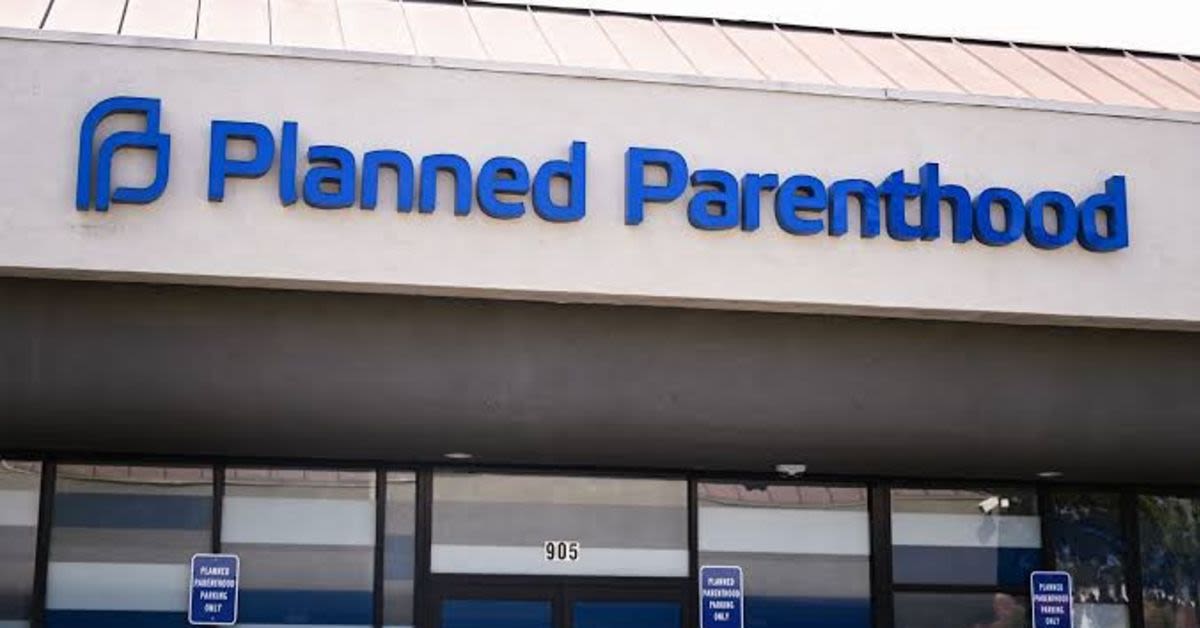
Planned Parenthood is preparing to pour more than $47 million into the 2026 midterm elections in a bid to unseat Republicans who backed a temporary halt to its federal Medicaid funding.
According to Newsmax, the abortion giants political arm is mounting one of its most aggressive electoral offensives to date, targeting GOP lawmakers who supported last years one-year block on Medicaid reimbursements to the nations largest abortion provider. Planned Parenthood Votes, the groups super PAC, intends to deploy the funds across 10 competitive House races in seven states, as well as pivotal Senate contests in Maine and Michigan, as reported by Politico.
The $47 million outlay marks Planned Parenthoods second-largest midterm investment, surpassed only by its 2022 spending spree, underscoring how central abortion politics have become to the lefts electoral strategy. For conservatives, the campaign is a direct attempt to punish lawmakers who sought to ensure that taxpayer dollars are not entangled with the abortion industry, even indirectly.
The House Republicans in Planned Parenthoods crosshairs include several members representing swing or marginal districts, where Democrats hope abortion messaging can tip the balance. Among those singled out are Reps. Bill Huizenga and Tom Barrett of Michigan, Gabe Evans of Colorado, Mariannette Miller-Meeks of Iowa, Mike Lawler of New York, David Valadao of California, Brian Fitzpatrick and Ryan Mackenzie of Pennsylvania, and Juan Ciscomani of Arizona.
On the Senate side, the group is preparing to oppose likely Michigan GOP Senate nominee Mike Rogers, a former congressman with a record of supporting pro-life policies. It has also trained its sights on Sen. Susan Collins, R-Maine, a longtime moderate whose votes on abortion-related issues have often drawn scrutiny from both sides.
Planned Parenthood officials are framing the 2026 cycle as an existential political battle for their organization and for the broader abortion-rights movement. "We're in the fight of our lives," Planned Parenthood Votes Executive Director Sarah Standiford told Politico, vowing to defeat lawmakers who voted to cut off the groups Medicaid reimbursements.
The Republican-led Congress last year approved a one-year provision blocking Planned Parenthood from receiving Medicaid reimbursements, a move conservatives argued was necessary to ensure that public funds do not subsidize an industry built on ending unborn life. While federal law already bars direct taxpayer funding of most abortions, pro-life lawmakers have long contended that Medicaid reimbursements and other streams of public money effectively underwrite the organizations broader operations.
That restriction, however, expired in early July after Republicans were unable to secure an extension, restoring Planned Parenthoods access to hundreds of millions of dollars in federal Medicaid reimbursements. The lapse has fueled frustration among pro-life advocates, who see the episode as evidence that more robust and durable legislative strategies are needed to disentangle taxpayer money from abortion providers.
Even with the funding restored, Planned Parenthood has been under mounting financial strain, forcing it to retrench in many parts of the country. The Kaiser Family Foundation reported that the organization has closed or consolidated 57 health centers across 20 states since January 2025, a development pro-life advocates say undercuts the narrative that Planned Parenthood is indispensable to womens health care.
The broader political landscape suggests that abortion will remain a defining and polarizing issue in the 2026 elections, with both sides preparing unprecedented spending. For Democrats and their allies, including Planned Parenthood, the strategy is clear: use abortion as a wedge issue to energize liberal voters and paint Republicans as extremists, despite the lefts own embrace of virtually unlimited abortion access.
Conservative groups, however, are not ceding the field. Susan B. Anthony Pro-Life America and its affiliated Women Speak Out PAC announced in November an $80 million effort to preserve Republican congressional majorities and elect pro-life candidates who will stand firm against the abortion lobby.
"Republicans simply cannot win without their pro-life base, especially in midterm elections when overall turnout drops," SBA Pro-Life America President Marjorie Dannenfelser said in unveiling the campaign, underscoring the centrality of life issues to the GOP coalition. She said the effort will reach more than 10.5 million voters through door-to-door canvassing, digital advertising, direct mail, and early voting initiatives in battleground states, signaling a ground-level push to counter Planned Parenthoods media-heavy blitz.
Dannenfelser has also warned that Democrats have embraced an "extreme all-trimester abortion agenda," a position far out of step with the views of many Americans who favor at least some limits on late-term procedures. She argued that maintaining Republican control of Congress is essential to preventing abortion-rights advocates from restoring hundreds of millions in taxpayer dollars to Planned Parenthood and expanding federal support for abortion on demand.
Beyond the marquee federal races, both abortion-rights and pro-life organizations are expected to channel tens of millions more into gubernatorial contests, state legislative campaigns, and ballot initiatives that could reshape abortion policy in multiple states. With the post-Roe landscape shifting power to state capitals and voters, these down-ballot fights may ultimately prove as consequential as the high-profile battles for control of Congress.
As Planned Parenthood mobilizes its war chest to shield its funding streams and expand abortion access, pro-life groups are betting that voters will reject what they see as the lefts radical push for abortion without meaningful limits. The 2026 midterms are shaping up not only as a test of partisan strength, but as a referendum on whether Americans want their tax dollars tied to the nations largest abortion provider or directed instead toward policies that protect both women and their unborn children.
Login