
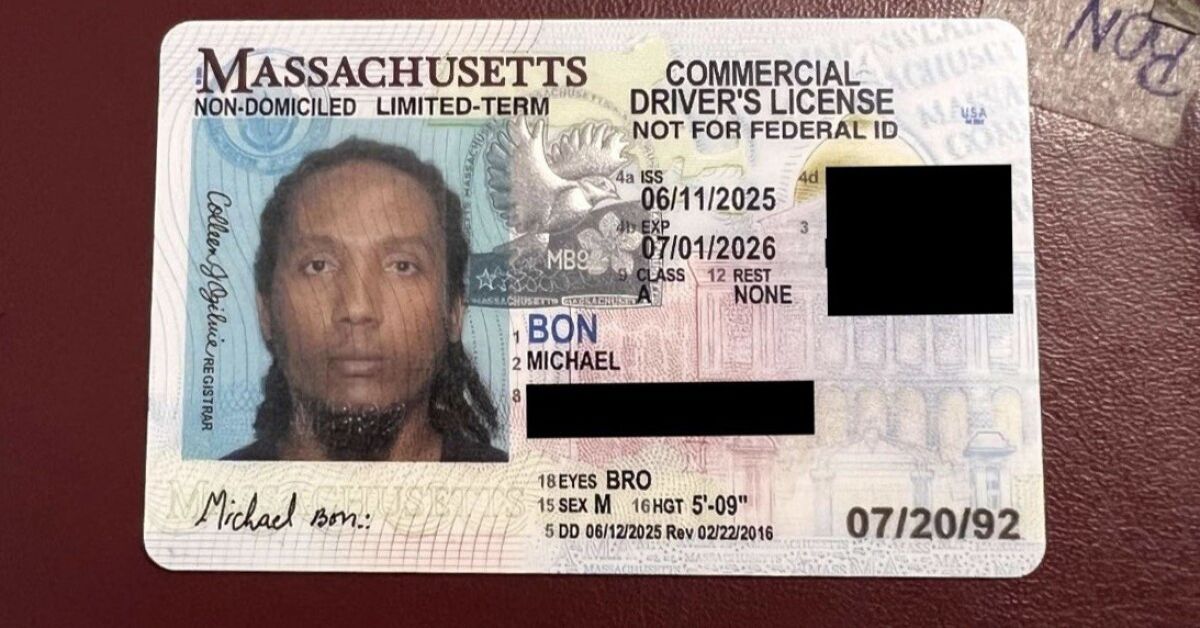
A Haitian national in the United States illegally has been charged in connection with a devastating highway crash in Pennsylvania that claimed the life of a state trooper, intensifying scrutiny of lax immigration enforcement and permissive licensing policies in liberal states.
The suspect, identified as 31-year-old Michael Bon, now faces a charge of homicide by vehicle in the July 1 death of Pennsylvania State Trooper Michael Pahira, as reported by Western Journal. Authorities say the deadly chain-reaction crash unfolded on Interstate 81 in Schuylkill County shortly after 7 a.m., when Pahira was conducting a routine inspection of a tractor-trailer on the shoulder.
According to investigators, a second tractor-trailer driven by Bon slammed into Pahiras patrol vehicle and then plowed into the truck under inspection, triggering a fiery wreck. Pahira was pinned beneath the mangled vehicles as flames spread, and although bystanders managed to pull him from the debris, he was later pronounced dead at a local hospital, according to the New York Post.
U.S. Immigration and Customs Enforcement has since lodged a detainer against Bon, according to a Department of Homeland Security news release, underscoring that he was in the country unlawfully at the time of the crash. The same release revealed that the state of Massachusetts had issued Bon a Commercial Drivers License, allowing him to operate heavy trucks on American highways despite his immigration status.
This Haitian illegal alien was released into our country by the Biden Administration, and the sanctuary state of Massachusetts gave him a Commercial Drivers License, Acting Assistant DHS Secretary Lauren Bis said. Now, because of these reckless policies, a Pennsylvania State Trooper is dead after a crash that was 100 percent preventable. Illegal aliens should not be driving trucks on Americas highways. Our hearts and prayers go out to his family and the Pennsylvania State Police as they mourn this loss, Bis said.
According to the Boston Herald, Bon entered the United States in July 2024 at Fort Lauderdale-Hollywood International Airport under parole status, a discretionary tool critics say has been abused to bypass normal immigration vetting. In October 2024, he applied for Temporary Protected Status with U.S. Citizenship and Immigration Services, but that request was never approved.
DHS records show his parole was terminated in June 2025, yet Bon remained in the country illegally and settled in Brockton, Massachusetts, a jurisdiction long associated with sanctuary-style policies. Despite his unlawful presence, he was still able to obtain a commercial license, raising serious questions about state-level complicity in undermining federal immigration law.
Pennsylvania State Police Troopers Association President Stephen Polishan said Bon should never have been behind the wheel of a big rig on American roads, according to WPXI-TV. This is not about politics. This is about right versus wrong, he said.
Trooper Pahira was a hero, and his family, fellow troopers and the public deserve answers. They need to know why the person accused of this senseless killing, who was in the United States illegally, had been granted a commercial drivers license in Massachusetts, he said.
This individual should never have been driving such a dangerous vehicle on our highways. But he was, and now a good man is dead. Trooper Pahira should be alive today, he said.
As President Trumps second administration presses for stronger borders and an end to sanctuary policies, this case is likely to fuel renewed demands for states to stop issuing licenses to illegal immigrants and for Washington to close the loopholes that allowed Bon to enter, remain, and drive commercially in the first place. For Pahiras family, fellow troopers, and a public weary of preventable tragedies, the central question now is whether policymakers will finally prioritize the rule of law and public safety over ideological experiments in open-border governance.
Login