
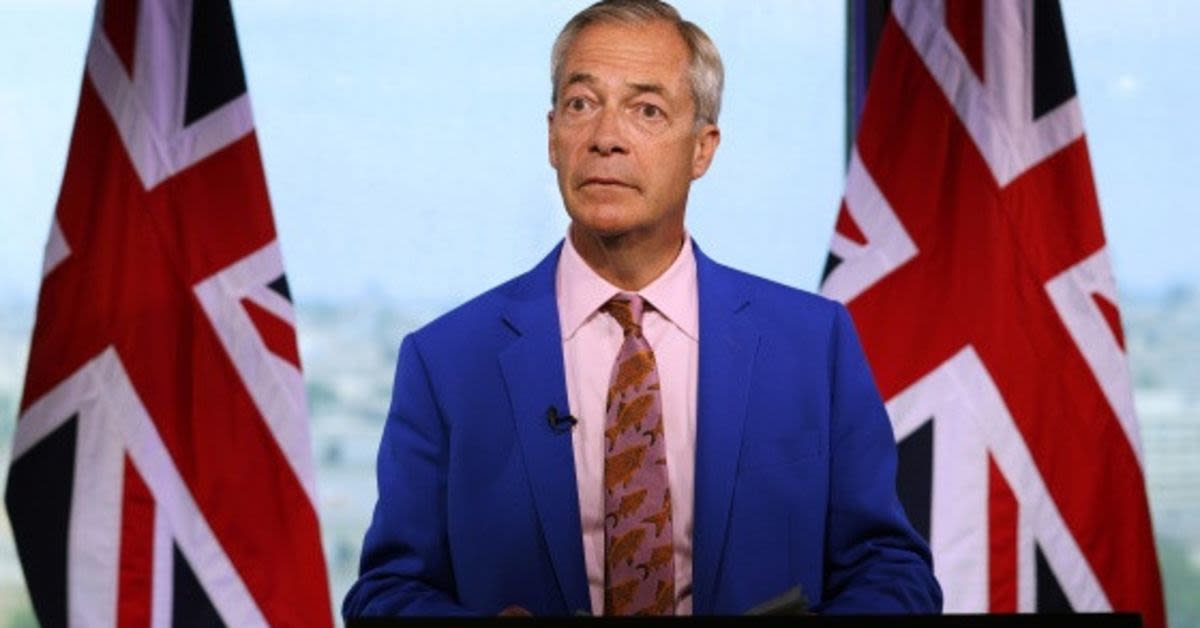
Nigel Farage has abruptly resigned his seat in the British Parliament, setting up a high-stakes by-election that he openly casts as a showdown between ordinary voters and the political establishment.
The Reform UK leader and Clacton MP announced on Tuesday that he would vacate his seat, a move that comes amid an ongoing investigation into substantial gifts he received while he was not serving in Parliament, as reported by RedState. Farage insists the resignation is a tactical decision designed to return directly to the electorate and strengthen his mandate rather than a retreat under pressure.
"Today I will resign as a Member of Parliament for Clacton-on-Sea, thereby forcing a by-election, which will happen, I hope in short order," he declared at a press conference streamed on the Reform UK YouTube channel. Under the United Kingdoms parliamentary rules, any MP who leaves office for any reason triggers a by-election in his or her constituency, and Farage has made clear he intends to be on the ballot.
Farage is presenting the contest as a referendum on the political class that has long tried to sideline him and the voters he represents.
"This will be a people vs. the establishment by-election. It's a chance to stick two fingers up to the entire establishment, to frankly tell them where to go, and that is why I will be putting my name forward to stand in this by-election," he said.
The resignation follows mounting scrutiny over gifts he received from wealthy backers while he was a private citizen, including a multi-million-pound contribution from a prominent donor. Farage has rejected any suggestion of impropriety, insisting that his conduct has been lawful and transparent.
"Let me be absolutely clear. I have done nothing wrong. I have not broken the law in any way at all. I have not misused public money."
An inquiry by Parliaments Commissioner for Standards remains ongoing, but no formal findings have yet been issued.
At the center of the controversy is a 3.735 million (approximately $5 million) gift from billionaire Christopher Harborne, provided during the period when Farage was out of office. Farage maintains that the funds were necessary to cover personal security costs after official support was sharply reduced, arguing that his safety needs are a direct consequence of his prominence and the hostility he faces.
"I am going to need security for the rest of my life and I cannot even tell you how grateful I am to Christopher Harborne, because now I will never ever need to worry about whether I've got the resource."
He has described years of escalating harassment and threats, saying that political authorities failed to take his security concerns seriously.
Citing years of abuse, Farage said "over the last years it's gotten worse," pointing to an attack on his home and "literally, daily online calls for me to be murdered." He said he repeatedly appealed to the Home Secretary for assistance but was ignored, leaving him to shoulder heavy private security bills.
Farage also disclosed that, just days after conservative activist Charlie Kirk was murdered, his own security funding from the state was slashed by 70 percent. For many on the right, that timing will reinforce a familiar pattern in which outspoken conservative figures face heightened danger while the political establishment appears indifferent or even punitive.
Beyond the immediate scandal, Farages move underscores his continuing role as a central figure on the British right, particularly on issues of sovereignty and immigration. He has long been one of the most forceful voices demanding an end to mass migration from the developing world into the UK, a stance that resonates with voters who feel ignored by the major parties and betrayed by years of lax border enforcement.
Farage was instrumental in the Brexit campaign, later leading the UK Independence Party and co-founding the Brexit Party, which evolved into Reform UK. He has since become a fierce critic of the Labour government, especially on immigration and national security, and when Labour Prime Minister Keir Starmer recently stepped down, Farage immediately called for snap elections to loosen Labours grip on Parliament.
No date has yet been set for the Clacton by-election, though such contests are typically held within weeks rather than months.
Whenever the vote is scheduled, it will serve as a test not only of Farages personal standing but of whether British voters are prepared to use the ballot box to rebuke an establishment that has, in his telling, failed to protect its own citizens while targeting those who challenge its authority.
Login