
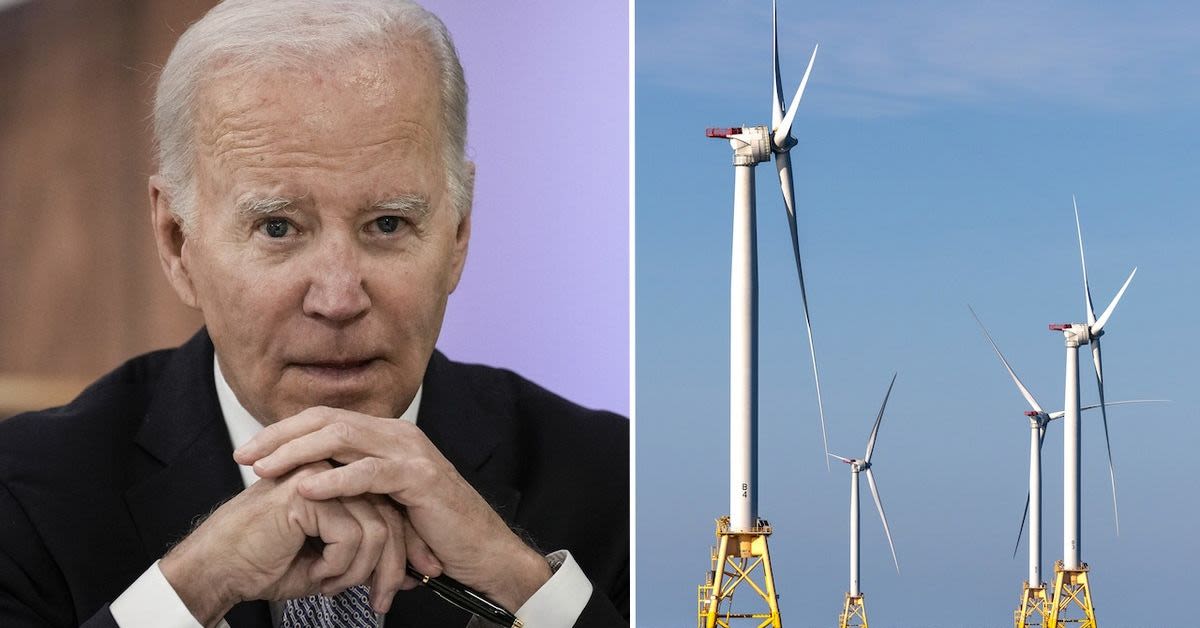
The Trump administration has taken another decisive step in dismantling President Joe Bidens offshore wind agenda, this time by steering a major North Carolina project toward more reliable, conventional energy sources.
According to the Daily Caller, the Department of the Interior (DOI) on Monday unveiled a settlement with Duke Energy that will see the utility abandon plans for a massive offshore wind installation near the Carolina Long Bay area. In return, Duke will receive a $129 million payment, structured as a partial reimbursement of its federal lease costs rather than a political payoff, as some critics have alleged.
Despite accusations that the administration is effectively bribing Duke Energy to walk away from offshore wind, the arrangement follows existing federal statutes and regulations governing lease terminations. The more consequential story lies in how Duke intends to deploy the funds, which will be redirected into dependable, around-the-clock power generation instead of intermittent offshore turbines.
This settlement allows Duke Energy to refocus $129 million in ways that directly benefit our customers and communities in the Carolinas, said Kodwo Ghartey-Tagoe, executive vice president and chief executive officer of Duke Energy Carolinas. Under the agreement, Duke Energy will reinvest nearly $129 million in additional generating capacity, which may include advancing new nuclear and natural gas generation, and grid enhancements to strengthen reliability, support continued growth in the Carolinas and keep costs as low as possible.
Rather than locking North Carolina ratepayers into higher electricity prices that so often accompany heavily subsidized offshore wind ventures, Duke is now positioned to expand 24/7 baseload capacity. The political losers in this shift are the state and local officials who had hoped to burnish their green credentials on the backs of consumers through a high-cost offshore wind buildout.
Interior Secretary Doug Burgum framed the deal as emblematic of the administrations broader energy strategy, one that prioritizes affordability, reliability and national security over ideological climate commitments. President Trumps vision of unleashing affordable, reliable American energy for our countrys communities and using common sense to put the American people first is being implemented, Burgum said. Duke Energy will now be able to convert a national security concern into projects that will lower the costs for its customers in North Carolina and surrounding states. The agreement is a win-win scenario that has become a hallmark for how the Trump administration operates.
The Duke settlement is only the latest in a string of similar agreements through which the DOI has been methodically unwinding early-stage offshore wind leases. Since early 2026, the department has used these arrangements to redirect capital away from subsidized offshore projects and toward natural gas, nuclear, oil, liquefied natural gas (LNG) and geothermal development, all under the banner of the administrations Energy Dominance agenda.
In March 2026, French energy major TotalEnergies agreed to terminate two large offshore wind leases off New York and North Carolina for roughly $928 million. The company then shifted those resources into U.S. oil and gas production, LNG facilities in Texas and new projects in the Gulf of Mexico, underscoring the renewed attractiveness of American hydrocarbons under a pro-development federal posture.
Three months later, in mid-June 2026, Invenergy surrendered four leases spread across the New York Bight, Californias Central Coast and the Gulf of Maine in exchange for $765 million. The firm committed those funds to building natural gas-fired power plants in Indiana, Wisconsin, Iowa, Kansas and Missouri, along with geothermal initiatives in Western states, reinforcing the pivot toward dispatchable power that can actually meet demand when the sun is not shining and the wind is not blowing.
Additional DOI agreements with Bluepoint Wind, covering waters off New York and New Jersey, and Golden State Wind in California added approximately $900 million more in redirected capital. By the time the Duke Energy deal was finalized, the cumulative value of these offshore wind lease buyouts had climbed to about $2.7 billion, representing a substantial reallocation of investment away from Biden-era green priorities.
In each instance, developers voluntarily relinquished their leases, received partial reimbursements consistent with federal law and then reoriented their portfolios toward firm, reliable generation. The administration has consistently described these moves as pragmatic corrections, designed to move money out of intermittent, subsidy-dependent projects and into energy infrastructure that strengthens grid stability and restrains long-term costs for American families and businesses.
That characterization is accurate, but it also understates the broader ideological and policy shift underway. The systematic rollback of Bidens lavishly subsidized offshore wind sector is a central pillar of the second Trump administrations effort to reverse what conservatives see as a deliberate, top-down campaign of managed decline in U.S. energy production.
This is American Energy Dominance in practice: a comprehensive strategy that has effectively turned back 12 years of regulatory and political pressure against traditional energy, spanning both the Biden presidency and that of his Democratic predecessor, Barack Obama. By restoring the primacy of market-driven, dispatchable power and curbing the excesses of green industrial policy, the administration is signaling that national strength, economic competitiveness and energy security take precedence over symbolic climate gestures.
What is becoming increasingly clear in this Trump term is that the stagnation and vulnerability of the previous era were not inevitable, but the result of conscious policy choices. What we are fully realizing in this Trump presidency is that Americas decline was a conscious choice forced by those two former presidents, the commentary argues, adding pointedly, Thats a choice President Donald Trump and his administration have no interest in making.
For energy producers, utilities and consumers, the Duke Energy settlement and its predecessors offer a roadmap for how Washington can unwind costly, politically driven commitments without simply writing off sunk costs. For critics of the green agenda, they also represent a tangible course correction toward an energy policy grounded in reliability, affordability and national interest rather than ideological experimentation.
David Blackmon, an energy writer and consultant based in Texas who spent four decades in the oil and gas sector focusing on public policy and communications, views these developments as emblematic of a broader restoration of American energy strength. The views and opinions expressed in his commentary are his own and do not reflect the official position of the Daily Caller News Foundation, but they capture a growing sentiment on the right that the country is finally choosing prosperity and security over decline by design.
Login