
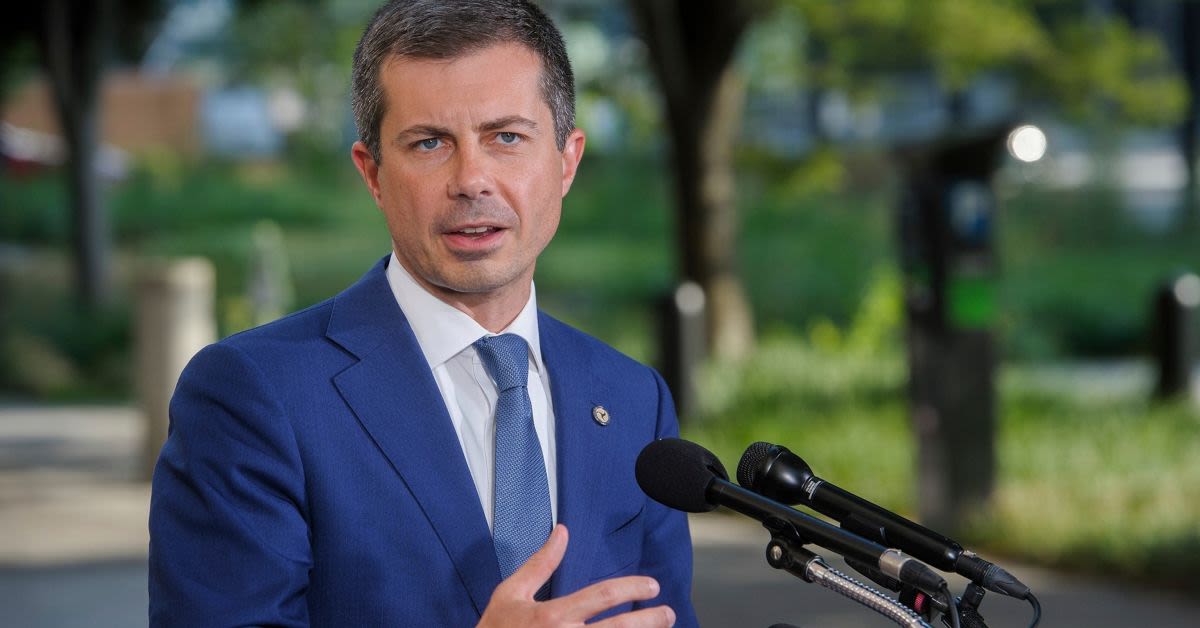
Former Transportation Secretary Pete Buttigieg has revealed that Child Protective Services briefly removed his adopted children from his care after an anonymous and evidently baseless allegation of abuse, yet his own account shows more outrage toward the hoaxer than toward the government machinery that enabled the ordeal.
In a lengthy Substack post, Buttigieg recounted how a CPS worker and a law enforcement officer unexpectedly arrived at his home and informed him that a forensic interview had been scheduled for his 4-year-old twins based on allegations against him. According to Western Journal, officials told him that, pending the interview, he was not permitted to be around the children, a restriction that immediately upended his familys routine and triggered a chain of events that exposed serious questions about state power and due process.
When his husband returned home with the children, Buttigieg wrote that the couple decided the twins should stay with their grandparents while the investigation played out. He described the following day as a harrowing emotional experience, writing, The twenty-four hours until they returned are among the darkest hours of my life, and recalling the shock of being treated as a potential threat to his own children.
I tried to get my head around the idea that I had been accused of something so serious that I couldnt be alone around my own children, and had consented to have them interviewed by strangers, without my knowing where the accusation had come from or even what it contained, Buttigieg wrote. He later sat for his own interview with authorities, during which he finally learned the substance of the allegations that had triggered the states intervention.
An anonymous caller had contacted CPS. The caller said that he had spoken to a woman who claimed to have met me at a conference several years ago in Alabama, where she said I told her that I had committed unspeakable violent crimes, and the caller believed my children were still at risk, Buttigieg recounted. He told investigators he had never even been to the town where this supposed encounter took place, and CPS ultimately reported that the childrens forensic interviews raised no concerns about their safety.
The former Biden administration official ended his post by venting his frustration over the experience, but his criticism was aimed almost entirely at the anonymous accuser. He largely declined to question the government system that allowed an uncorroborated, politically tinged allegation to result in the temporary removal of his children and a presumption of guilt.
Buttigieg consistently places the blame squarely on the hoaxer without once criticizing the system that facilitated this occasion, Western Journal noted in its analysis of his account. Buttigieg himself praised the officials involved, writing, The police officer, the CPS professional, and the forensic interviewers who spoke to my children were just following procedure and doing their jobs admirable jobs that must be incredibly difficult every day, protecting the most vulnerable children from the most horrible threats.
He further emphasized that the real wrongdoing lay with the anonymous caller, insisting that the legal framework itself is sound. To be clear, making a false report of this kind is a crime. Thats as it should be, both to protect the innocent from false accusations, and to preserve the integrity of a process designed to protect children from harm, he wrote, effectively endorsing the same expansive state authority that had just turned his own life upside down.
Buttigieg even acknowledged that the officer on the scene understood the political nature of the allegation, suggesting that those enforcing the rules recognized the dubious character of the complaint. Yet, despite that awareness, the process moved forward, and the family endured a traumatic separation based on what was, by Buttigiegs own description, an obviously implausible story.
Cato Institute Director of Immigration Studies David J. Bier highlighted this contradiction on X, questioning why Buttigiegs anger was not directed at the government itself. Bier wrote, Why is he not upset with the government? An anonymous caller said he told an anonymous woman at a fictitious event that he was violent is not a credible report. Why wouldnt you be as furious at the officials who took this obvious hoax seriously?
Indeed, the episode underscores a broader concern long raised by conservatives: a sprawling bureaucracy that can intrude into family life on the flimsiest of pretexts, with little accountability when it errs. Yet Buttigieg, a committed progressive and former Cabinet official, appears unwilling to confront the possibility that the system he defends may be too quick to override parental rights and too slow to apply common sense.
Major establishment outlets such as The New York Times, The Washington Post, and National Public Radio have largely sidestepped this deeper issue in their coverage, focusing instead on the cruelty of the hoax and the political climate surrounding it. Their reluctance to question the underlying government power structure is telling, especially when any serious reform might mean limiting the reach of agencies they routinely champion.
For Buttigieg, the outrage seems to end at the fact that this happened to him, not that it can happen at all to any parent caught in the crosshairs of an anonymous accusation. The unanswered question is whether this experience will prompt any reconsideration of the unchecked authority granted to child welfare bureaucracies, or whether it will be filed away as just another personal grievance in a system that remains as expansive and unaccountable as ever.
Login