
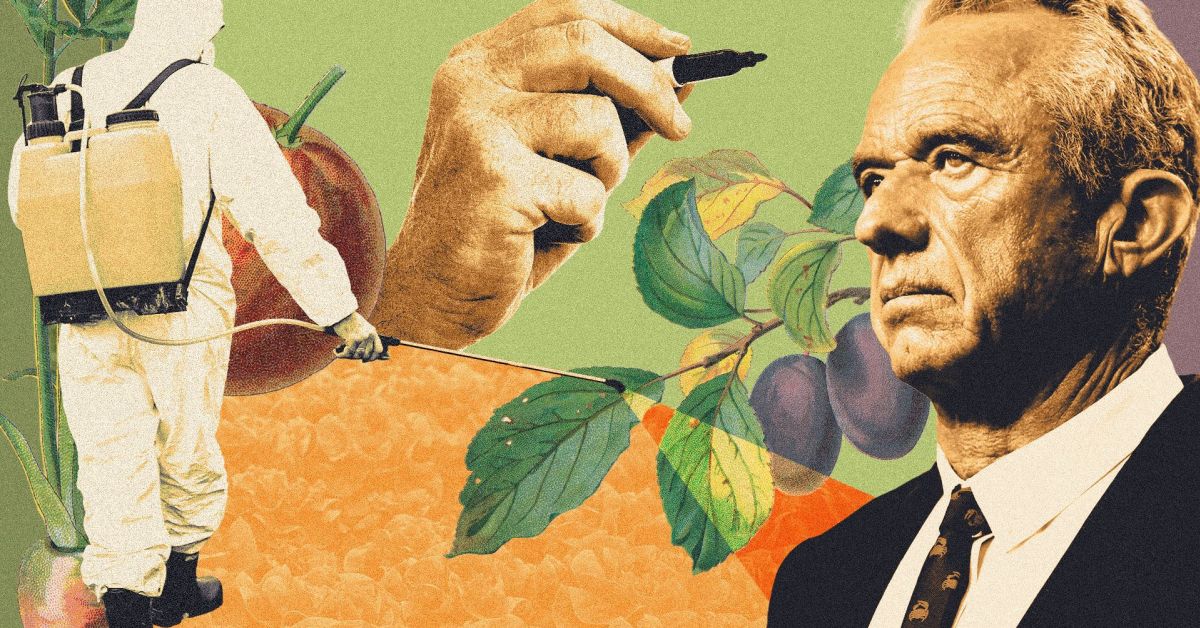
A powerful agriculture lobbyist reportedly warned President Donald Trump that backing an initiative to promote alternatives to conventional pesticides would risk alienating key farming supporters, exposing a deepening rift between health activists and the farm lobby over the future of American agriculture.
According to the Daily Caller, the confrontation unfolded as Trump weighed an executive order aligned with Health and Human Services (HHS) Secretary Robert F. Kennedy Jr.s Make America Healthy Again (MAHA) movement, which has pushed for tighter scrutiny of pesticides and greater emphasis on regenerative farming. The dispute underscores a broader clash between Kennedy-aligned reformers, who want to curb reliance on chemical inputs, and powerful agricultural interests determined to preserve access to widely used products like glyphosate and Roundup.
Trump met in the Oval Office with Kennedy, U.S. Department of Agriculture (USDA) Secretary Brooke Rollins and American Farm Bureau Federation (AFBF) President Zippy Duvall to discuss the pesticide-focused executive order he was scheduled to sign later that day, Axios reported. Several MAHA-aligned staffers present were reportedly angered by a U.S. Supreme Court ruling earlier that morning siding with the maker of Roundup, a decision they viewed as a major blow to efforts to hold pesticide manufacturers accountable.
Kennedy told Trump that the high courts decision represented a serious setback for his health-centered movement, according to the outlet. He further argued that the executive order, which seeks to promote alternatives to conventional pesticides in the food supply and expand research into their health and environmental impacts, could help blunt the rulings consequences, Axios reported, citing three anonymous sources familiar with the meeting.
Jonathan Lundgren, a South Dakota farmer and former USDA scientist, also pressed Trump to sign the order, warning that heavy pesticide use is harming those who work the land. One of the take-home messages I really wanted [Trump] to understand is that the farmers were sick right now, Lundgren told Axios. Were literally killing our farmers with these food systems.
Other farmers in the room echoed Lundgrens endorsement of regenerative agriculture, according to the outlet, signaling a growing grassroots interest in farming practices that reduce dependence on synthetic chemicals. Regenerative agriculture, as defined by the Noble Research Institute, focuses on restoring degraded soils through management techniques such as minimal or no use of pesticides and synthetic fertilizers, cover cropping and diversified rotations.
Even as some producers urged a shift away from chemical-intensive methods, the political and economic stakes were evident. A photograph from May 2026 shows a sign warning about pesticide spraying on an organic farm near West Bend, Iowa, a visual reminder of the divide between conventional and alternative production systems that has long shaped U.S. farm policy debates.
Duvall, representing the influential Farm Bureau, pushed back hard, urging Trump not to sign the order and warning that it could cost him support among farming constituencies, Axios reported. Lundgren told Axios that Duvalls direct challenge to the president was shocking, adding that Trump appeared visibly concerned and wanted to understand why Zippy was so worried.
The tension escalated when Duvall reportedly clashed with White House Senior Advisor Calley Means, who accused the Farm Bureau chief of criticizing an order he had not fully reviewed, Axios reported, again citing three anonymous sources. It was intense in there, Lundgren told Axios. They were arguing. It was back and forth.
Rollins, who has publicly defended glyphosate and other conventional pesticides as essential tools for modern agriculture, nonetheless urged Trump to move forward and sign the order, Axios reported. After soliciting additional feedback, Trump did sign it, and Duvall later reversed course and said he would support the move, a notable shift from his initial warning that it could fracture farm-state backing.
Glyphosate remains one of the most widely used herbicides in the United States, prized by many producers for its effectiveness and role in keeping input costs manageable, but its critics allege that it can cause certain cancers and other health problems. The AFBF and HHS did not respond to the Daily Caller News Foundations requests for comment, reflecting the sensitivity of a debate that pits health concerns and environmental stewardship against productivity and economic security.
We dont comment on private meetings with the President, on or off the record, a USDA spokesman told the DCNF. Its unfortunate that others do. The response highlights the administrations reluctance to publicly air internal disagreements even as outside factions on both sides of the pesticide debate attempt to shape the narrative.
President Trump listens to a variety of opinions from many subject experts to inform his decision-making, White House spokesman Kush Desai told the DCNF. The President is committed to ultimately doing whats best for the MAHA movement, our farmers, and the American people and the signing of this executive order reflects that commitment. That framing positions Trump as trying to balance the MAHA movements health agenda with the practical realities facing producers who rely on chemical tools to remain competitive.
In the executive order, titled Advancing Regenerative Agriculture and Strengthening American Farm Resilience, Trump declared it the policy of the United States to promote continued advances in precision agriculture technologies and to significantly increase Federal investment in regenerative agriculture practices, research, and education. The language suggests an attempt to harness innovation and market-driven solutions rather than heavy-handed regulation, consistent with a conservative preference for empowering farmers and scientists over bureaucrats and activist litigators.
Axios report follows Trumps February executive order aimed at expanding domestic production of glyphosate, a move that drew fierce criticism from MAHA supporters who want to phase out the herbicide. That earlier order warned that a lack of access to glyphosate-based herbicides would critically jeopardize agricultural productivity, adding pressure to the domestic food system, and may result in a transition of cropland to other uses due to low productivity, underscoring the presidents view that safeguarding food security and farm viability must remain a central priority even as Washington experiments with regenerative approaches.
Login